
Construction safety is inseparable from operations. It is the daily effort of protecting workers from incidents and protecting the public through perimeter control, clear visibility and fast response when something goes wrong.
Fixed-position cameras help because they reduce uncertainty. They give teams a consistent view of what is happening now, what happened earlier and what changed over time, without adding friction to the job.
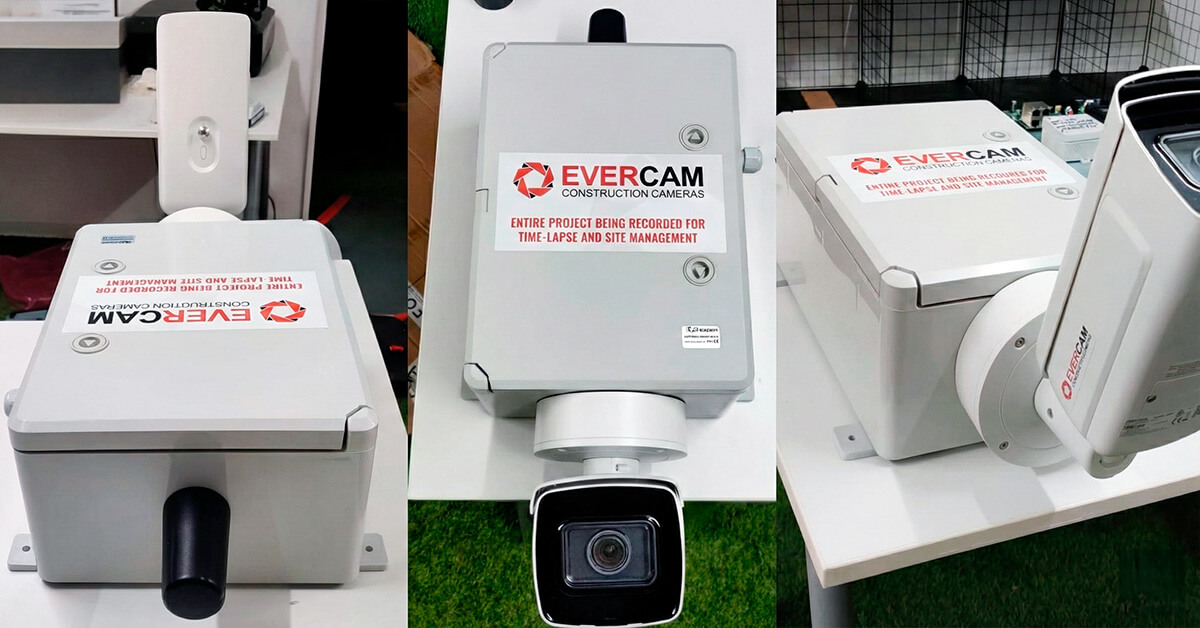
Evercam fixed-position cameras are built for long-term site monitoring in 4K+ resolution, with a 110° horizontal field of view and long-range coverage up to 100 meters, including harsh conditions.
Why fixed-position cameras matter for safety (not just security)
When safety breaks down, it is often because teams cannot:
- verify conditions in high-risk zones without sending people in
- see a developing issue early enough to intervene
- reconstruct events when accounts conflict
- document what happened in a consistent way for internal review and learning
Fixed-position construction cameras support remote site monitoring, jobsite visibility, incident documentation, near-miss prevention and safety compliance by providing a reliable visual record that teams can reference throughout the project.
And when you need the bigger picture, Evercam’s Timeline provides a searchable timeline of your entire project, with no gaps.

8 real project examples of safer operations with Evercam
These examples reflect common challenges in large-scale construction projects, especially in data centers, renewables and mission-critical builds.
1) Incident investigations without assumptions
Real project example: A Director of Health & Safety needed to review incidents where different people had different accounts of what happened. Footage clarified the sequence of events so the team could focus daily safety huddles on specific contributing factors and safer practices.
Operations takeaway: Clarity improves the quality of corrective action and learning.
2) Compliance verification near sensitive boundaries (aviation risk)
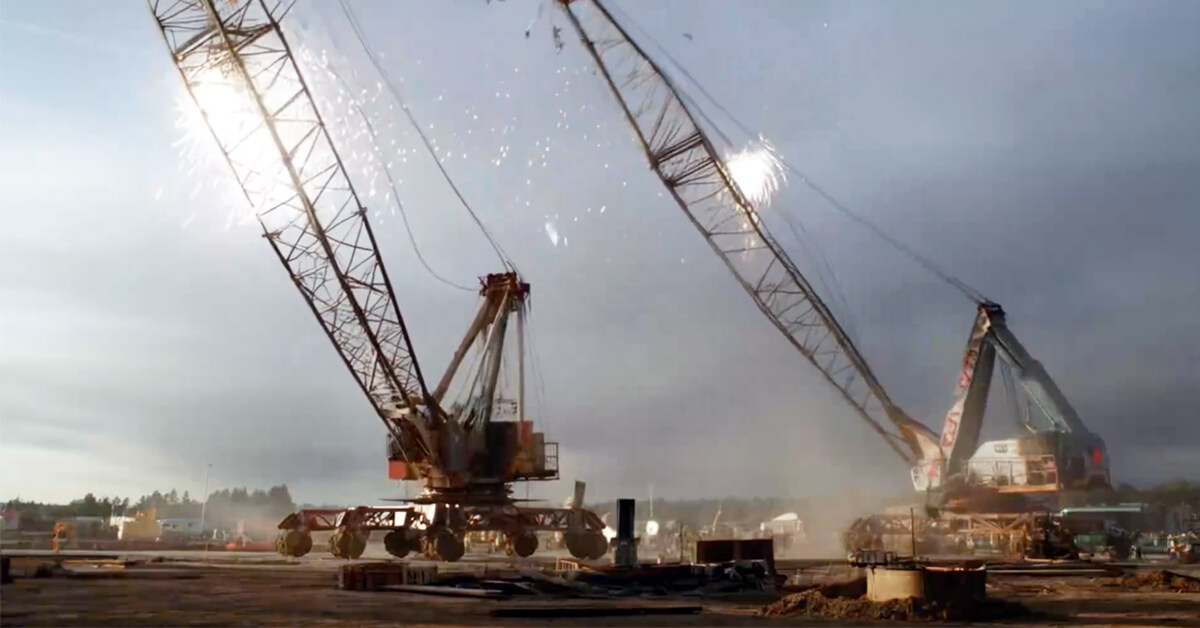
Real project example: On a project near an airport, crane height limits required ongoing attention. The team used live view to monitor crane activity and recordings to verify movements when questions came up later, creating a clear internal audit trail.
Operations takeaway: Compliance gets easier when verification is routine, not reactive.
3) Restricted-zone oversight without putting people in harm’s way
Real project example: A project had a hazardous bowl area with tensioned wires and restricted access. Cameras gave the team “eyes inside” the space so they could manage the zone remotely without unnecessary entry.
Operations takeaway: High-risk zones should be observable without requiring exposure.
4) “Open the site without being on the site” (daily remote monitoring)
Real project example: A Project Manager needed simple, daily visibility without complex workflows. They relied on live view for constant monitoring as a practical substitute for physical presence.
Operations takeaway: Adoption sticks when the workflow is effortless.
5) A safety tool that starts as “documentation” and becomes operational
Real project example: A team initially treated cameras like a marketing or documentation tool. As site constraints tightened, the platform shifted into a core operational safety and visibility system, especially for managing restricted areas.
Operations takeaway: The best safety tech earns its role by solving today’s problem, not by promising tomorrow’s.
6) Stopping a near-miss while it is still a near-miss
Real project example: A supervisor spotted a subcontractor cutting material without proper hand protection in live view. The risk was addressed immediately and the crew adjusted behavior once the footage made the gap clear.
Operations takeaway: Real-time visibility shortens the time between risk and correction.
7) End-of-day checks that prevent after-hours safety issues
Real project example: A site team built a habit: before leaving, someone checked the live view to confirm no workers were still inside the work zone.
Operations takeaway: Small routines can eliminate surprisingly serious failure modes.
8) Vehicle and equipment incidents with clear context
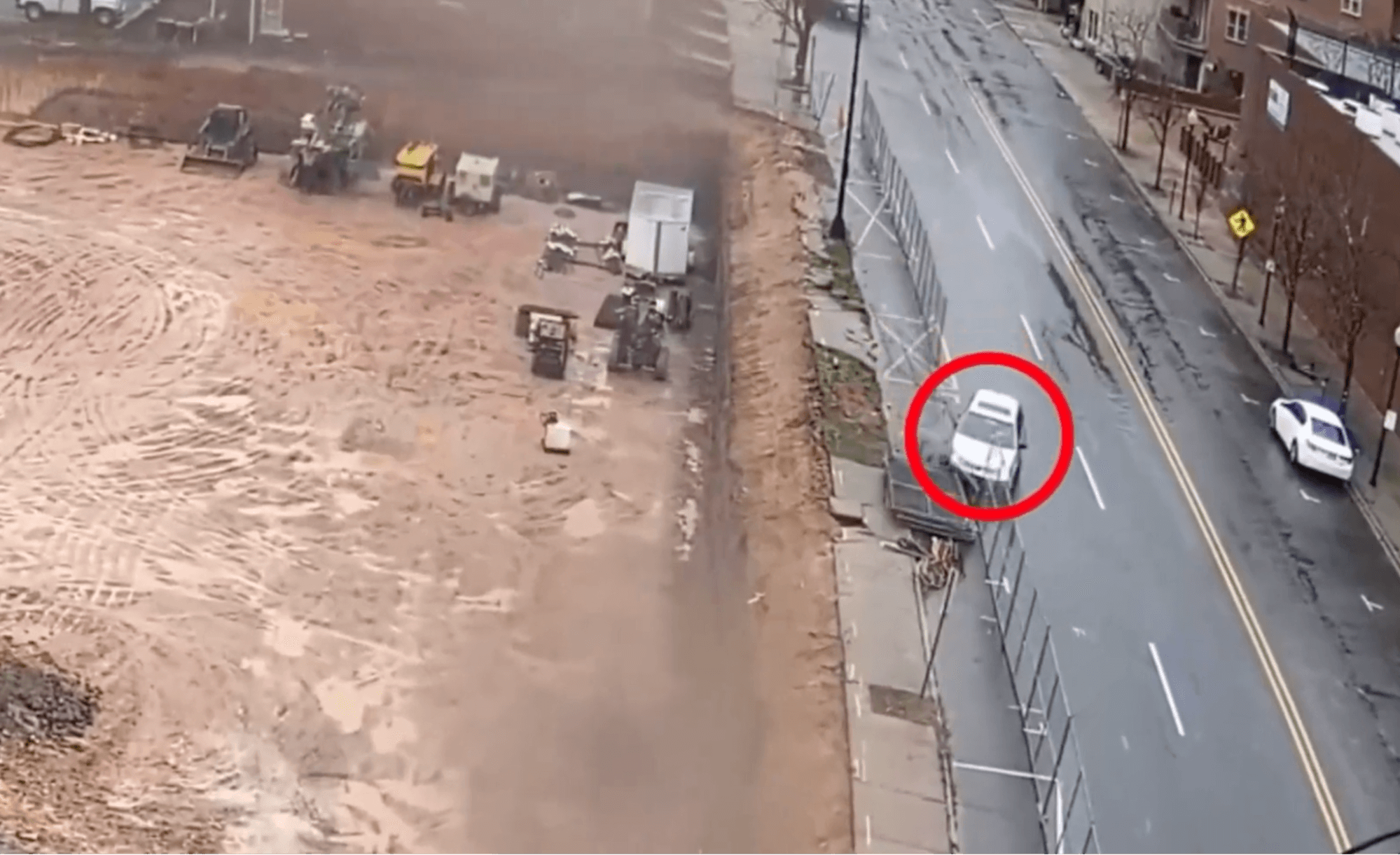
Real project example: A vehicle incident created conflicting witness statements. Footage from Evercam’s Gate Report helped the team confirm what happened so they could focus on practical follow-up and awareness.
Operations takeaway: Fewer debates means faster improvement.
How to improve jobsite safety with Evercam: a practical ops playbook
1) Map your risk zones first
Start with places where visibility changes decisions:
- public interface + perimeter
- delivery routes + traffic pinch points
- lifting zones + equipment travel paths
- restricted-access areas
- after-hours exposure points
2) Place cameras for decisions, not aesthetics
Optimize for:
- stable, wide coverage of entrances and boundaries
- clear sightlines into high-risk zones
- reference points that help verify conditions consistently
Evercam’s fixed-position cameras are designed for long-term capture from start to finish, including progress documentation and investigations. Learn more in our Installation Guide.
3) Set permissions and sharing rules early
Safety improves when the right people can see what they need without over-sharing:
- define who has day-to-day access
- establish how clips are shared internally
- keep review consistent so learning compounds
4) Use Timeline to connect safety moments across the whole job
Incidents and near-misses rarely live in isolation. Timeline helps teams review the project as a continuous record: a searchable timeline of your entire project, with no gaps.
5) Turn incidents into training that sticks
When you can create short internal “lesson” clips from real conditions, training becomes grounded in your site's reality, not generic examples. (From your later insight list #25)
Real ROI
Construction teams using Evercam report measurable time and cost savings across every project phase:
Site Visits Avoided Remote visibility eliminates unnecessary trips. Teams report 20–80% fewer site visits, saving 25+ hours per month and $2k+ per avoided trip. Suncode saved 80% in site visits. Shell Vito avoided 30+ trips during commissioning.
Schedule Recovery Video evidence accelerates critical path decisions. Projects recover 7–15 days on average when disputes are resolved with timestamped proof instead of conflicting accounts. ST Telemedia Philippines cut crane assembly time by 57%—from 7 days to 3 days.
Safety & Compliance Documentation prevents costly claims and speeds incident investigations. Teams save 25+ hours per incident review and avoid payouts ranging from €30k–€200k per project. Barnhill avoided a €31k workers comp claim. OHLA saved €200k in claims defense costs.
Why this matters for US builders in data centers, renewables and mission critical construction
These sectors demand strict safety controls, rapid coordination and clear visibility across distributed teams.
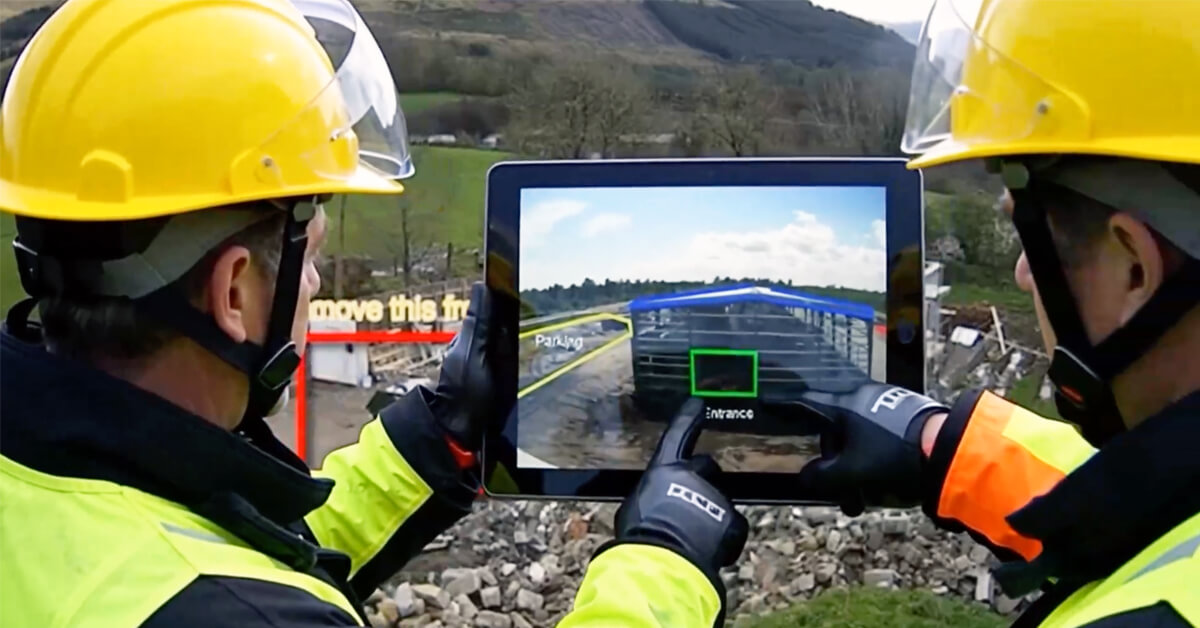
These projects move fast, carry heavy coordination overhead, and often operate under stricter controls. Fixed-position cameras and reality capture help safety leaders and PMs keep work legible across distance and time, especially when teams are distributed.
For a visibility-focused example in a complex US industrial context, Evercam’s Shell case study describes improved visibility across multiple locations and a reduction in site visits through visual documentation.
Next steps
If you are responsible for safety outcomes and operational flow, fixed-position cameras can give you a simpler way to verify conditions, document incidents and reduce avoidable risk.
- Explore Fixed-Position Cameras
- Read the Shell Case Study
- See Evercam’s Connectors