Manage Site Logistics with Site Evidence
Monitor deliveries, vehicle flow and material movement using time-stamped site records.
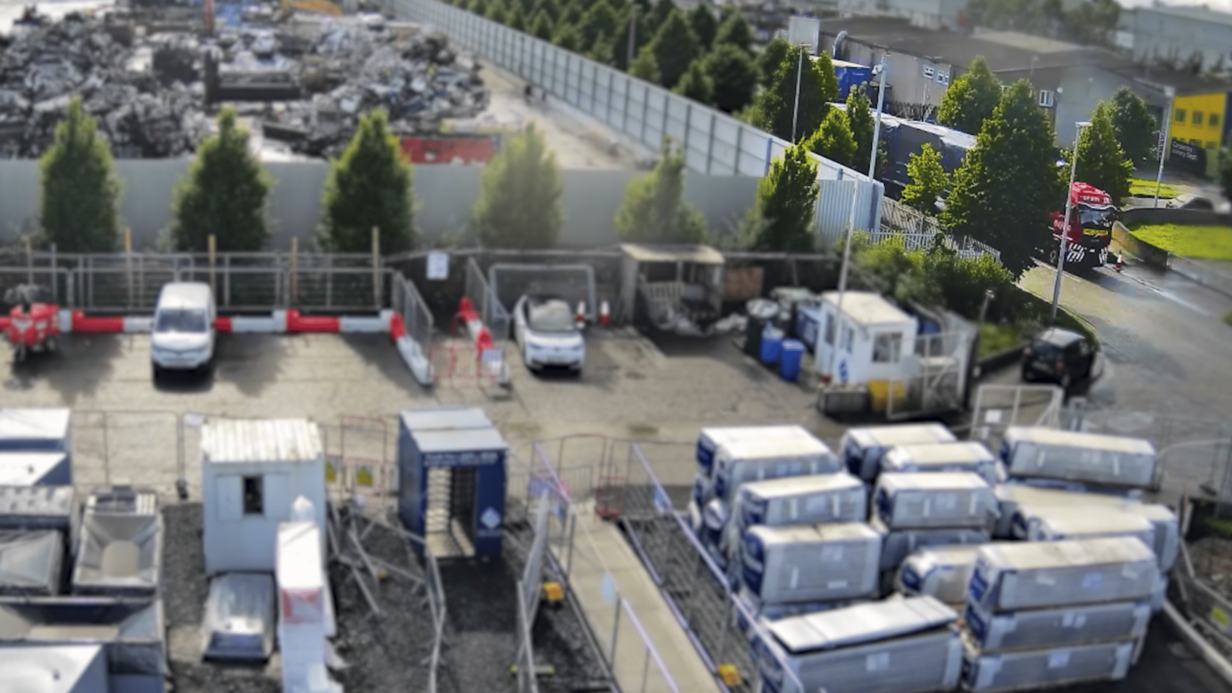
Better Logistics Starts With Clear Visibility
Why site logistics break down on real projects. Logistics requires visibility across the full site, not only at the entrance.
Unverified delivery times
No objective record of arrival or unloading.
Congestion at access points
Patterns are noticed too late.
Misaligned staging and workfronts
Deliveries do not match site phasing.
Disputes over time and quantities
Manual checks delay resolution.
Multi-View Reality Capture
Evercam combines several types of visual data into one unified view so logistics teams can review activity across the full site.
Fixed Cameras
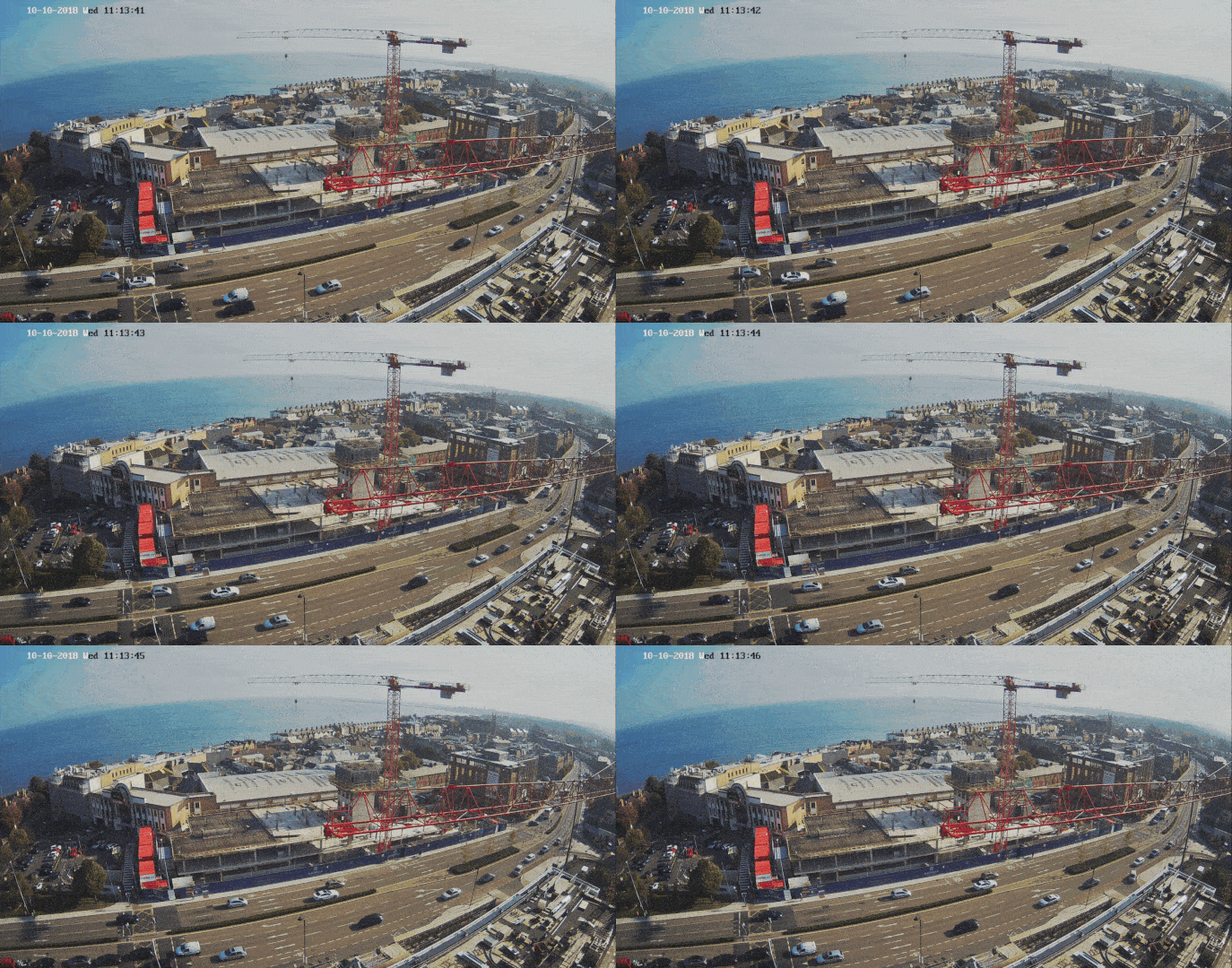
Continuous monitoring of entrances and major work zones.
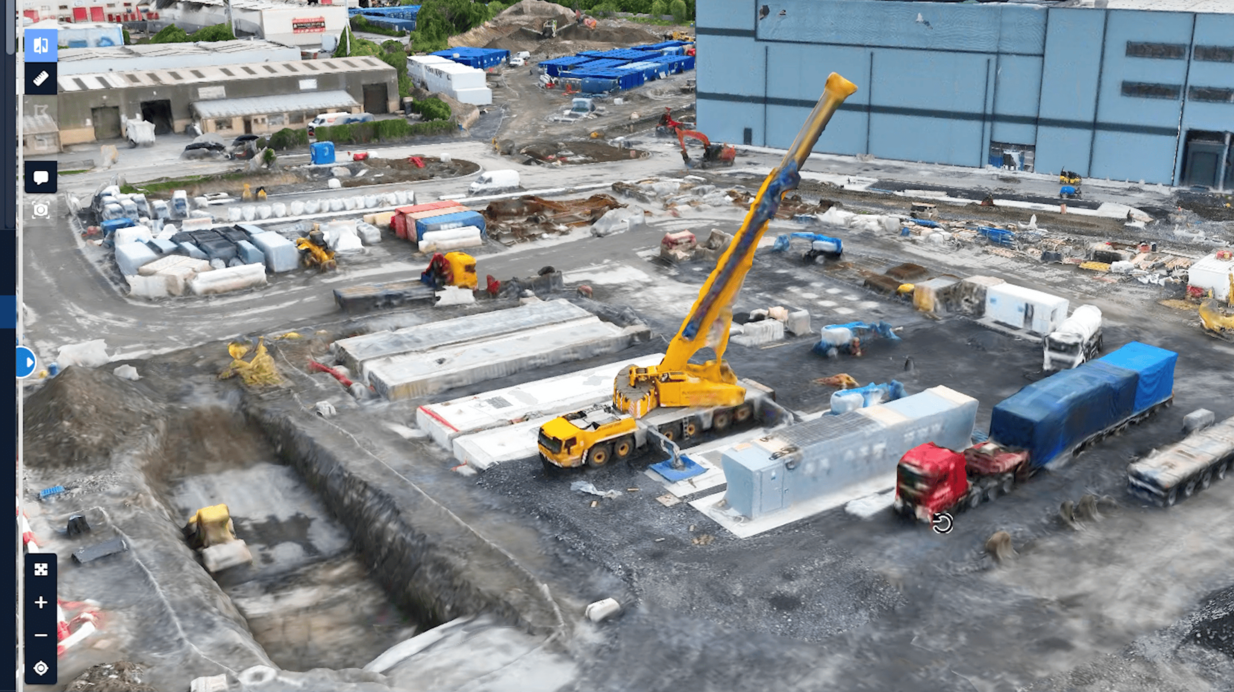
Drone View
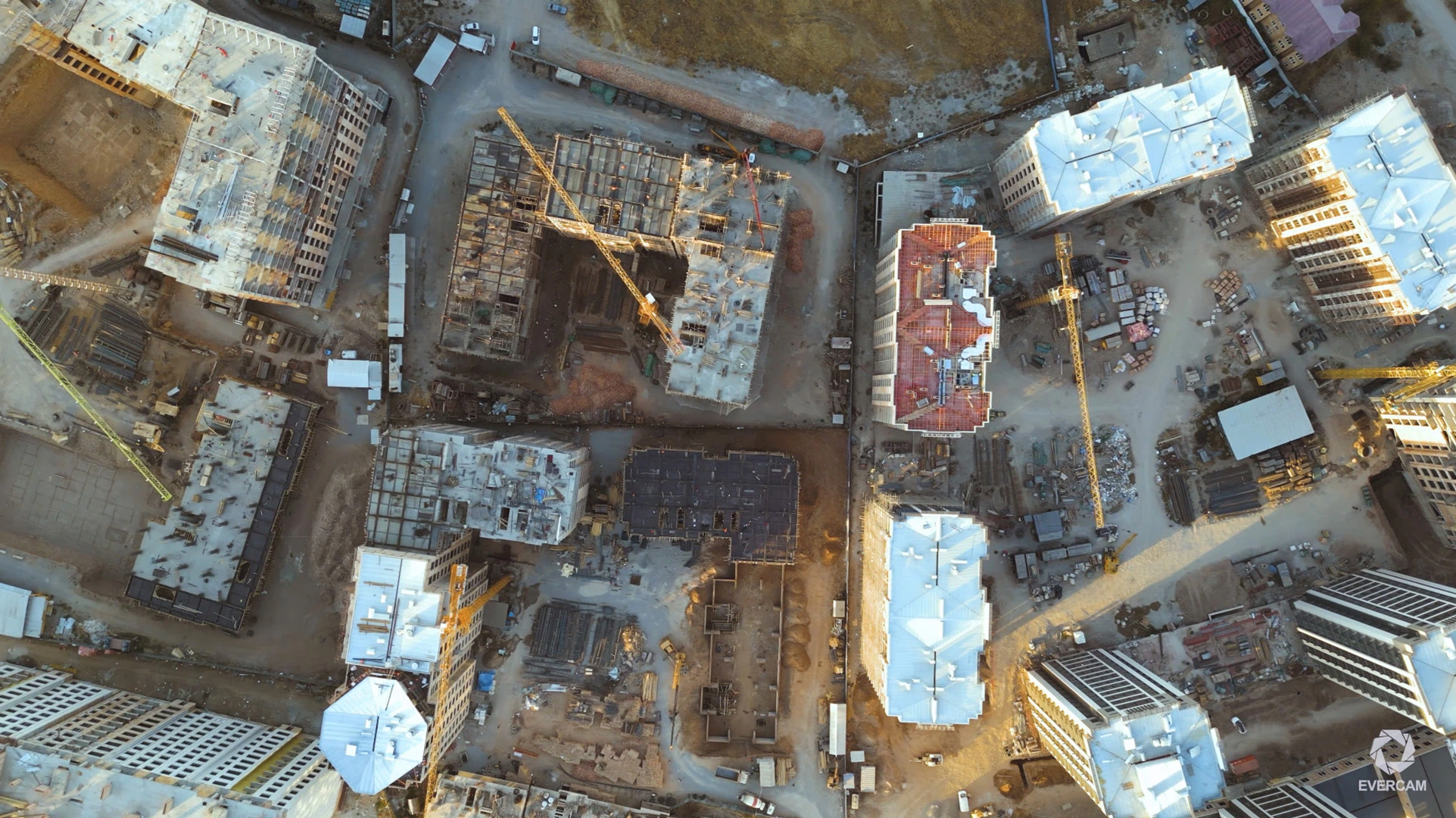
Orthomosaic maps for reviewing stockpiles and site layout.
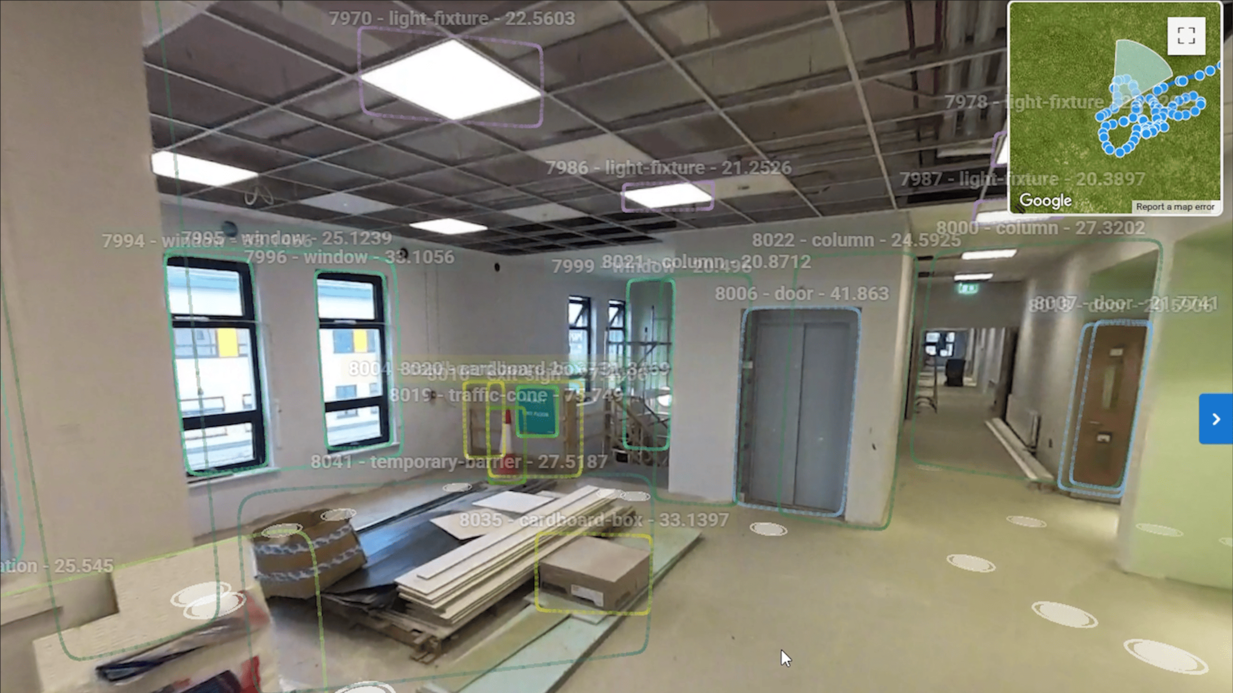
360° Walkthroughs
Interior visibility for logistics planning and progress tracking.
Core Logistics Use Cases
Automated Documentation
Each delivery includes:
Teams schedule automated image updates and comparisons to keep stakeholders informed.
- Send scheduled progress snapshots
- Share updates with project teams
- Deliver reports to email or project platforms
- Maintain a consistent visual record of activity
Updates can be scheduled to provide a consistent visual record for project reporting.
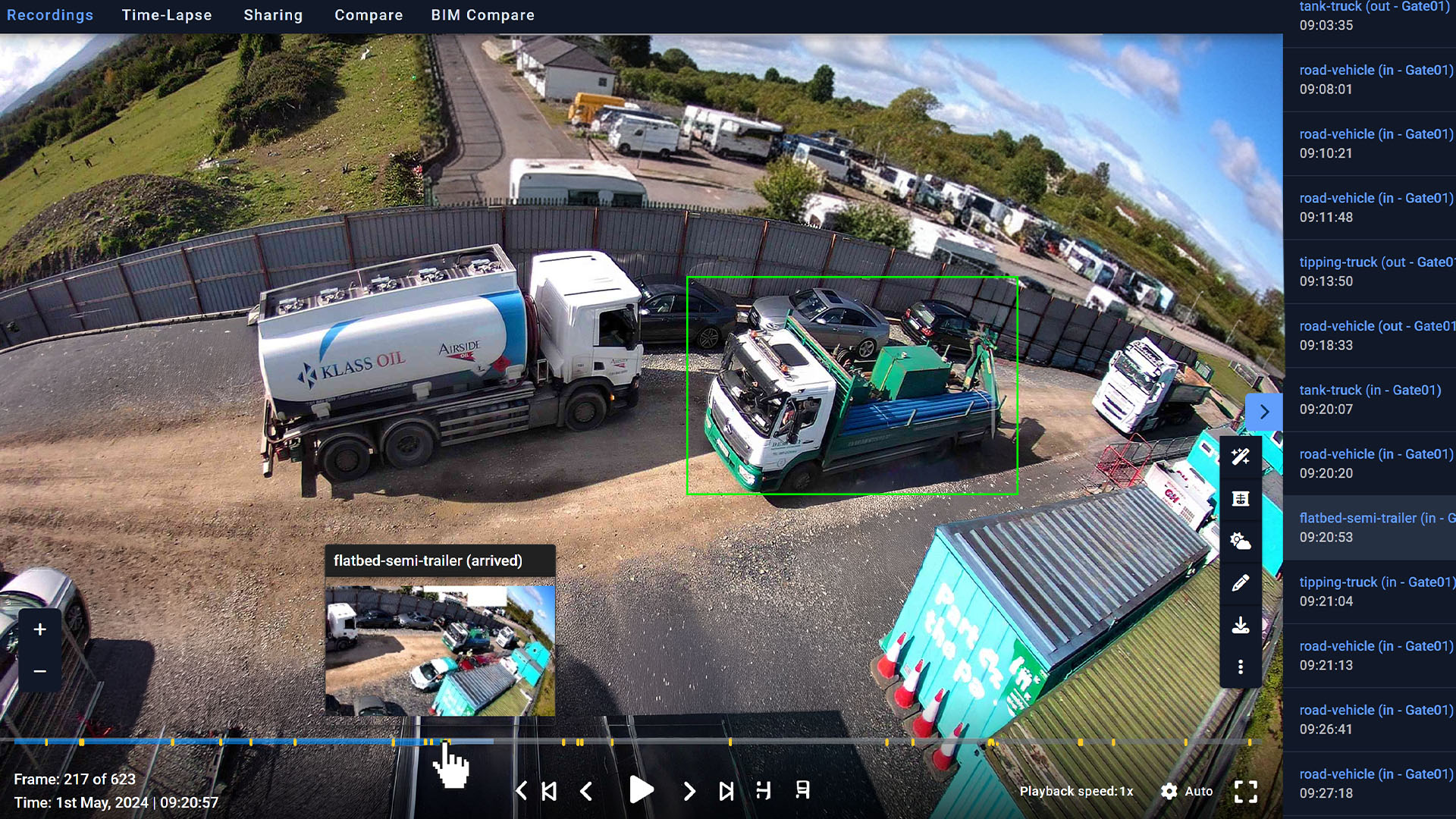
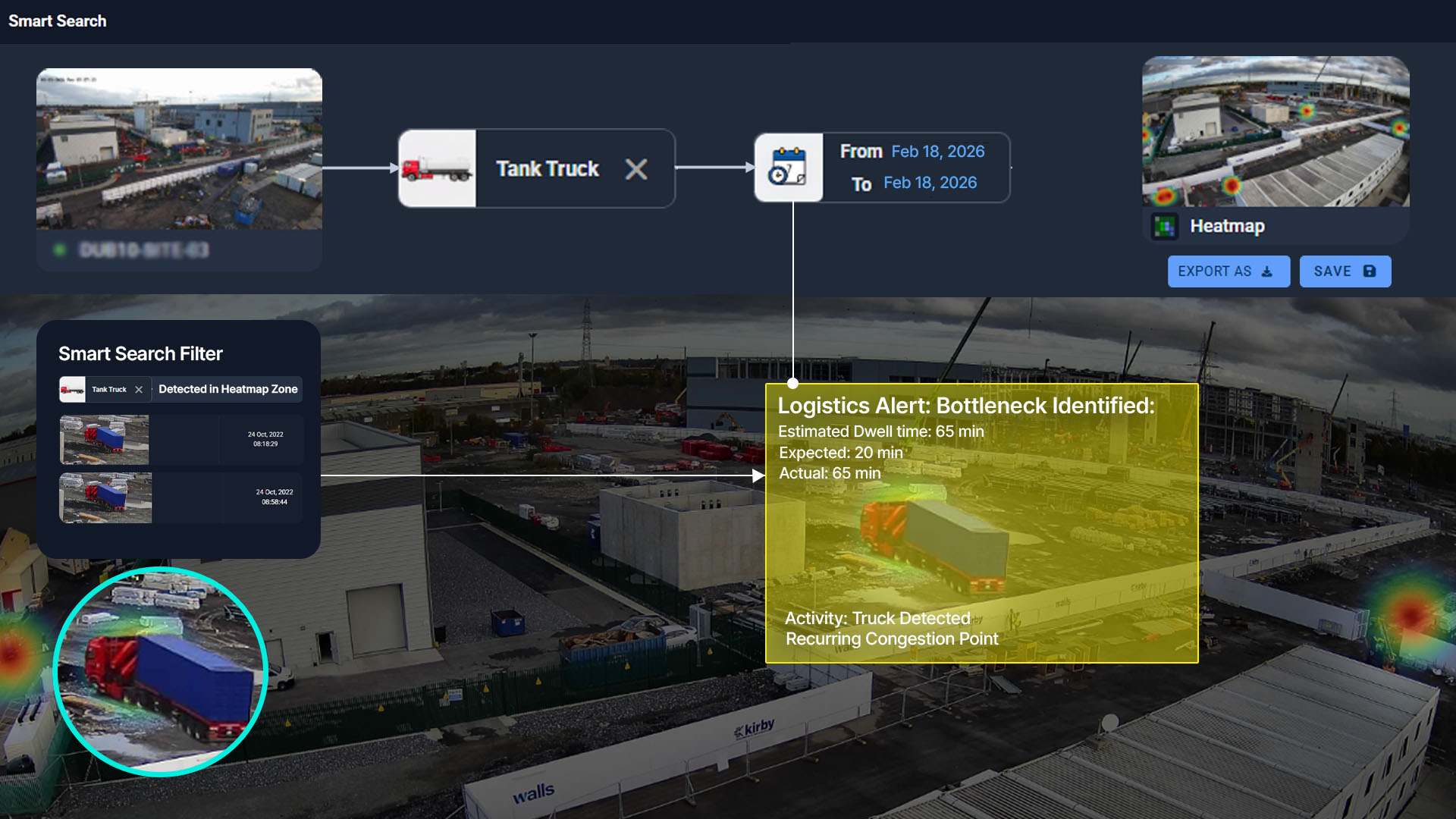
Site Flow and Congestion Monitoring
Use cases include:
Logistics activity extends beyond the entrance.
Teams use live and recorded site views to:
- Identify recurring bottlenecks
- Review vehicle dwell time
- Compare planned sequencing with actual movement
- Monitor circulation routes across active work zones
Patterns become visible over time through recorded footage.
Planning and Layout Alignment
Use cases include:
Logistics plans shift as workfronts change.
Aerial and ground context allows teams to:
- Review staging zones and delivery routes
- Track stockpile movement
- Compare layout changes week by week
- Align logistics activity with construction phases
Site conditions can be reviewed against logistics plans to check alignment.
.jpg)
.jpg)
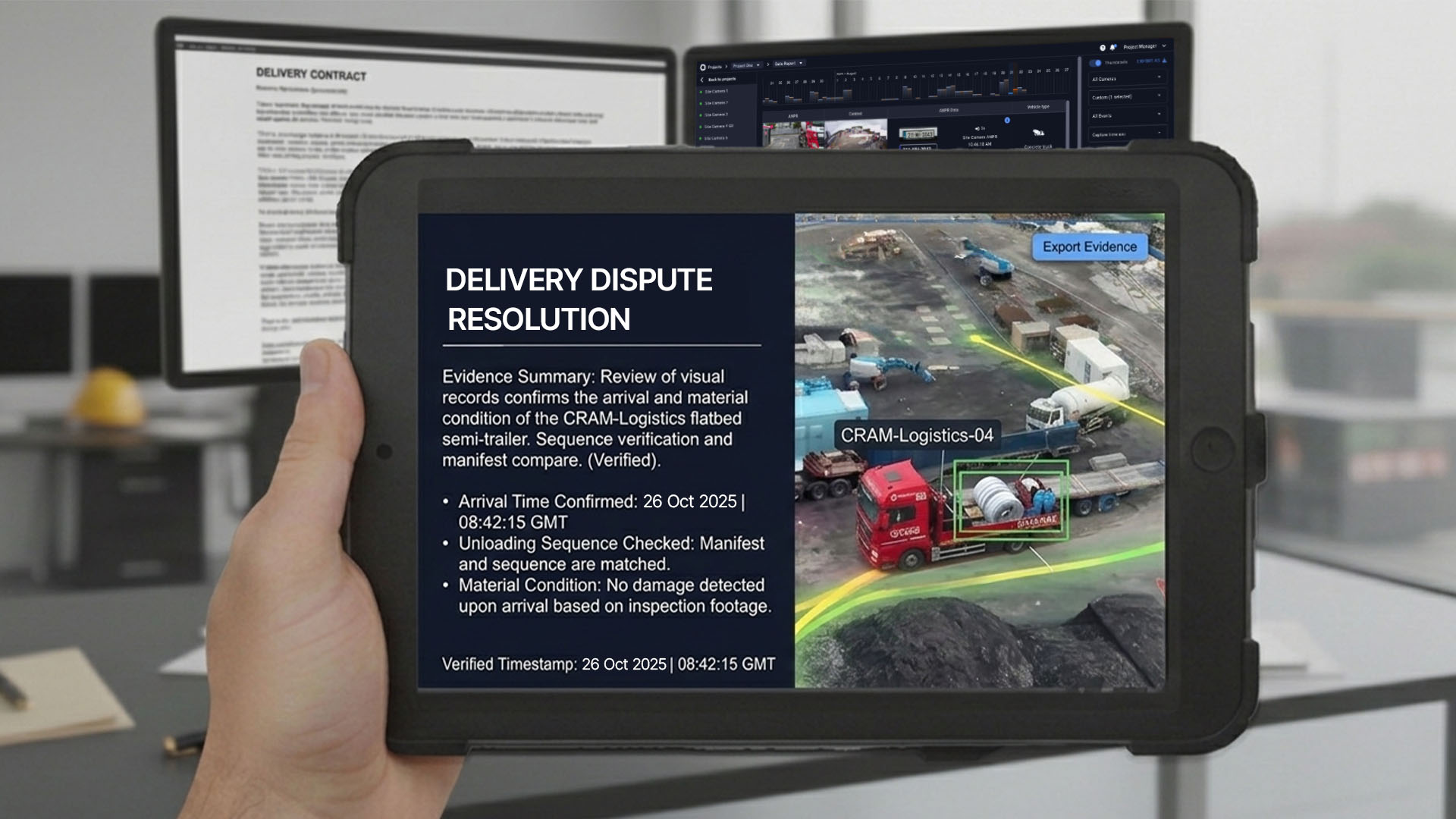
Claims and Dispute Review
Use cases include:
Questions often arise around delivery timing, quantities or duration on site.
Time-stamped records allow teams to:
- Review material condition upon arrival
- Compare before and after unloading
- Verify duration of plant or subcontractor presence
- Share specific clips for commercial review
Evidence is linked directly to the relevant moment in the project record.

Customer-Reported Outcomes
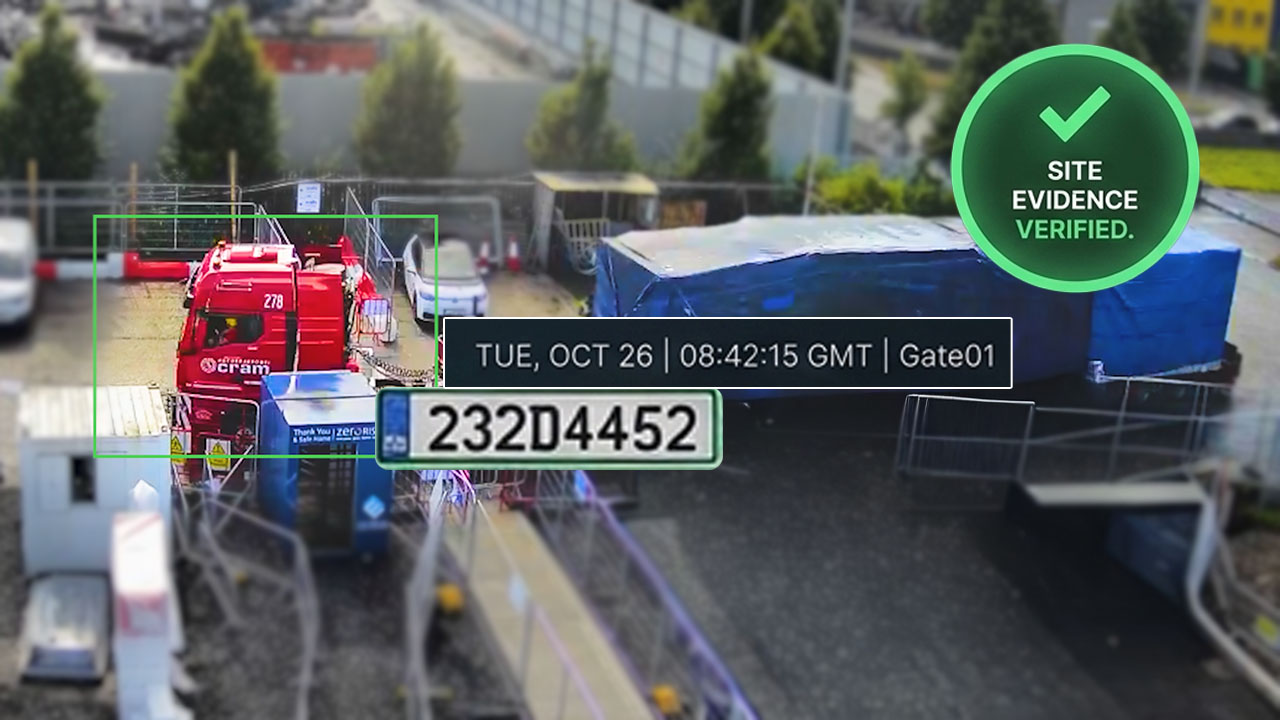
Delivery Verification
Recorded arrivals and departures allow teams to confirm when deliveries enter and leave the site.
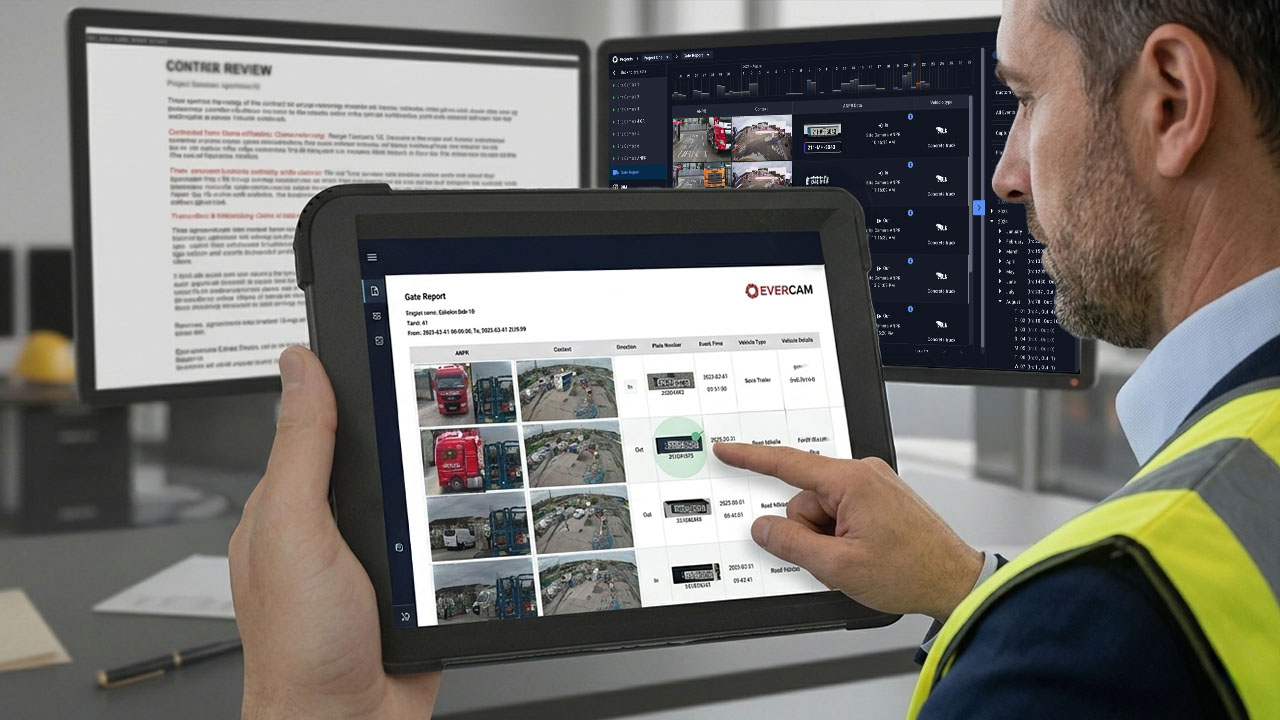
Audit Documentation
Recorded site activity provides a reliable reference for audits and project documentation.

Work Zone Coordination
Site visibility helps teams monitor staging areas, vehicle flow and activity across work zones.
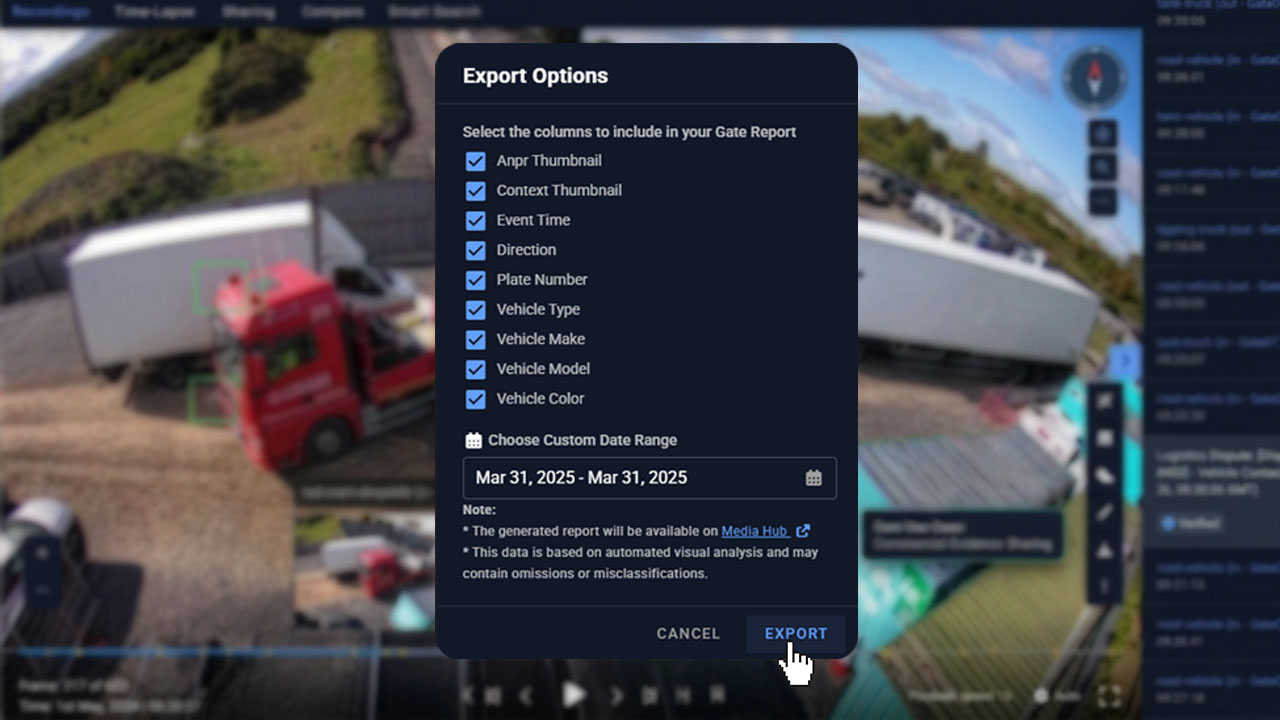
Commercial Evidence
Time-stamped records support review of deliveries, unloading activity and time on site.
Related Blog Articles
Improve Your Inspections with Evercam
Traditional jobsite inspections don't keep up with the speed and complexity of modern construction. Teams that still rely on handwritten notes, scattered photos, and incomplete documentation expose themselves to missed details, delays, and costly rework. Evercam's construction camera software eliminates those gaps by providing a reliable, visual inspection system. Our AI-powered jobsite cameras, drone tools, and 360-degree walkthroughs help teams inspect, record, and resolve issues with speed and confidence. With Evercam, you can see your project in a unified screen informed by three crucial feeds: camera, drone, and 360. Combined with AI insights, your team gains the tools to inspect, document, and resolve issues quickly and accurately.
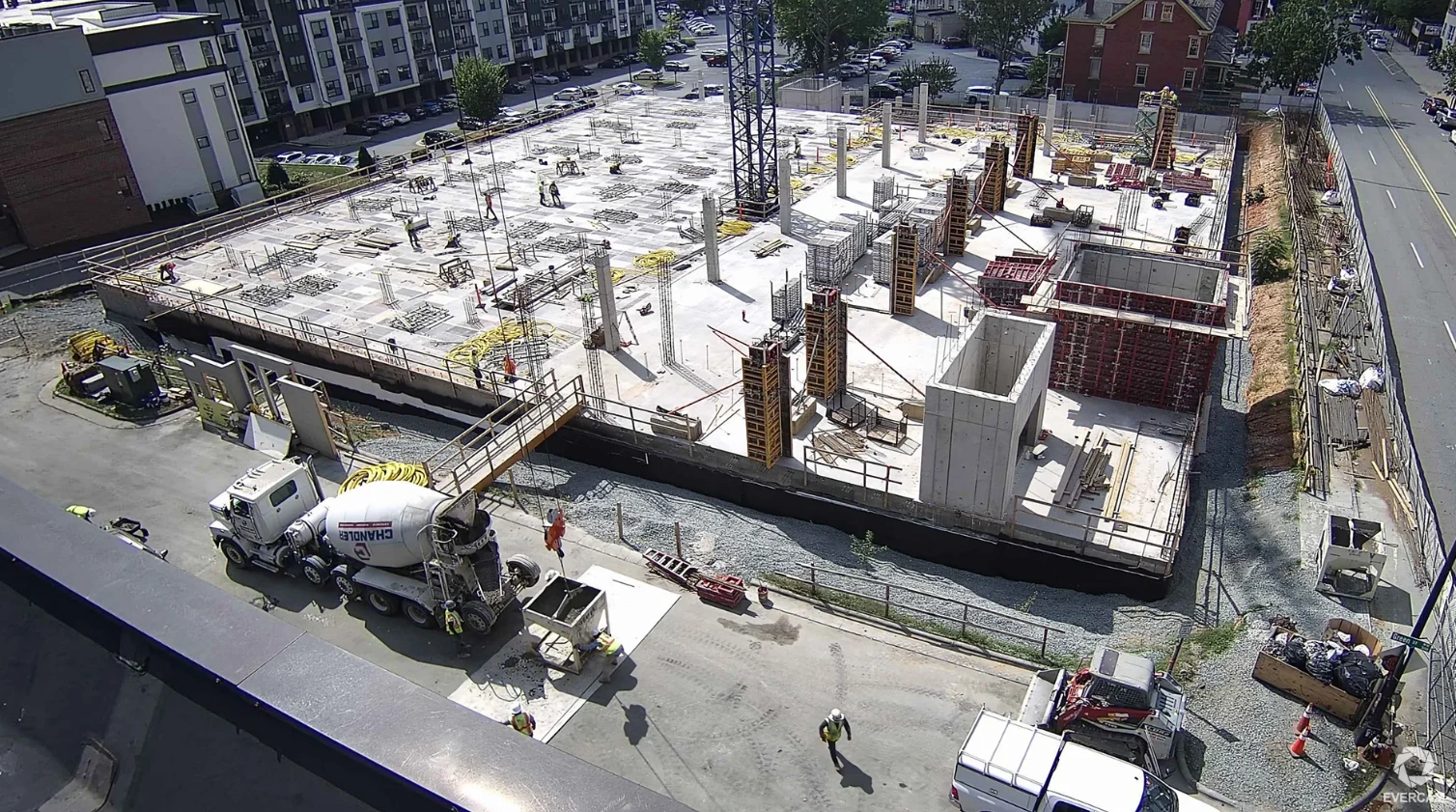
Fixed-Position, Fixed Truth: Construction Cameras that Work Hard for You
Fixed position and PTZ construction cameras provide real-time site visibility, and they also serve as the foundation of a smarter inspection workflow. Evercam's AI-powered construction cameras continuously capture and archive high-resolution footage, enabling teams to validate progress, confirm deliveries, and document key activities. For example, Glenveagh Homes used Evercam to streamline remote quality checks:
The Evercam system proved useful for checking work progress remotely and helped to catch a couple of errors early in the process. We see this as a service we can utilise in future.
Raymond O'Reilly, Glenveagh Homes
Having a visual site record means you can reference specific events, like a concrete pour or a safety incident, without relying on memory. Everything is timestamped, objective, and accessible.
360° Walkthroughs: Thorough Documentation in a Single Pass
With 360 cameras, your scheduled construction walkthroughs aren�t merely observational. 360 walks allow you to capture every detail of an entire floor in one go. Instead of relying on disconnected site visits and incomplete photo logs, you create a full, navigable visual archive of the project.
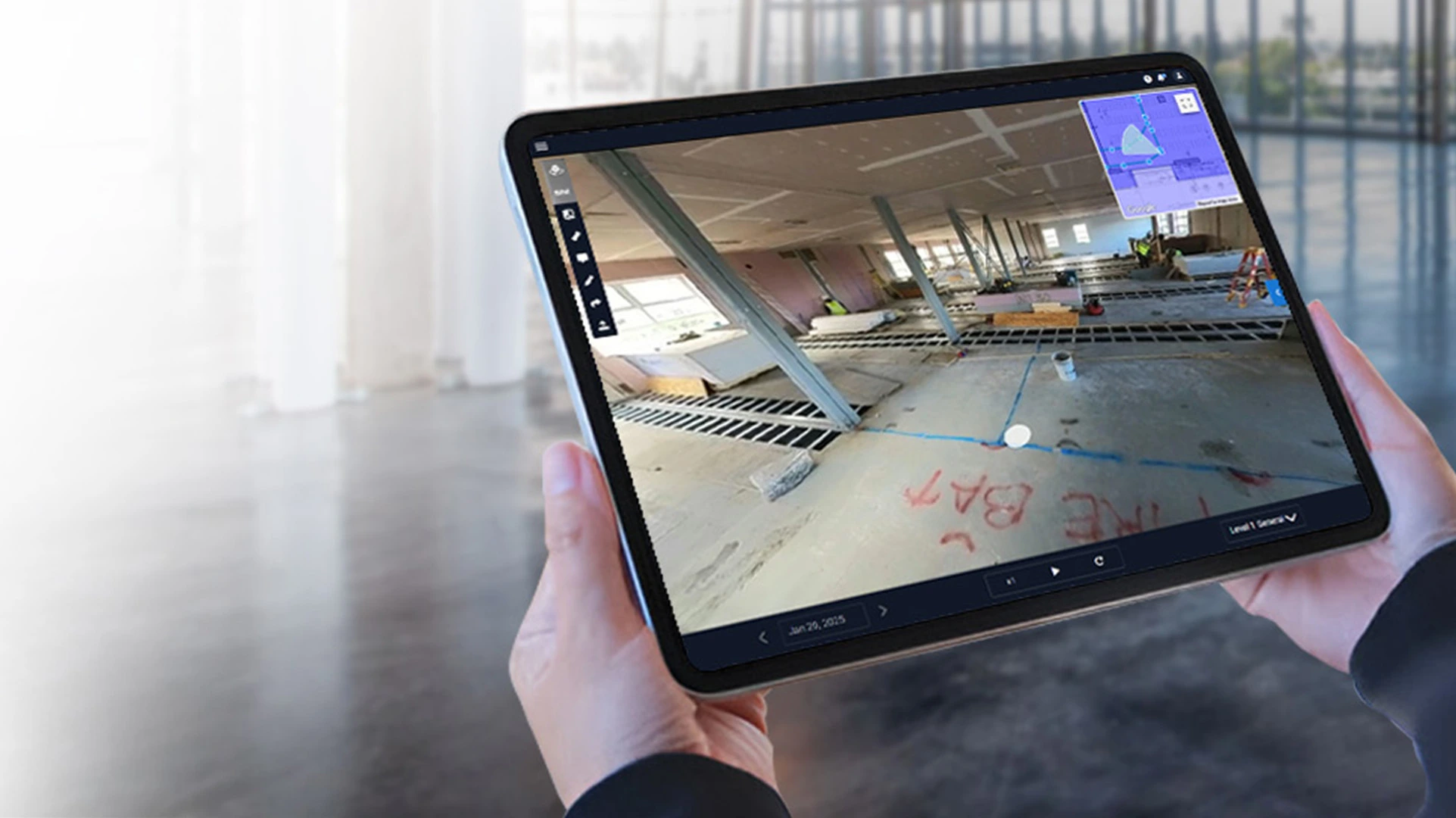
Once you're back at your desk, you can:
- Add tags and comments
- Flag issues for subcontractors or designers
- Compare walkthroughs weekly to track progress
This approach saves time and improves coordination, especially across teams working remotely. As Sarah Bradley from McAvoy noted: The Compare Tool (in 360) was easy to use, and we found it useful for creating progress GIFs for social media. When internal QA and external reporting are handled from the same visual interface, you reduce miscommunication and eliminate repeat site visits.
Drone Inspections with Real Context
Some areas like rooftops, towers, or expansive concrete pours are hard to inspect from ground level. Evercam's drone solution integrates directly into your project dashboard, allowing you to capture detailed aerial imagery for hard-to-reach zones.
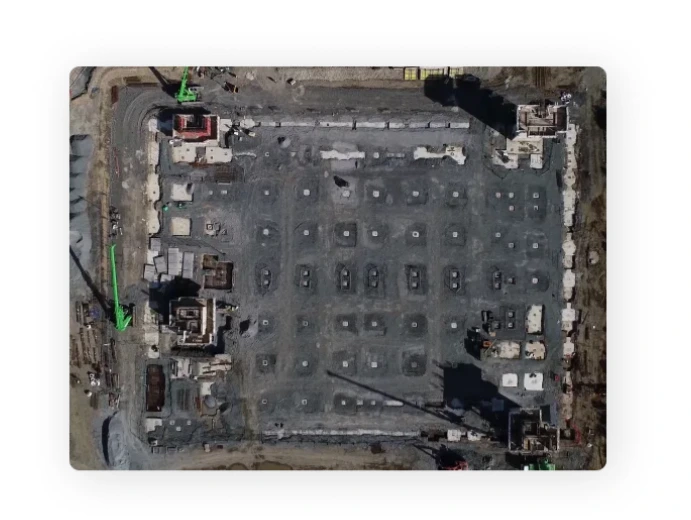
With BIM overlays and date-matched comparisons, Drone gives your team insights that are both accurate and measurable. You don't need separate tools or additional file management. All drone footage is accessible alongside your fixed and 360 footage, simplifying your construction site documentation software workflow.
Centralized Visual Documentation and Collaboration
One of Evercam's biggest strengths is unifying your visual data. Footage from drones, fixed cameras, and walkthroughs can all be:
- Annotated
- Shared
- Reviewed for QA, billing, or compliance
Evercam is your construction documentation system, inspection log, and progress verification tool — all in one. For example, reviewing a slab pour through your 360 camera allows you to identify issues like exposed rebar, tag them, and notify the site manager before they become a rework problem.
Why Better Inspections Save Time and Money
Rework, disputes, and compliance issues are some of the biggest drains on project budgets. A strong construction inspection process helps prevent these problems before they begin. With Evercam:
- You inspect remotely, saving hours on travel
- You reduce errors by checking work as it's completed
- You stay audit-ready with shareable, time-stamped footage
- You create alignment with visual records, not just reports
Start Improving Your Inspection Workflow Today
Whether you're managing a high-rise, data centre, or infrastructure project, Evercam gives you the tools to track construction progress, improve collaboration, and deliver more confidently.Explore Evercam Features
State of Site Logistics - From Planning to Execution
How Construction Tech is Advancing Site Logistics
The construction industry is undergoing a radical transformation. This shift is being driven by technological advancements, new planning strategies, and the complex nature of modern site logistics. Javier Glatt, once an athlete and now a construction industry trailblazer, shared insights on this evolution on the BIM Heroes podcast. Together with an engineer from the esteemed Frank Gehry's architectural firm, Glatt co-founded a startup. CmBuilder, a tool designed to cater to the pressing need for advanced construction technologies in today's world.
Bridging Site Logistics Gaps with Technology
Historically, construction site logistics relied heavily on 2D planning and the age-old practice of physical site visits. Urban settings, with their spatial limitations and administrative red tapes like permits, only amplified the challenges. Today, with advanced technologies like 3D visualisation, site logistics is not just about managing space but also about strategizing and presenting intricate construction sequences in an intuitive manner. Tools like the cmBuilder have made it possible to simulate these logistics in an immersive 3D environment. This not only facilitates visualisation of potential challenges but also provides insights into foundational techniques.

The utilisation of 3D technology has become pivotal. It provides a holistic view of projects, allowing for the anticipation of potential issues. For instance, using 3D visualization, one can decide on the feasibility of tree removal, potentially averting hasty decisions. Drones offer the advantage of quick site inspection, replacing the need for physical visits. This drone-acquired data can be merged with design plans to validate construction processes, eliminating much of the guesswork. Quick aerial inspections have negated the need for time-consuming physical visits. When this data is paired with design blueprints, the accuracy of construction processes is heightened. Clients are now actively seeking out general contractors who use these technological tools. Digital simulations, which were previously a luxury afforded only by high-budget projects, are becoming industry standard. These simulations are instrumental in streamlining planning, ensuring seamless coordination, and promoting smoother construction progress management.
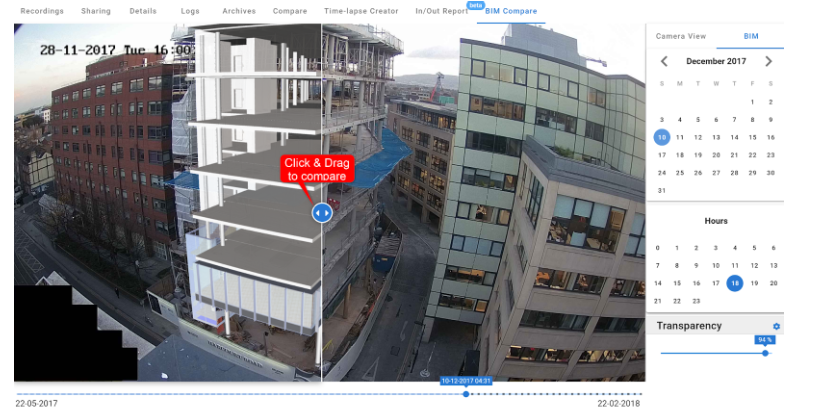
One cannot stress enough the interconnected nature of today's construction tools. They enable a holistic grasp of construction projects, taking into account the interaction between the building and its immediate environment. Such comprehensive planning recently aided John Paul Construction in Ireland in spotting a potential crane clash - a misstep that traditional 2D planning would have overlooked. Urban constructions, however, introduce their own set of intricacies. The overlapping of numerous elements, from cranes to power lines, necessitates meticulous planning. This is where advanced technology steps in, offering precise data indispensable in today's environment of rigorous safety and noise regulations.
Embracing Reality Capture
The advent of reality capture technologies, including drones, seismic imagery, and 360-degree imaging, has been monumental. These tools present a real-time, granular view of construction sites, paving the way for meticulous planning and on-the-fly adjustments. There's also a discernible shift from static planning to a more dynamic, real-time approach. By integrating data from various sources, projects remain on track, and potential risks are minimised. Some progressive construction firms are now overlaying simulations with real-time site camera feeds, allowing for a direct comparison between planned trajectories and on-ground progress. Emerging tech trends like machine learning and computer vision are making inroads into construction. Cameras equipped with these capabilities offer real-time monitoring of site activities, ensuring accurate tracking of materials. However, the unpredictable nature of construction challenges means that human expertise, with its inherent problem-solving skills, remains irreplaceable.
A pressing challenge in the industry is understanding what lies beneath. Technologies such as X-ray scanning are being utilised more than ever, providing insights into subsurface conditions. Such preemptive measures help in circumventing unforeseen challenges, leading to time and cost savings. The realm of subsurface utility engineering (SUE) is another focal point. With urban development in mind, tools like ground-penetrating radars are being employed to map underground utilities with precision. Integrating this data with city planning frameworks is imperative. This synergy, especially with the rise of digital twins, promises unparalleled insights into underground utilities, enhancing planning accuracy.
Machine Learning and Computer Vision in Construction
The industry is gradually recognizing the power of technologies like machine learning and computer vision in managing construction processes. For instance, cameras equipped with machine learning capabilities can recognize and track different objects on site. These cameras can detect the arrival of specific materials at the construction site and update the database in real-time. Such advanced technologies have already been implemented in industries like manufacturing. For instance, Tesla uses cameras that overlay CAD models against physical parts to analyse deviations from the manufacturing tolerances. Today's urban landscapes demand smarter infrastructures. There's a growing emphasis on detailed 3D models for equipment during the planning stage. Accurate simulations, as opposed to generic representations, optimise both space and resource allocations on sites. Equipment manufacturers stand to benefit, as their products are portrayed with realism in these digital platforms, adhering to operational and safety benchmarks. In this tech-driven evolution, software solutions are at the forefront. They enhance planning by minimising redundancies and facilitating swift resource adjustments in response to fluctuating construction demands. The commitment to innovation is evident. With user-centric product development at its heart, the industry is witnessing solutions that truly align with its needs.

Furthermore, the educational aspect of the sector is gaining prominence. Continuous learning initiatives are bridging the gap between traditional practices and modern, tech-driven methodologies. These efforts cater to a wide audience, from construction professionals to software developers, ensuring a feedback loop that perpetually refines the industry's tools and techniques. Conclusively, the construction sector's future is intertwined with technology. With a focus on adaptability, collaboration, and incessant learning, the industry is steering towards a horizon where efficiency and innovation coalesce seamlessly
- This blog is an extension of the BIM Heroes Podcast hosted by Cody Whitelock, a virtual construction manager at Barnhill Contracting in the US along with Evercam Construction Cameras. Tune in for more informative and interesting conversations on construction, digitization and technology adoption in the industry
Spotify: http://evr.cm/JzUl
Apple: http://evr.cm/ZzPn
YouTube: http://evr.cm/BzTT

4 Ways Evercam's Gate Report Drives Efficiency in Construction Logistics
In the fast-paced world of construction, efficient management of logistics is paramount to the timely and cost-effective completion of projects. Delays, budget overruns, and productivity gaps can all be attributed to suboptimal logistics practices.
Challenges in logistics, such as inconsistent tracking, fragmented communication, and delivery delays, can be addressed by using reality capture through the Gate Report feature. This feature provides real-time visibility, comprehensive analytics and an accurate record of vehicles in and out of the site, streamlining the collaboration capabilities of construction professionals.
By harnessing this technology and intelligent data analytics, project managers can pinpoint bottlenecks, streamline workflows, optimize resource allocation, to make informed decisions and enhance operational efficiency.

In a construction project, efficient logistics management can make or break the project. Delays, cost overruns, and productivity gaps often stem from logistical inefficiencies. Evercam's Gate Report feature is designed to address these challenges by providing a project-centric approach to logistics.
It acknowledges that gates serve as a critical checkpoint in a project's efficient operation, allowing for precise monitoring and control of material and equipment flow. As such Evercam Gate Report is installed at each gate controlling and recording the entry and exit of each vehicle.
Data is combined to deliver a complete visual record of all the traffic to/from the site. The generated report allows project stakeholders to make informed decisions and manage their projects more efficiently.
Whether a project involves two gates for entry and exit or more complex logistics, the Gate Report's project-centric perspective enables a holistic and efficient approach to project management.
To offer users precise control over their data and insights, Evercam has implemented three levels of filters within the Gate Report feature that users can benefit from:
- Filtering by Camera: Users can select specific cameras within a project, especially useful when multiple cameras are deployed at various entry and exit points.
- Filtering by Vehicle Type: Recognizing the diverse range of vehicles involved in construction projects, the Gate Report allows users to filter data by vehicle type, ensuring they focus on the relevant information.
- Filtering by Events: Users can refine their analysis by filtering specific events, such as Entry or Exit events, tailoring their insights to meet specific project needs.

Furthermore, it fosters improved collaboration and communication among project stakeholders through a centralized platform for real-time information sharing and progress updates.
Embracing innovative solutions like the Gate Report holds the key to unlocking enhanced efficiency, substantial cost savings, and heightened productivity in construction projects, ensuring successful outcomes within a predefined budget and schedule constraints.
The Gate Report feature offers a comprehensive solution to address various challenges in construction logistics such as;
1. Accurate, Timestamped Visual Record of Trucks Unloading Materials:
The Gate Report provides an accurate and timestamped visual record of trucks unloading materials, such as steel. This feature helps in identifying instances where trucks take excessively long to unload materials, causing delays. With clear visual evidence, project managers can address these delays promptly and optimize the unloading process for increased efficiency.
2. Inadequate Allocation of Crane Time:
By utilizing the Gate Report, project managers can track and analyze the crane usage at the construction site. This data allows for better allocation of crane time by the main contractor, reducing inefficiencies and ensuring that cranes are optimally utilized to meet project timelines and requirements.
3. Data on Concrete Truck Movements for Logistics Planning:
The Gate Report offers insights into the number of concrete trucks entering and exiting the construction site per hour. This data aids in effective logistics planning, especially during large concrete pours. Project stakeholders can use this information to plan and coordinate the arrival and departure of concrete trucks, optimizing the concrete pouring process and minimizing delays.
4. Adherence to Traffic Plans for Excavation:
The Gate Report helps in adhering to traffic plans by providing accurate data on the number of trucks allowed per day for excavation. Project stakeholders can monitor and control truck movements based on these plans, ensuring compliance and minimizing the need for time and labor-consuming manual monitoring.
5. Preventing Overcharging by Subcontractors:
The Gate Report assists in preventing overcharging by providing a transparent record of the loads removed, particularly for contaminated soil. This visual record helps in verifying the actual load removed and ensures that subcontractors are not overcharging for the work, leading to potential cost savings for the construction project.
6. Optimizing Vehicle Capacity During Waste Removal:
Utilizing the Evercam Gate Report, project managers can monitor and analyze the utilization of vehicle capacity during waste removal. This data allows for better planning and coordination, ensuring optimal use of vehicle capacity and reducing unnecessary costs associated with underutilization.
7. Accurate Tracking of Concrete Truck On-Site Time:
The Gate Report offers accurate tracking of on-site time for concrete trucks. This digital record replaces paper-based systems, minimizing errors and ensuring precise tracking. Accurate tracking helps in preventing higher charges based on inaccurate or manually recorded on-site time, contributing to cost management and billing accuracy.
Types of Vehicles Identified
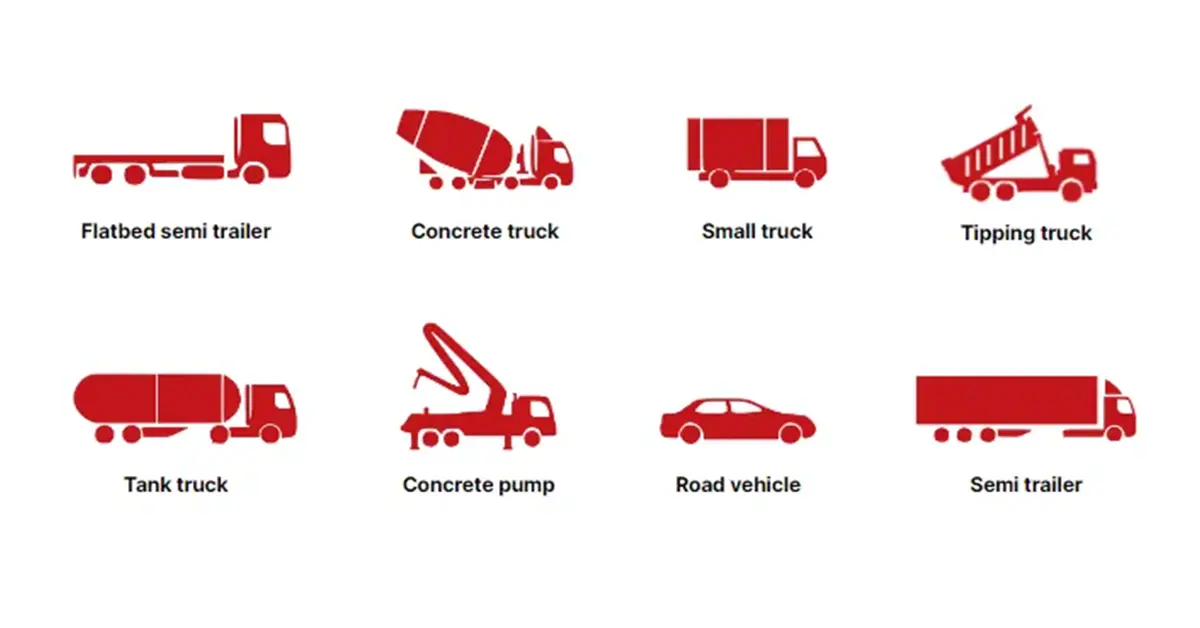
The Gate Report feature accurately tracks and analyses the activities of diverse vehicle type s from small trucks to flatbed semi-trailers, concrete trucks to tipping trucks, tank trucks to concrete pumps, and road vehicles.
Material and Equipment Tracking
One of the most significant challenges in construction logistics is tracking the movement of materials and equipment. With Evercam's Gate Report, this process becomes more efficient and reliable. By integrating high-resolution cameras at the entry and exit points of construction sites, the Gate Report feature captures real-time images of vehicles entering and leaving the site.

The Evercam Gate Report feature automatically generates detailed reports, including timestamps. This information provides construction managers and logistics teams with accurate data on material and equipment deliveries, enabling them to track inventory, detect delays, and address potential bottlenecks promptly.
By streamlining material and equipment tracking, Evercam Gate Report helps prevent inventory shortages, reduce downtime, and improve overall project efficiency.

Payment Verification Tool
The Gate Report serves as an invaluable tool for dispute avoidance on sites. While it is not intended to be the sole method of approving payments to subcontractors, it proves to be highly effective in confirming and cross-referencing data from other sources.
In cases where there is a discrepancy between gate dockets and sub-contractor dockets, the Gate Report can be instrumental in identifying missing or over-counted deliveries. By leveraging the comprehensive tracking and analytics capabilities of the Gate Report, construction professionals can resolve payment disputes and ensure accurate payment processing.

Concrete Pour Operations
The Evercam Gate Report proves to be an indispensable tool during concrete pours, focusing on enhancing efficiency in unloading times and avoiding additional fees associated with waiting for concrete trucks. By using the Gate Report, construction professionals can accurately determine the requirements for space as the site layout changes, ensuring optimal placement and allocation of resources.
This enables better coordination of concrete deliveries and unloading processes, resulting in improved productivity and cost savings. The Gate Report's real-time visibility and comprehensive analytics enable project managers to streamline logistics operations and optimize the utilization of resources during concrete pours.
Case Studies
- Project A: The contractor for this project had a traffic plan approved by the City, allowing for 60 trucks per day. They utilized the Gate Report to ensure compliance with this limit while maximizing the number of loads delivered. This helped them balance regulatory requirements with productivity.
- Project B: Facing delays and charges from a supplier due to unloading issues on-site, the project team turned to Evercam. By analyzing Gate Report data, they identified that their crane time was not allocated efficiently for lifting from that specific supplier. Armed with this insight, they could rectify the problem promptly, ultimately saving time and costs.
These organizations found the Gate Report to be a vefaluable tool for monitoring project timelines. By quickly checking when the first loads arrived and when the last loads departed, they could ensure that their projects were staying on track and completed within the specified timeframes.
Construction logistics can be challenging, but with the right resources and tools, a successful outcome is achievable. Evercam's Gate Report feature provides an all-encompassing solution to address the issues of material tracking, administration, and stakeholder communication.
By providing detailed data on material and equipment movement, this tool empowers construction professionals to streamline operations and maximize efficiency. With Evercam's Gate Report, construction experts gain access to an advanced level of effectiveness, and adherence to budget constraints. Reach out to us today for a demo and unlock the full potential of efficient project management.
5 Ways to Use the Time-Lapse Creator
Looking for a way to give your construction project communications a boost? Time-Lapse Creator is here to help! This feature within the platform enables users to create unlimited time-lapse videos instantly.
Uniquely, you can capture the construction process from start to finish and share it with your team in a whole new way. Time-lapse videos are the perfect way to show progress on a project, and with Time-Lapse Creator, creating them is quick and easy.
5 ways that you can use the time-lapse creator
1. Keep Clients/ Investors Engagement
Time-lapse videos are great for showing how much things change over time. For investors, this is one aspect of the construction project that is important to them. Furthermore, with the time-lapse creator, the project team are able to quickly come up with a time-lapse video that shows how much progress has been made and update the client on where progress is at, as and when required.
As a matter of fact, often it saves them time for travelling to remote locations while giving them a clear idea of what the status of a particular project is at a given point in time. It serves as a great project tracking tool creating enhanced engagement for clients.
2. Pitch for new business
Pitch presentations are a way for sales and marketing teams to generate more business. The time-lapse creator saves time on the preparation of tenders and pitches because a time-lapse video can be generated quickly to convey the company's capacity, capability, and competence to a prospective client in a matter of minutes.
Visual representation like this may be a game changer in terms of gaining new business, where gaining the client's trust is critical to closing the deal.
3. Health & Safety Regulation
Adherence to health and safety standards is critical in any construction project. The project team can use the time-lapse creator to not only help regulate operations on the construction site but also to improve occupational safety implementation.
It can be used as a guideline when developing interventions to ensure that the same incident does not occur again. Furthermore, this data can also assist site managers in developing a well-designed training program.
4. Internal communications
Larger construction companies typically have multiple construction projects underway at any given time. The time-lapse creator assists in driving employee engagement and internal communications C-level employees can have visibility to various projects from one place.
5. Progress Review and bidding for new projects
With a construction camera installed at the job site, projects can be monitored remotely. The time-lapse creator quickly provides data that can be used to communicate progress for weekly meetings and presentations.
The project team is kept up to speed with the progress and can quickly tell if they are on schedule. Construction companies can also use the time-lapse creator to showcase their portfolio when it comes to tendering for new projects.
If you're looking for an easy way to document construction projects or want a time-lapse of your next event, Evercam's time-lapse creator is the perfect solution. Our intuitive software makes it easy to create beautiful time-lapses in minutes, and our construction cameras are built tough to withstand any environment.
Contact us today to book a demo and find out more about how Evercam can help you capture your project from start to finish.
FAQs
Practical information about how Evercam works, what it does, and how teams use it.
1. How does Evercam improve site logistics?
Evercam records and organises time-stamped visual data across entrances, yards and workfronts. Teams use it to verify deliveries, monitor vehicle flow and review logistics activity against site conditions.
2. Can Evercam verify delivery times and duration on site?
Yes. Recorded site activity allows teams to confirm arrival and departure times, review unloading sequences and check time spent on site.
3. Does Evercam support logistics planning across the full site?
Yes. Combined ground and aerial visibility allows teams to review staging zones, circulation routes and layout changes as work progresses.
4. Can Evercam be used to review disputes or commercial claims?
Yes. Time-stamped records support objective review of delivery timing, unloading sequence and duration on site. Clips can be shared with commercial or management teams when required.
Built for Complex Construction Logistics
Supporting delivery control and site coordination across active projects.