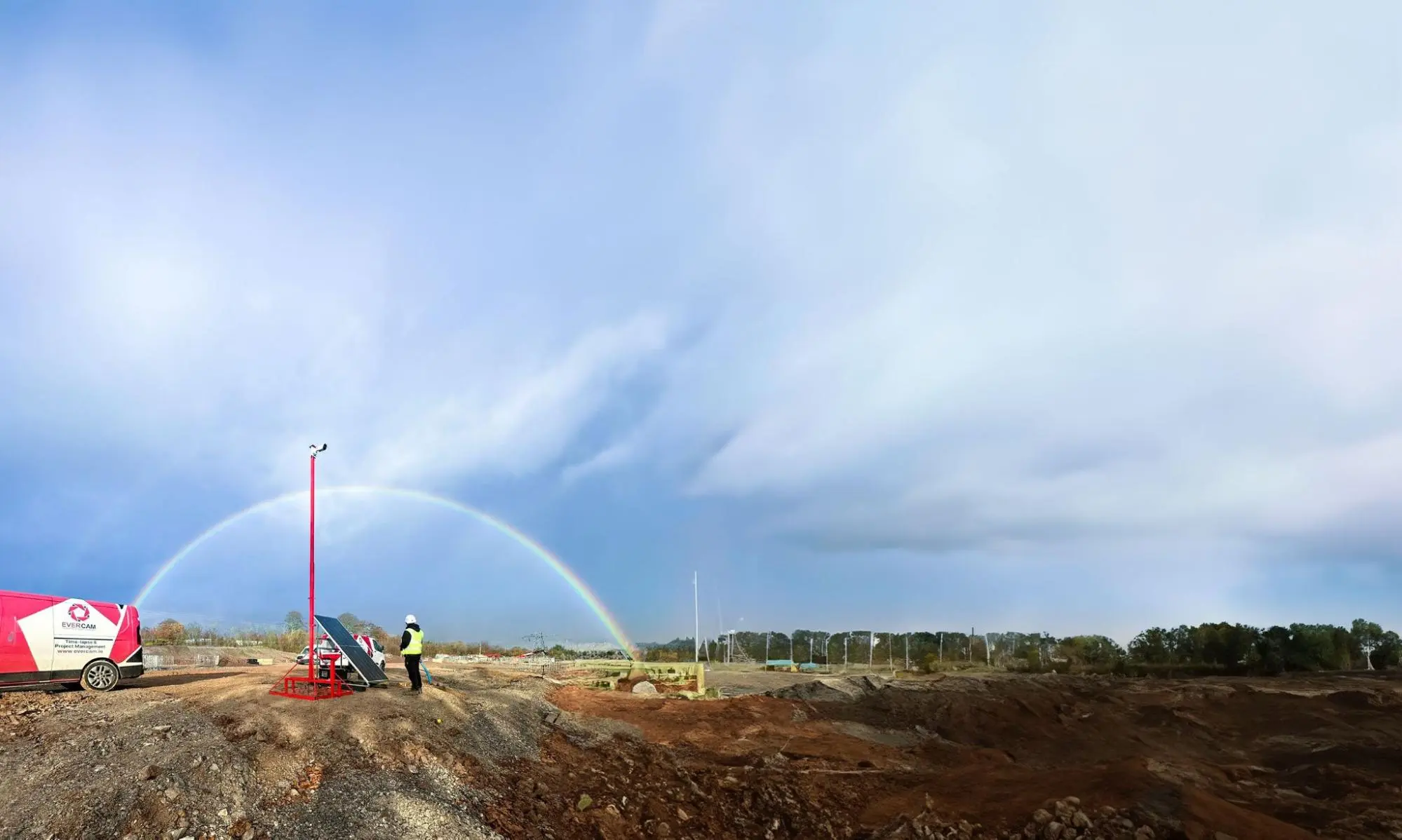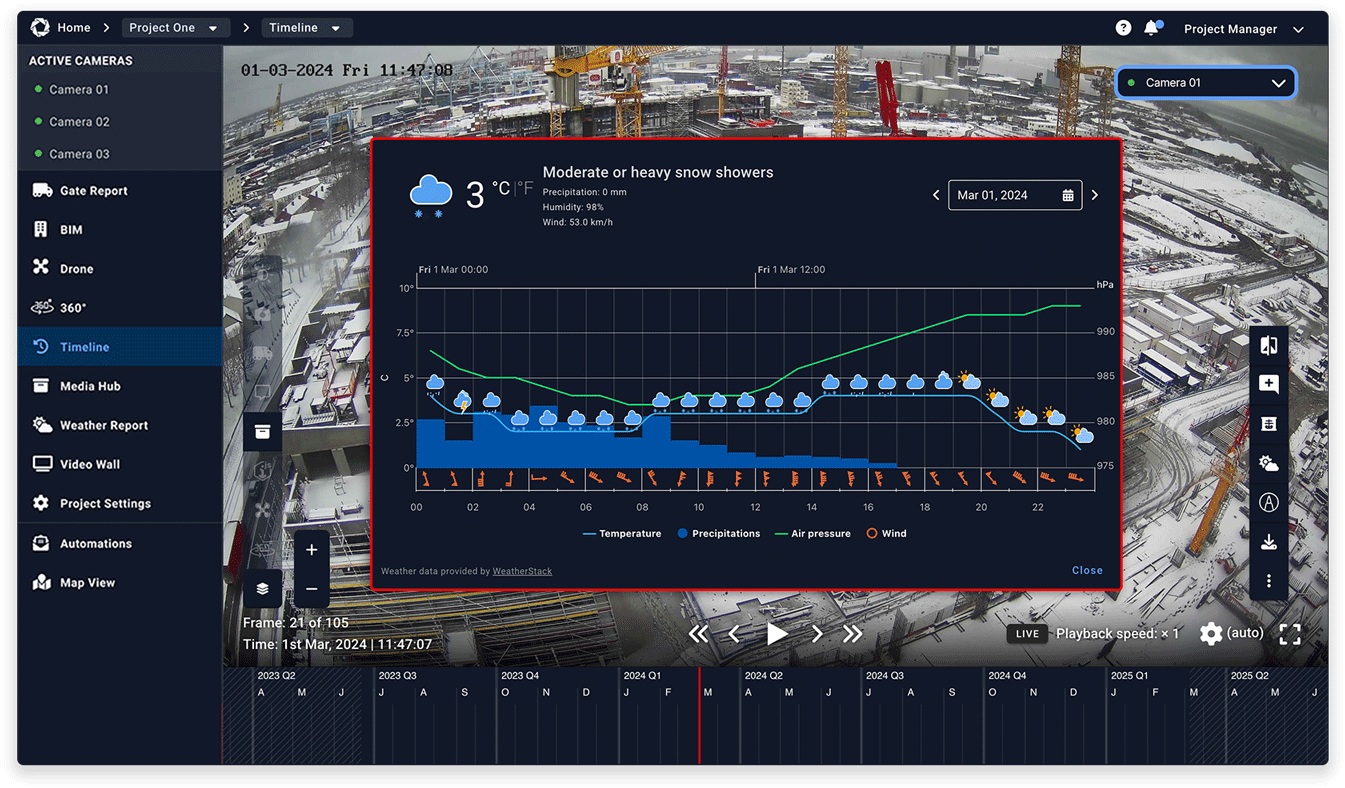

Weather affects construction every day. Shifting conditions, such as sudden rain, rising temperatures, or high winds, can delay work, impact safety, and increase costs. To stay on schedule, project teams need reliable weather visibility built into their daily workflow. Relying on general forecasts isn’t enough when critical decisions are made on-site and in real time.
A 2022 study by Dodge Construction Network found that 70% of construction managers in Europe experienced weather-related delays, and 39% faced financial penalties as a result. Globally, weather accounts for over 45% of construction project delays.
Even light rain (just 4 mm over 12 hours) can reduce productivity by up to 40%. Wind, heat, or freezing conditions can force equipment shutdowns and pose serious safety concerns. Cold stress also presents a major risk, with ice, snow, and low temperatures contributing to over 40% of weather-related workplace fatalities.
High winds can halt crane operations entirely, and in some cases, gusts over 21 mph have been linked to crane collapses. These risks underline the need for accurate, site-specific weather monitoring to support safer decision-making on site, as evidenced when Evercam’s Weather Tool allowed John Sisk & Son to monitor wind speeds and conditions, ensuring safe crane operations and reducing potential hazards on their Glass Bottle project. In the words of Chris O’Reilly, Sisk’s Health and Safety Manager:
“Checking wind speeds and weather conditions daily helps us plan crane operations and prevent accidents.”
What Accurate Weather Data Looks Like
To make informed decisions, teams need access to site-specific conditions, not general forecasts. The key data points include:
- Temperature
- Rainfall
- Humidity
- Wind speed and direction
- Air pressure
- General outlook (today and next day)
- Historical weather records
This data should be accessible to all stakeholders (site managers, subcontractors, and head office teams) to ensure everyone is working from the same source of truth.
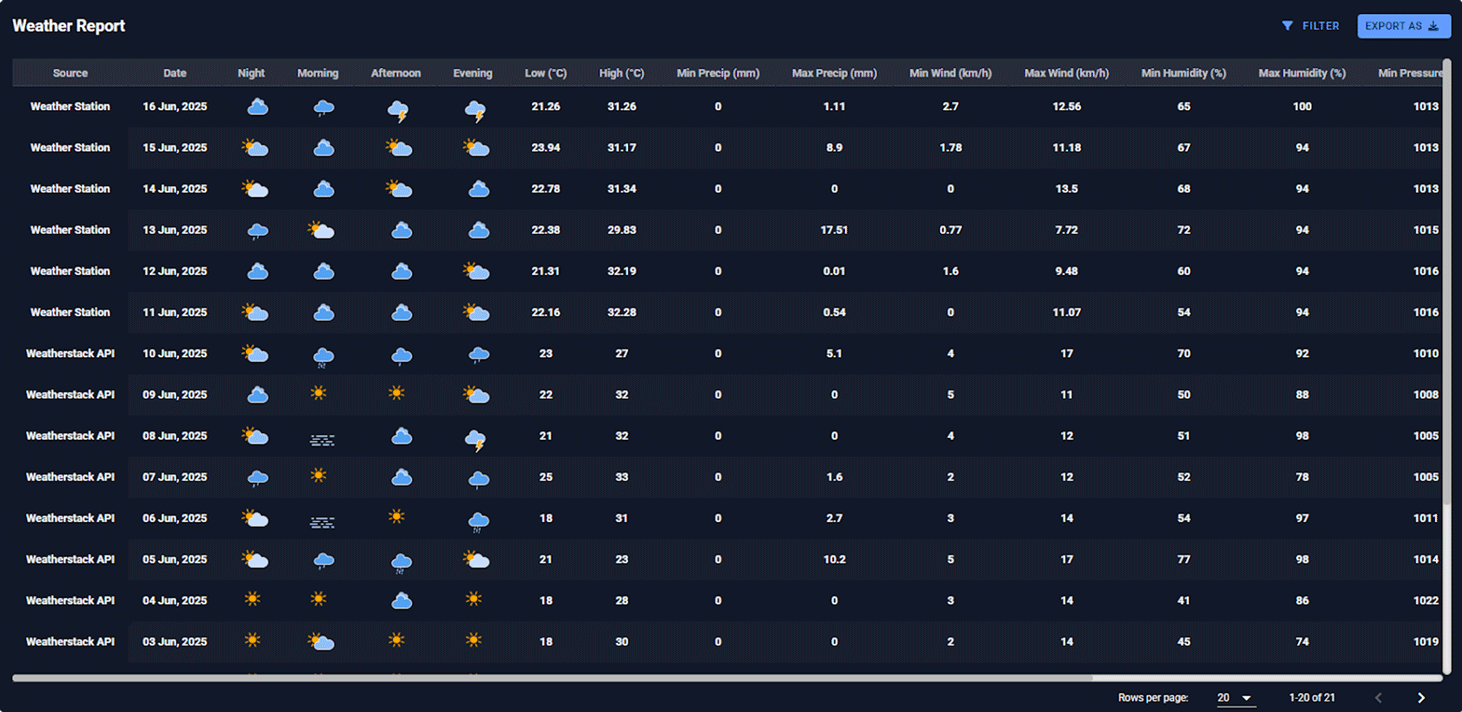
Our Weather Tool delivers this information using real-time and historical weather data, directly linked to each project. This gives teams accurate, project-specific insights they can rely on for planning and execution. Forecasts help teams prepare for upcoming conditions, while historical weather logs support retrospective reporting and project analysis.
Need even more accuracy? You can integrate your on-site weather station using our PWS Station ID and XWeather Keys setup. This pushes local data into your Weather Tool and Weather Reports, giving you a clearer view of what’s happening and what’s coming, essential for managing weather-sensitive tasks like concrete work, crane scheduling, or site access.
Weather Reports provide a logged, visual record of site conditions tied to each day’s activity, adding operational value for compliance, claims, and post-project reviews.
Why Combine Construction Cameras with Weather Data
Construction cameras already help teams monitor progress, resolve disputes, and keep stakeholders informed. Using all our platform features, including weather data, they become even more valuable.
- Use construction documentation to solve disputes and delays caused by weather
- Track equipment downtime related to site conditions
- Support site planning using our Live View
This combination creates a visual and environmental record of events, which is beneficial for reporting, safety, operational purposes, and daily meetings, as O’Reilly noted:
“We gather in the coordination room, using live feeds to align subcontractors, supervisors, and staff. The visual clarity ensures everyone understands their role, streamlining workflows and reducing errors.”

How Evercam Helps Construction Teams Tackle Weather Challenges
- Improve Day-to-Day Planning
Get real-time visibility into weather conditions like temperature, wind, and rainfall right from your project dashboard. Know when it’s safe to pour concrete, operate a crane, or reschedule outdoor work.
Quick tip: Evercam can display accurate local readings and hourly forecasts using your on-site weather station.
- Reduce Downtime and Idle Equipment
Don’t let bad weather catch your team off guard. Use historical trends and real-time weather data, combined with construction camera footage, to identify patterns and minimize unnecessary standby time.
Quick tip: Review previous weather-related downtime directly alongside recorded site activity.
- Avoid Disputes and Strengthen Documentation
If work was delayed due to weather, you’ll have timestamped footage and weather logs to prove it. This protects you in case of claims or penalties.
Quick tip: Export clips and weather reports for client updates, internal reviews, or insurance use.
- Maintain Safe Working Conditions
Use the Weather Tool to monitor conditions like wind speed and heat indexes to prevent unsafe site activity. Use footage to double-check safety compliance in high-risk conditions.
Quick tip: Overlay weather data on camera views to assess and respond to site risks in real time.
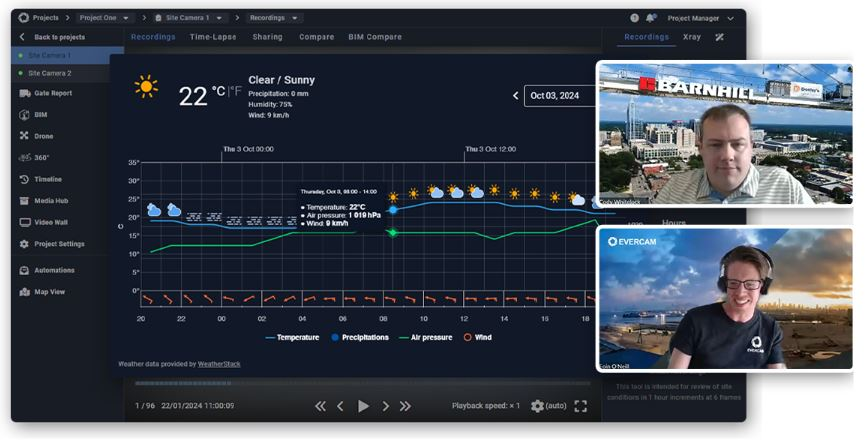
As Cody Whitelock, Director of Innovation and Professional Development at Barnhill Contracting Company, puts it, “on-site weather stations linked to construction cameras provide reliable data for weather delay claims. This has improved reporting and helped with planning and scheduling. Cody emphasized how valuable this feature has been in dealing with unpredictable conditions. Having a jobsite camera that integrates weather insights has become vital to managing these challenges.” It is clear as day - when weather data is paired with construction camera footage, it provides a shared understanding of what happened and when.
Give it a try. Track conditions, capture progress, and work with the data that matters.