“Up to 70% of construction delays are caused by poor site coordination and visibility.” - McKinsey Global Institute, Construction’s Digital Future”
We’ve worked closely with contractors, developers, and project teams long enough to know that construction site visibility is about more than security. They’re a critical part of construction management, creating a clear visual record that supports progress tracking, dispute resolution, safety oversight, and even marketing.
Why Camera Positioning and Field of View Matter
While camera specs matter, in construction, it’s the setup and field of view that define how useful your footage really is. Two identical jobsite cameras can tell completely different stories based on where they’re mounted and what they capture.
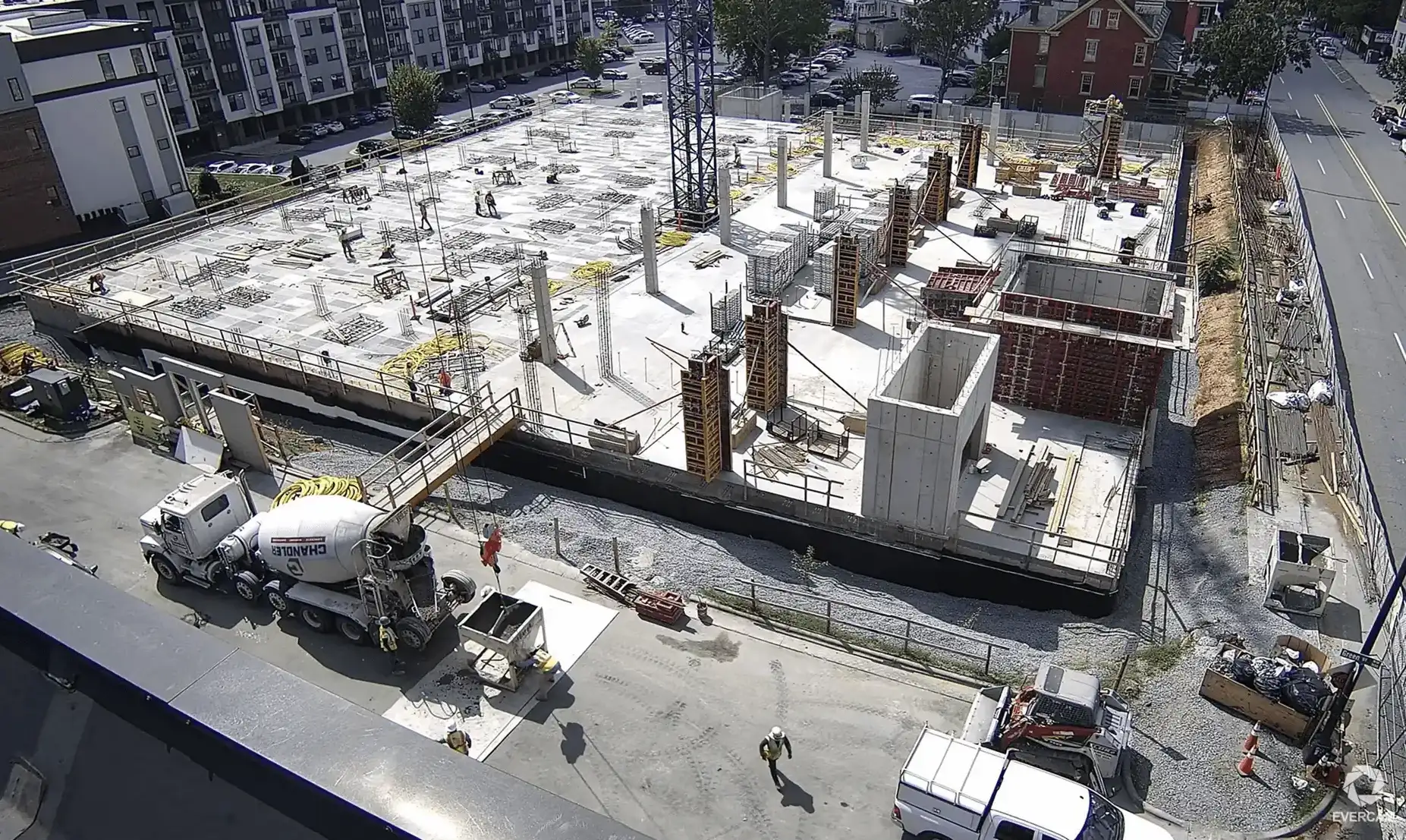
A poorly positioned camera might miss delivery zones, block views with fencing, or fail to show vertical progress. With the right construction camera setup, you can document:
- Exactly when materials were delivered.
- Whether safety railings were in place before an incident.
- The full execution sequence for the as-built records.
We’ve seen sites with cameras fixed on the structure, capturing vertical progress well, but missing critical logistics zones like entrances or laydown areas. Adding a second camera facing the laydown and entrance area allowed them to resolve delivery disputes and capture better time-lapse for future bids.
How Site Visibility Supports Smarter Decisions
Getting the camera location and field of view right does more than record activity, it also gives your team better tools to manage the project.
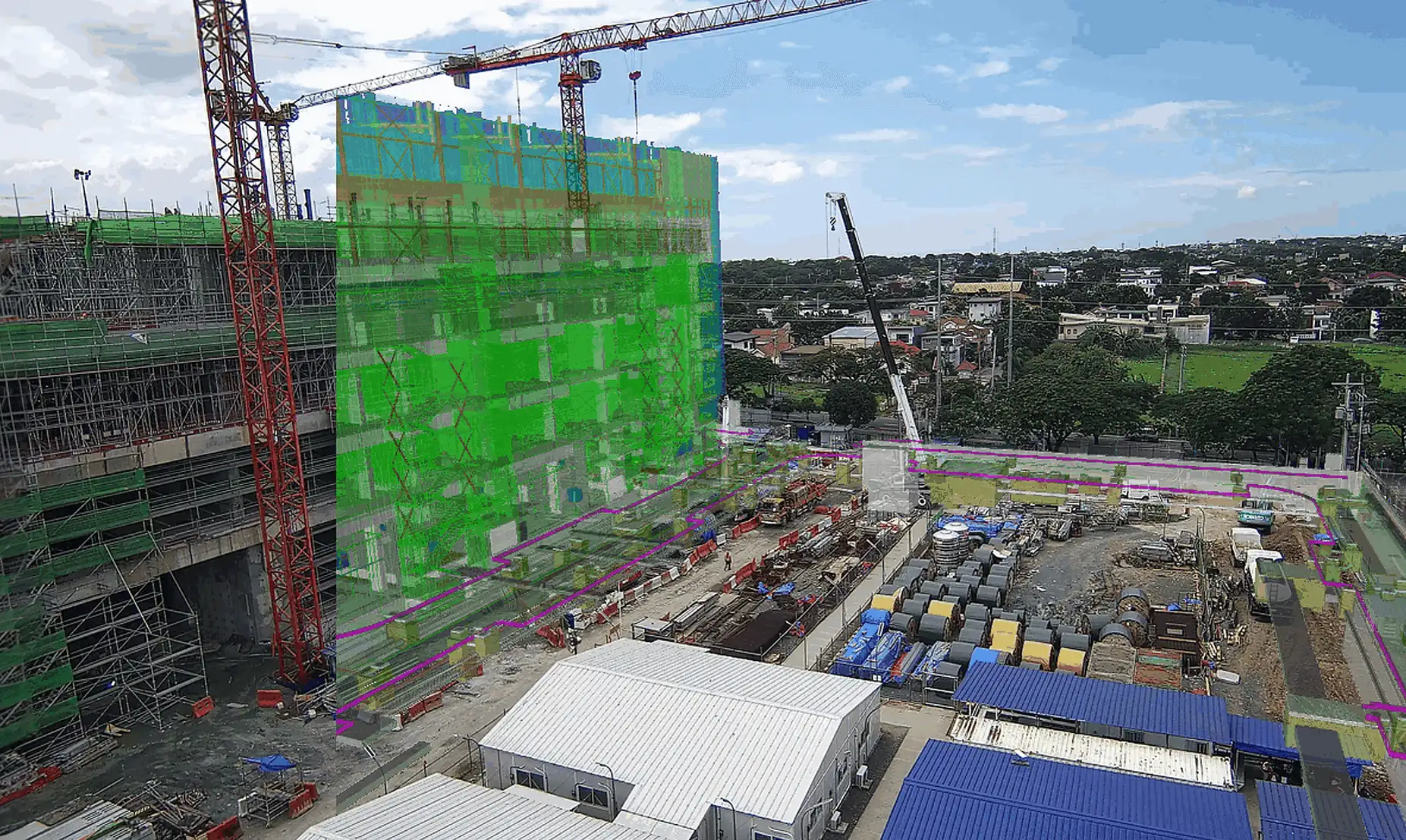
Project Managers: A multi-camera setup helps track work areas, delivery flow, and crew activity. As one of our construction partners put it, their setup was like “having eyes on every corner of the site without needing to be there.” These views also support BIM integration, making it easier to compare design and execution across different parts of the project.
On STT GDC Philippines, the ability to review footage from the right angles revealed a clear opportunity for improvement, something that would’ve gone unnoticed without proper visibility:
“After reviewing Evercam footage, we noticed key areas for improvement in crane assembly. The adjustments we made reduced the assembly time from seven days to three.” - Aaron Nnicklaus King, Project Manager, STT GDC Philippines
Safety Teams: Sometimes, the most useful visibility is outside the obvious areas. On a high-traffic site, a strategically placed side-view camera picked up near-misses at a pedestrian gate. That insight led to a redesign of the site’s access routes before anyone was hurt.
Marketing Teams: With the right field of view, you don’t lose valuable content. In a recent high-rise development, a camera was installed too low, cutting off the top of the building as it rose. Repositioning and adding a second construction time-lapse camera delivered crisp, stable time-lapse footage, which is perfect for stakeholder presentations and media use.
Getting the Construction Camera Setup Right
A great camera setup doesn’t just happen; it is planned. And that starts with smart decisions about construction camera placement and field of view.
Ask yourself:
- Does the view show enough context and scale?
- Will it stay clear and unobstructed as the project evolves?
- Will it still be usable six months from now?
- Does it align with your project goals: compliance, safety, marketing?
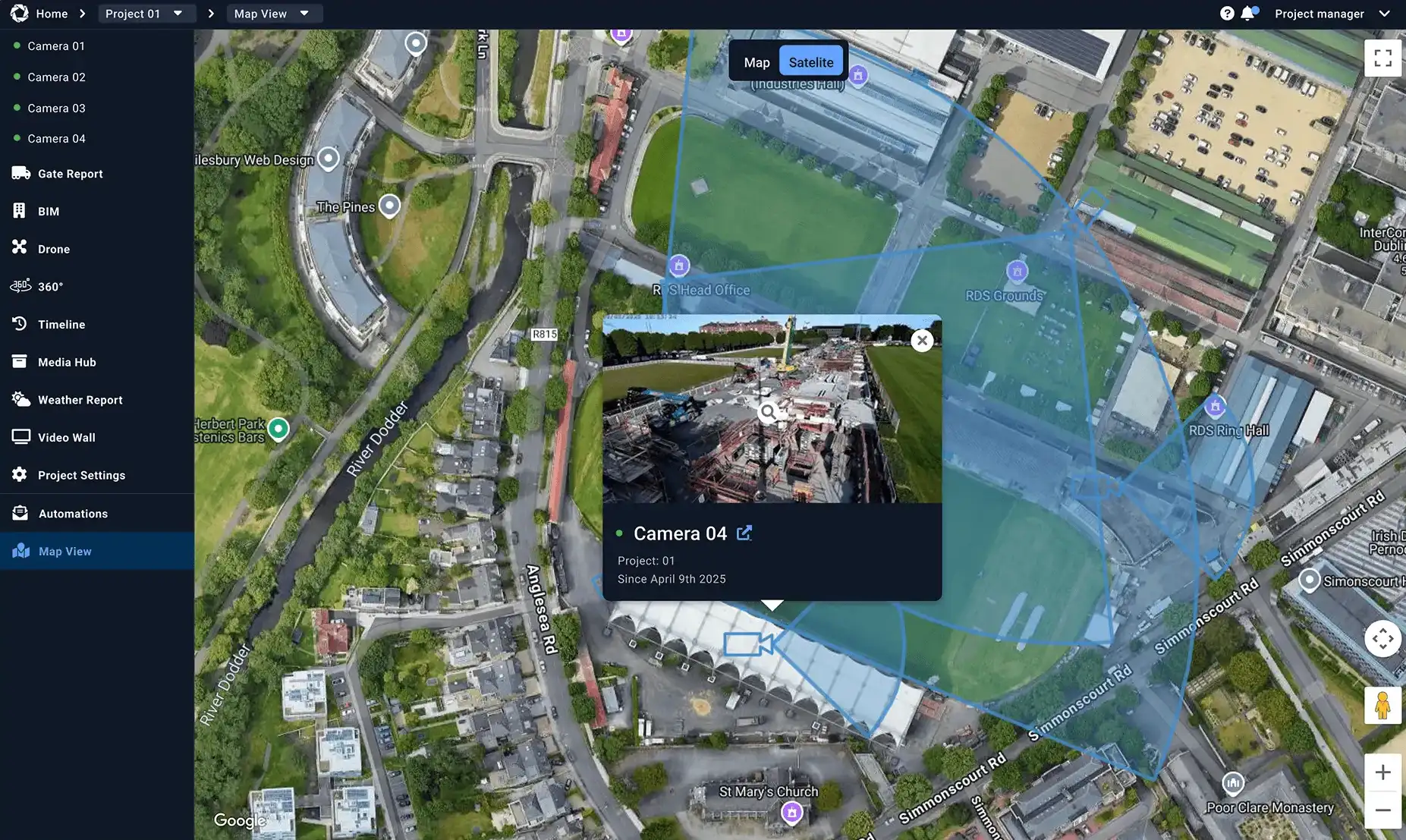
Wider views are especially useful early in a project, they give you flexibility to crop, reframe, or zoom as things take shape on site. But as the project evolves, so do your visibility needs. When structures start rising, entrances shift, or key work zones move, a single wide view often isn’t enough. That’s where combining multiple cameras, each with a clear purpose, makes the difference. One is to capture the site overview, another is focused on logistics zones, and another is on vertical progress.
That’s why we use a 110° field of view as standard. It’s wide enough to see the full story, but focused enough to keep the picture sharp.
When teams need even broader coverage, we often recommend placing a second camera at a different angle rather than relying on one ultra-wide view. That way, you get more clarity, more context, and fewer blind spots.
More coverage doesn’t mean one big view; it means the right views, from the right places, working together. That’s what we help you set up from day one.
How We Approach Construction Camera Visibility at Evercam
We’ve been on enough construction sites to know what works and what doesn’t. Our approach to jobsite camera placement and construction visibility follows four key principles:
- Start With the Why
Whether you're documenting for compliance, safety, stakeholder updates, or public marketing, your objective defines the camera’s location and field of view. - Plan for Phases
A camera that works for the excavation phase may not work once the structure goes vertical. We help teams adjust and optimize throughout the project. - Embrace Redundancy
On busy sites, overlapping views aren’t overkill, they’re protection. If a crane or scaffold blocks one camera, another fills the gap. - Capture the Human Side
Construction is about building things and the people who build them. Our best footage includes the day-to-day action: crane lifts, crew coordination, and safe demolitions. These clips are useful for project success and help tell a better story.
Bringing It All Into View
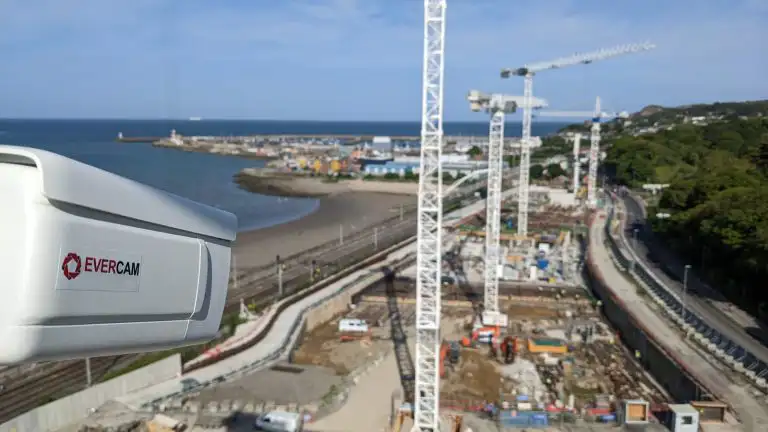
Construction cameras have become an essential part of modern site management. But the value comes from having it see the right data, from the right place, with the right field of view. And because Evercam records everything, you’ve always got a complete visual record of your project, ready when you need it.
Let's talk if you're planning a project and want to get more from your visual documentation. We’re always happy to share what’s worked on similar sites or help you plan a smarter, more strategic camera setup for construction from day one.