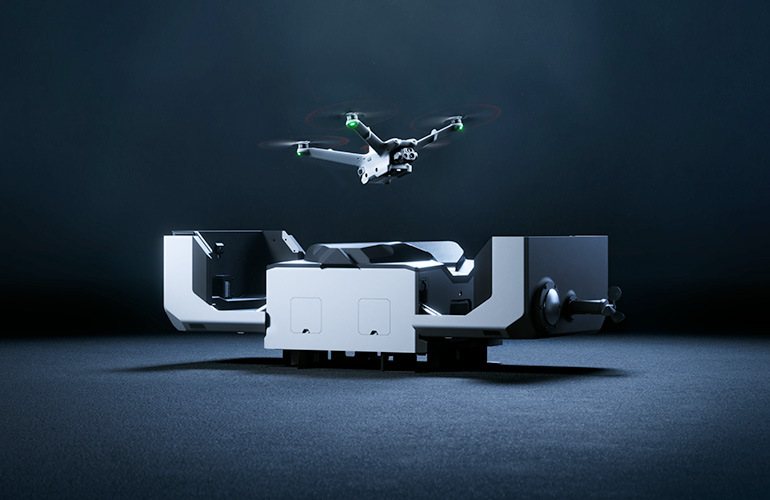

The construction and industrial sectors are experiencing a shift as automation moves from experimental to a key part of daily practices, especially in areas that are hazardous and high-risk. From mining operations to offshore oil platforms and urban construction sites, the most advanced companies are deploying robots, autonomous vehicles, and AI-powered systems to increase productivity while protecting their most valuable asset: their people.
Defining Automation: Automatic vs. Autonomous
Automation in industrial settings encompasses two distinct but often confused concepts: automatic and autonomous systems. Automatic systems follow pre-programmed instructions to perform repetitive tasks without human intervention, like a conveyor belt that moves materials at set intervals or a robotic arm that repeats the same welding sequence. Autonomous systems, however, use artificial intelligence to make decisions and adapt to changing conditions in real-time. Consider Komatsu's haul trucks: an automatic truck would follow a predetermined route, while an autonomous truck analyzes terrain conditions, weather, traffic patterns, and obstacles to determine the optimal path moment by moment. This distinction matters because autonomous systems can handle the unpredictable nature of construction and industrial environments, making decisions that weren't explicitly programmed.
Large-Scale Automation Already Operational
The scale of automation at work already is impressive. Komatsu's autonomous haul truck fleet with over 750 vehicles has moved more than 10 billion metric tons of material, adding 6 million tons daily without human drivers. These are workhorses operating 24/7 across four continents, proving that fully autonomous heavy equipment isn't the future but the present. They are also inviting others to the table, hosting events like the Automation Global User Forum.
Built Robotics is taking a different approach, retrofitting existing excavators, dozers and loaders with AI guidance systems that transform conventional machinery into autonomous operators. After 13,000+ operational hours, their track record remains perfect: zero accidents. The company's autonomous excavators are now deployed across sites from utility installations to residential developments, demonstrating that automation scales from mega-projects to everyday construction work.
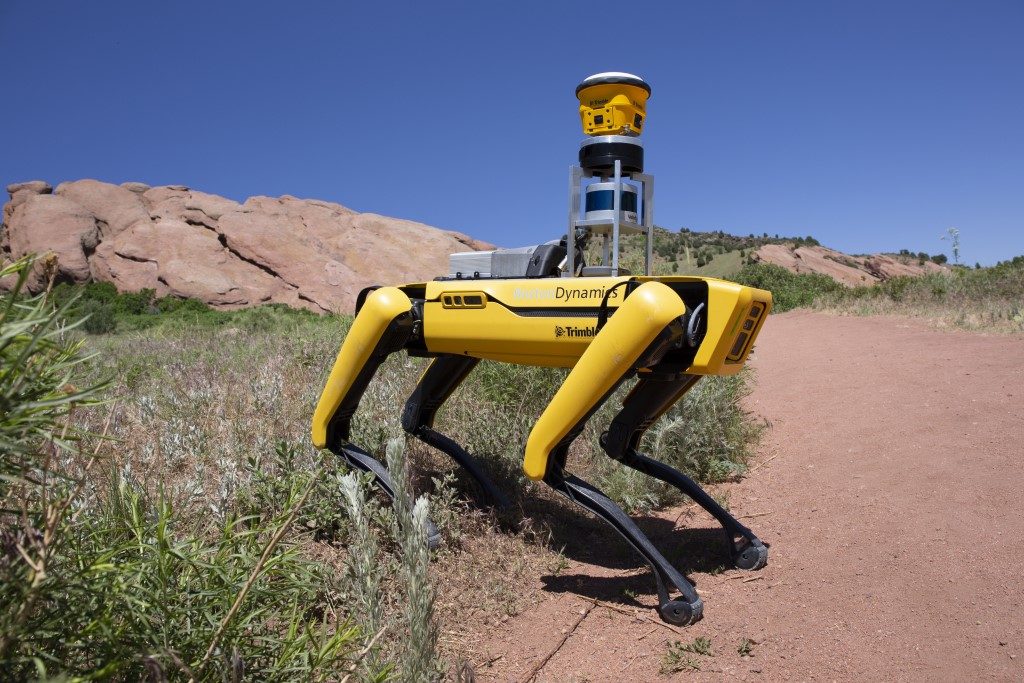
Major contractors are embracing this transformation. Skanska has deployed Boston Dynamics' Spot robots for autonomous site inspections and housekeeping operations. Turner Construction, the largest general contractor in the United States, uses DroneDeploy's robotic solutions with Spot robots to perform autonomous data capture on large-scale data center construction projects. Turner saves four to five hours with each 15-minute automated mission, allowing these robots to work overnight after human crews have left the site. These quadrupedal robots navigate construction sites independently, capturing progress data, monitoring safety conditions and detecting issues that human inspectors might miss while keeping personnel away from potential hazards.

Offshore Oil: The Ultimate Automation Testbed
Perhaps nowhere is the marriage of innovation and safety more critical than on offshore oil platforms, where automation is literally a matter of life and death. Equinor's Oseberg H platform represents the industry's holy grail: the world's first fully automated oil and gas platform operating unmanned in the North Sea.
The offshore robotics ecosystem is remarkable in its sophistication. ANYbotics' ANYmal quadrupedal robots perform autonomous inspections on North Sea platforms, equipped with thermal cameras, gas detection sensors and 3D mapping capabilities. These robots navigate the complex industrial environment 24/7, identifying potential equipment failures, gas leaks and structural issues before they become catastrophic events.
BP has deployed Boston Dynamics' Spot robots carrying specialized sensor packages across their facilities. These robotic inspectors can access dangerous areas where gas leaks or equipment failures pose risks too great for human workers. The robots continuously monitor for anomalies, enabling predictive maintenance that prevents the kind of disasters that have plagued the industry.
Subsea operations represent perhaps the most advanced application of industrial robotics. Oceaneering's self-contained, battery-powered ROVs (remotely operated vehicles) can operate for extended periods without mother ship support, dramatically reducing operational costs while providing continuous monitoring of critical underwater infrastructure. The Eelume robot, developed by Equinor, operates in restricted subsea areas, performing maintenance tasks that would previously require expensive vessel mobilizations and put divers at risk.

The Safety and Productivity Revolution
The statistics driving this automation revolution are compelling. Construction managers currently spend 30% of their time simply verifying the accuracy of progress updates, time that could be spent solving complex problems and managing teams. With acute skilled labor shortages across both construction and industrial sectors, automation isn't just about efficiency; it's about survival.
The safety benefits are equally dramatic. Workers on offshore oil rigs are six times more likely to die on the job compared to average workers, making automation not just economically attractive but morally imperative. In construction, where safety incidents cost billions annually and disrupt schedules for months, autonomous systems eliminate human error in the most dangerous tasks.
Boston Dynamics has systematized this approach across industries. Their Spot robots now include integrated safety lighting, audio alerts and emergency stop systems designed specifically for industrial environments. AB InBev reduced average equipment repair times from months to just 13 days by using Spot for early issue detection. BMW's Plant Hams Hall uses Spot to automate data capture for digital twins, centralizing insights that improve operational efficiency.
The Economics of Automation
The financial case for automation has reached a tipping point. The global oil and gas robotics market, valued at $18.46 billion in 2024, is projected to reach $29.38 billion by 2033. This growth isn't driven by speculation but by proven ROI.
Komatsu's electric mining excavators deliver 47% savings in total cost of ownership compared to conventional diesel equipment, backed by real-world pilot program data. Built Robotics charges $3,000 per month plus usage fees for their excavator automation systems, a fraction of the cost of the productivity gains and safety improvements they deliver.
The offshore industry has embraced this economic reality. Major operators including Shell, ExxonMobil, BP and TotalEnergies are deploying robotic solutions not as experiments, but as core operational strategies. Shell has been particularly active in automation and digitalisation, implementing AI-powered inspection management systems and showcasing automated inspection technologies at industry conferences.
What It Means for Construction Cameras
This automation revolution directly impacts Evercam's role in the construction technology ecosystem. While robots and autonomous vehicles handle the physical work, construction cameras serve as the digital nervous system that enables remote monitoring, progress verification, and safety oversight. The same trends driving automation adoption, like labor shortages, safety concerns, and the need for real-time data, are creating demand for intelligent camera systems that can operate autonomously and provide actionable insights.
Construction cameras are evolving from simple recording devices to autonomous monitoring systems that can detect safety violations, track progress automatically, and alert managers to issues before they become problems. As more construction sites adopt robotic systems for material handling and site preparation, cameras become essential for coordinating these automated operations and ensuring they work safely alongside human workers. The 30% of management time currently spent verifying progress updates represents a massive opportunity for camera systems that can automatically capture, analyze, and report construction progress without human intervention.
For Evercam, this means positioning construction cameras not just as documentation tools, but as critical infrastructure that enables the broader automation transformation happening across the industry.
What's Next
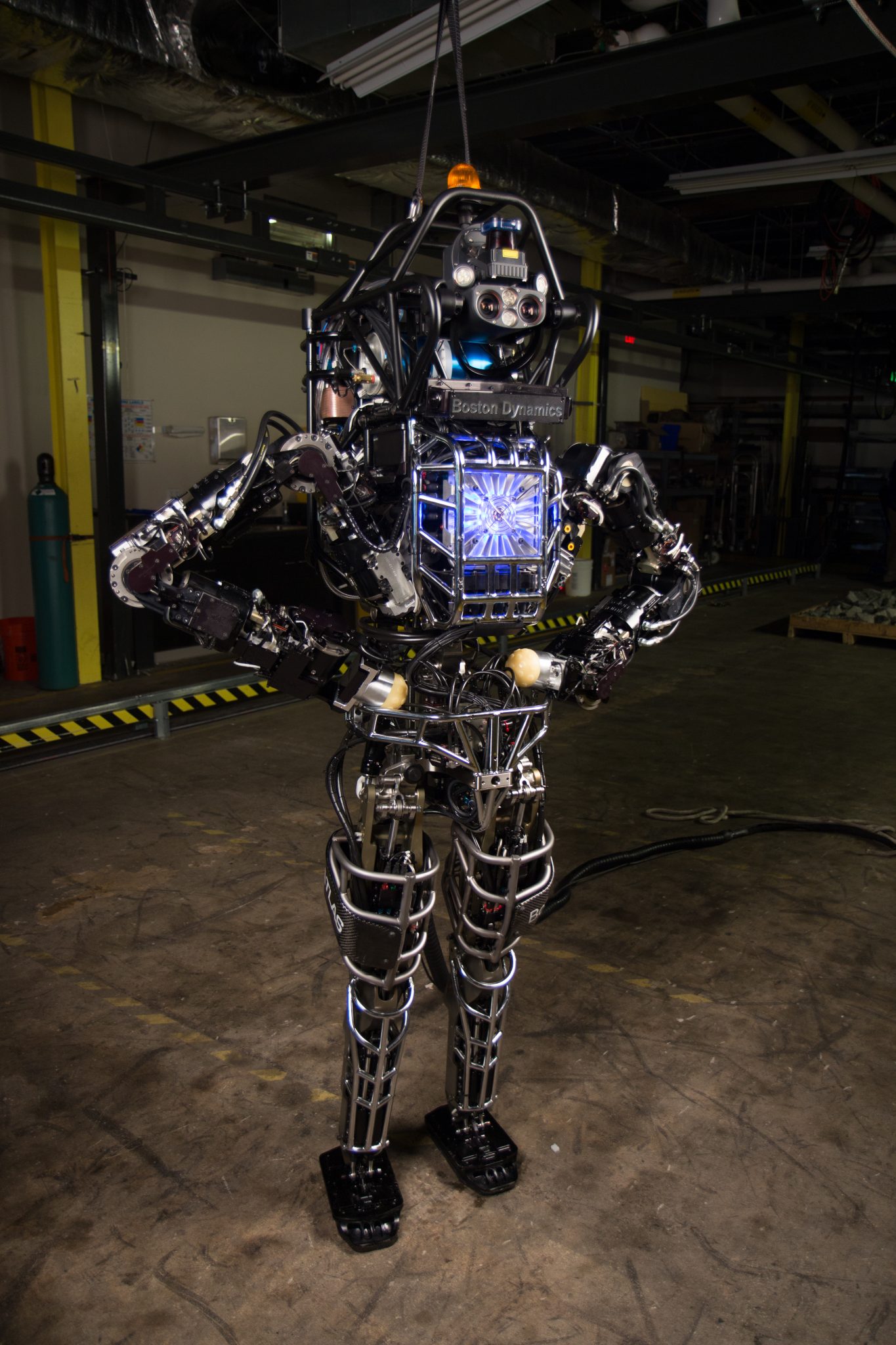
The convergence of AI, robotics, and industrial operations is accelerating. Boston Dynamics' new electric Atlas humanoid robot will soon join Hyundai's manufacturing operations, while companies like Figure are preparing full-time robotic workforces for BMW's factories.
In construction, autonomous drones, robot dogs, 360° cameras, and fixed-position monitoring systems are creating comprehensive visibility platforms that enable remote project management and predictive problem-solving. The most innovative firms aren't asking whether to automate—they're asking how quickly they can scale these technologies across their operations.
The message is clear: automation in construction and industrial operations has moved beyond proof of concept to proven performance. The companies investing in these technologies today aren't just improving their current operations but building the foundation for tomorrow's industry leadership.
The future of construction and industrial work isn't about replacing humans; it's about augmenting human capability while eliminating human risk. As these technologies continue to mature, the question isn't whether your organization will adopt automation, but whether you'll lead the transformation or be left behind.
Ready to learn how we can help improve project outcomes? Contact us today!