Insights on Construction Technology and Site Visibility
Items in view: 2
Showing items 1 to 3 of 6

How Does a Construction Camera Benefit a Superintendent?
The Benefits of Construction Cameras: A Superintendent�s Perspective
When it comes to construction projects, it can be difficult for investors and contractors to keep up with all of the moving parts. The anatomy of a standard job site includes the general contractor, which oversees all aspects of the project and is responsible for the overall completion and ultimate delivery. Under the general contractor are various subcontractors, each specialising in a particular area of the project such as plumbing, electrical, roofing, etc. As construction progresses, and more subcontractors are introduced to the job, complexity increases, and it becomes challenging to keep everything under control.�
Enter the superintendent. Think of the superintendent as the on-site project manager, responsible for overseeing the operations of a job site through to completion. While the duties of superintendents vary, they are generally responsible for
- Ensuring the safety and compliance of the site.
- Generating, updating and maintaining the project schedule�
- Coordinating and overseeing all subcontractor activity to maintain the quality of finished work
- Reviewing & adhering to the project budget
- Responsible for equipment and materials on site
- Maintaining records for site personnel/ongoing work such as daily field reports, change orders, and RFIs
- Liaising with inspection authorities regarding approvals.
A site monitoring system is a superintendent�s best tool for ensuring full visibility of the job.
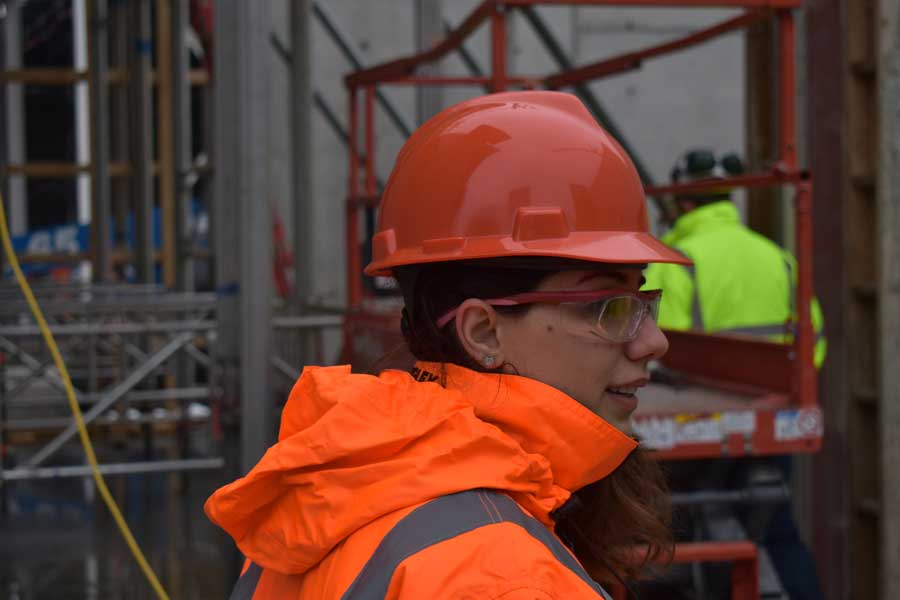
Here are some ways in which a site superintendent can benefit from construction cameras on the job site;
Health and Safety
The Health and safety of workers are priority #1 on all job sites. We are all out there to do a job and then come home safely to our families. Ineffective construction site monitoring can lead to gaps in on-site safety standards, which could endanger the lives of employees and future users of the building. To minimise risks and maximise safety, a Superintendent needs to establish and enforce effective communications channels and reporting systems. Site monitoring systems such as Evercam can greatly assist in delivering safety updates, risk assessments, and hazard detection as quickly as possible.�
Quality and Productivity
Following Safety, the quality and productivity of work are vital to a job site's success. A superintendent inspects every stage of production to ensure the quality of work is sufficient and efficient. One of the biggest challenges a superintendent faces on the job is figuring out how to optimise productivity without compromising quality.� Creating superior buildings in a short amount of time is a corporate expectation that is difficult to execute and one of the best ways you can satisfy both demands is through fully-implemented monitoring. For example, Evercam�s X-Ray tool in the construction cameras is a game-changer for superintendents because it is such an accurate image referencing tool that helps to compare separate stages of the construction phase. The presence of cameras on site can prevent a lot of untruthful information from being communicated between teams, which in turn leads to enhanced productivity from the site staff to subcontractors. With visibility, it helps to ensure that quality standards are met.
Security
According to a report by the National Insurance Crime Bureau, the construction industry suffers more than $1 billion in losses each year in heavy equipment alone, and those numbers continue to rise. Construction cameras can help secure the job site against these thefts and, in the worst-case scenario, provide vital evidence for law enforcement authorities in the case of a crime.
Although trust in employees is the basis of any business, no construction company is immune to theft from the inside when part-time employees and subcontractors are accessing the site throughout the project. Visual monitoring can deter would-be thieves if they know they are under observation. Vigilance is key.�
Troubleshoot potential issues.�
Construction cameras help uncover potential problems early, allowing site teams to be proactive instead of reactive by tracking, capturing, and documenting any violations. Footage of a specific event can be reviewed to determine what went wrong and what actions can be taken to prevent similar problems from resurfacing. They pick it, we stick it! My old boss used to say. They, being the design team and we, being the field team of superintendents on site. In a past project, they changed their minds and we had to relocate plumbing lines for a ground floor bathroom after Slab on Grade was poured. It was extremely useful having a compare tool within the camera system to check where underground utilities were laid before we had to chip concrete and lay additional plumbing pipe work. Of course, we could have checked the plans to see where the undergrounds should have been but the use of cameras meant we were 100% sure.
Transparency
The use of cameras on construction sites keeps all project stakeholders in the loop throughout the project by helping the superintendent keep accurate records of site activities to distribute amongst other teams without the need to organise an in-person site visit. Consequently, it cuts time and travel costs and can accelerate approval processes for additional funding.
Justify delays
Between inclement weather, public health crises, budget cuts, and supply chain shortages � delays are almost inevitable in any construction project.� Construction cameras play a critical role in explaining and justifying these delays. Using Evercam�s weather feature can help superintendents to justify time added to the schedule if a delay occurs due to weather-related issues. Sudden changes in weather can cause you to halt certain aspects of construction for a day or more.�
Construction cameras have almost become a standard tool to have in any project. In fact, many projects now have cameras required in the specs. So it's not a matter of whether or not you want cameras, it�s which cameras to choose.�
With construction cameras, GCs & developers give themselves a competitive edge by avoiding expensive mistakes, keeping projects on schedule, protecting themselves against losses, and building clientele bases that can span across industries.
���
About the author:
�Darah Callan works as a part of Evercam�s USA Business Development & Customer Success team from Barcelona, Spain. While he has not always worked in the Camera/AI world, he is passionate about construction and has spent 5 years in the industry. After graduating from University College Dublin with a degree in mechanical engineering, Darah ventured into the world of construction, mainly based in the USA working as a Field Engineer and Assistant Superintendent with Ryan Companies out of their South Central office in Austin, Texas.�

The evolution of Reality Capture on Construction Sites
Reality capture is the future of construction site communications. The accuracy of digital capture and storage not only improves communication but also productivity. This ensures that construction projects are completed on time and budget.
With the ever-progressing technology advancements, construction companies are increasingly adopting reality capture tools as part of their workstreams. Reality capture reduces latency in communication amongst project teams and democratizes access to information about the respective projects, while also giving clients a more detailed look at your future facilities.�
The evolution of reality capture technology has been an interesting path from early cartographers, to tripod-based laser scanners, and modern videographers, there has always been the need to adapt and package reality capture into formats that are easily interpreted and more actionable.��
Historically, the construction industry has relied on laser scanning to capture the visual information needed to build 3D models. Even though this type of reality capture achieves precise and detailed results, it comes at a costly rate and requires specialized training to do it successfully. Also, there is a need for specialized software to view, making it less accessible to the full project team.
Over time, photogrammetry has also come into play. Photogrammetry is an algorithmic process of creating digital geometry by comparing pixels in photographs. In this process, a set of digital images are used to determine the geometry of the areas in question.
Essentially, photogrammetry leverages photography where technicians take multiple photos from different angles around a space and capture the objects in it, then a computer algorithm processes the images to find similar pixels in the photos. The software uses this information to align the pictures and assemble a virtual and navigable 3D model of the space.��
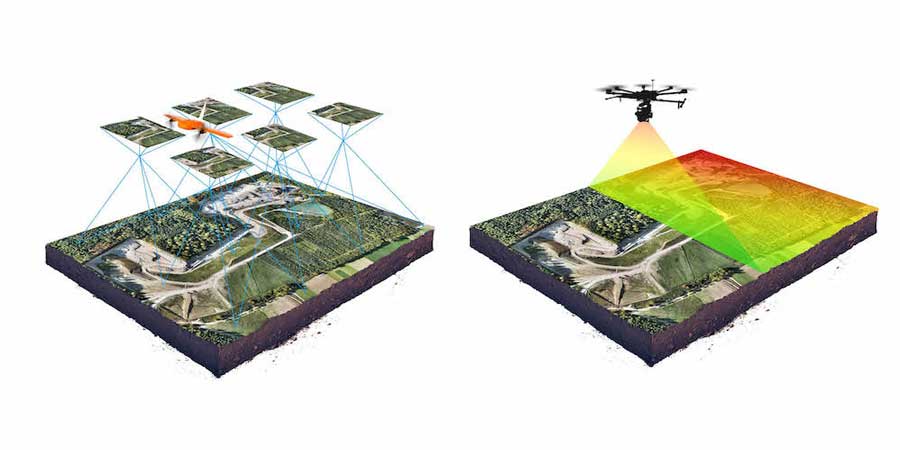
Similar to photogrammetry, 3D mapping uses a series of photographs to map out terrains for greenfield projects. Here, helicopters are used to capture photos from the air and then the photos are run through computer models which plot ground contours.�
Because accuracy is extremely key when it comes to buildings, construction companies adopted SLAM LIDAR in order to measure distances on-site accurately. This LIDAR-based method captures data by running laser scanners from several positions in a facility. The data points are then positioned together to create a �point cloud� and a navigable 360� photo tour.
This method has been preferable for accuracy, particularly in hard-to-reach, complex areas of a facility.� For anyone who was very good at using LIDAR for measurements, it would be very beneficial from an efficiency point of view as well as information theory - seeing things from all different perspectives, as well as making the technology of measuring and high quality more accessible.
Even though SLAM LIDAR was already delivering pretty good results for a couple of years, unfortunately, there were many cases that were hard to somehow predict where it was not working. It took quite some time to understand these corner cases and really honed that technology to a point where it would be really applicable in most cases or if there would be something breaking the technology to give satisfactory feedback that wouldn�t need one to redo measuring or so that the workflow would start to be really reliable.�
To monitor and enhance security in construction sites, CCTV cameras were taken up for this measure. These cameras helped to monitor the use of resources in the sites and the project managers could be able to easily determine where any inconsistencies or perhaps where there was any illegal activity occurred at the site and therefore deal with it as soon as possible.�
Even though CCTV cameras aided with resource management and security surveillance, its system was not highly effective as a tool on construction sites. Technology called for upgrading the cameras to capture staggering snapshots (eventually leading to a time lapse video), hence the rise of construction timelapse cameras. The time lapse cameras can capture high-definition visual progress of a building from the ground up.
The timelapse videos are a great tool for increasing productivity since project stakeholders can monitor progress remotely. Evercam construction cameras provide these cameras which not only offer a wider field of view than the CCTV cameras but also provide up to 18X beyond the basic zoom level. These cameras provide value with respect to dispute resolution, handling any project claims that arise thanks to the X-ray tool as well as ensuring Health & Safety Protocols are adhered to.�
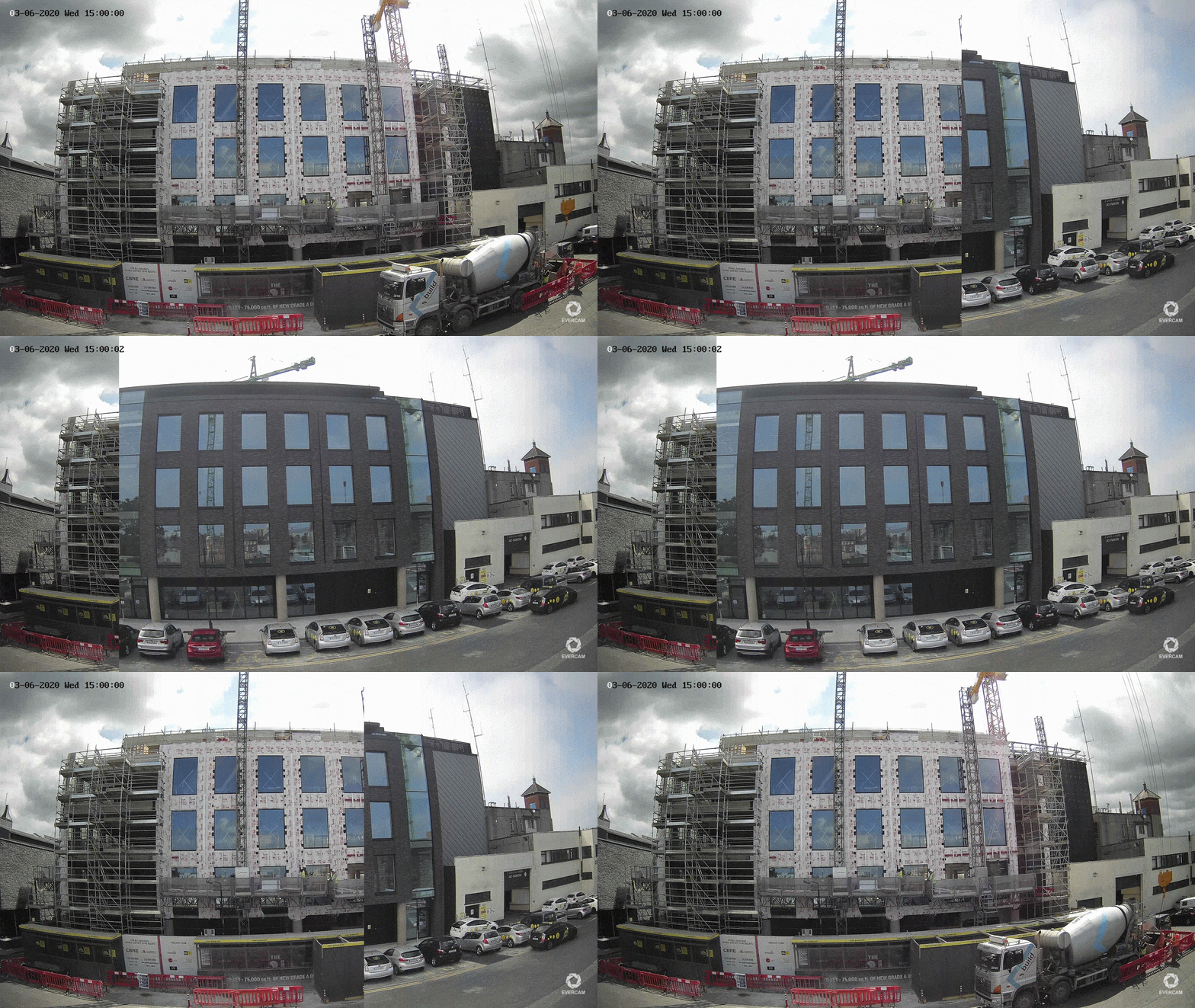
The ubiquitous need for construction timelapse cameras has called for the need to keep up-to-speed with the ever-changing technology. As technology advances so have construction companies desired to keep up to date with the appropriate tools. Evercam now provides construction timelapse cameras that have integrated BIM and Digital twins into the cameras.
BIM (Building Information Modeling) is a new generation of architecture and building design software that provides a 3D digital representation of the project to be constructed so that it can be visualized in realistic conditions and used for further calculations. Digital Twin, on the other hand, refers to an integrated digital model of both the physical asset and its surrounding environment. It�s often described as a �living twin� because it updates in real time as changes occur and enables predictive maintenance.
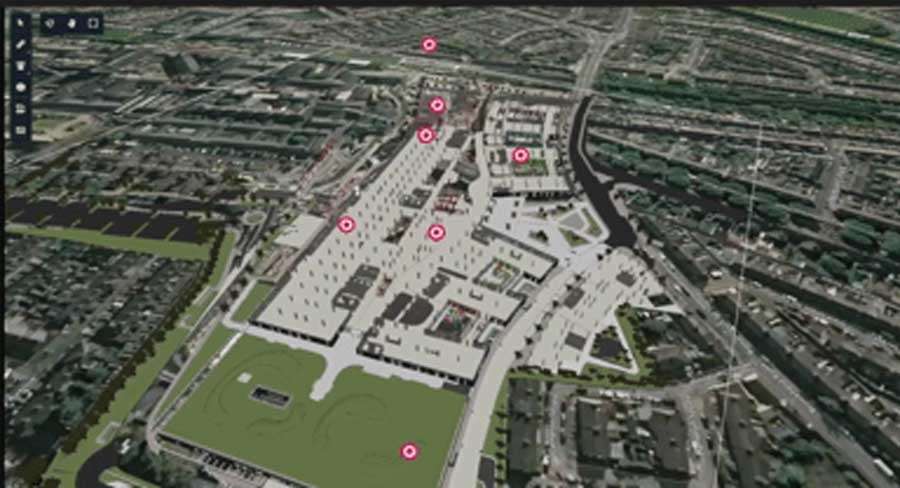
Away from the surveying side of things, Reality Capture has certainly helped alleviate skills shortages and speed up many construction processes. New Reality Capture technology is emerging at a price point that makes it cost-effective for construction cameras to be placed on construction sites. These would then be left there for the duration of a project to constantly stream data to the cloud to check every stage of the construction process.
The advantages of this live monitoring are obvious. One is be able to instantly compare captured reality with the design model. Also, this eliminates many costly errors and assists in overcoming problems with the shortage of skilled site staff. Reality Capture feeding into the cloud really does now make it possible for a project team member to sit in front of a computer and efficiently monitor construction processes on a number of sites. These sites could be a few miles down the road or scattered across several continents. Both the advantages and the implications of this are immense.
Get in touch with us to find out more about the features that are integrated in our construction cameras.
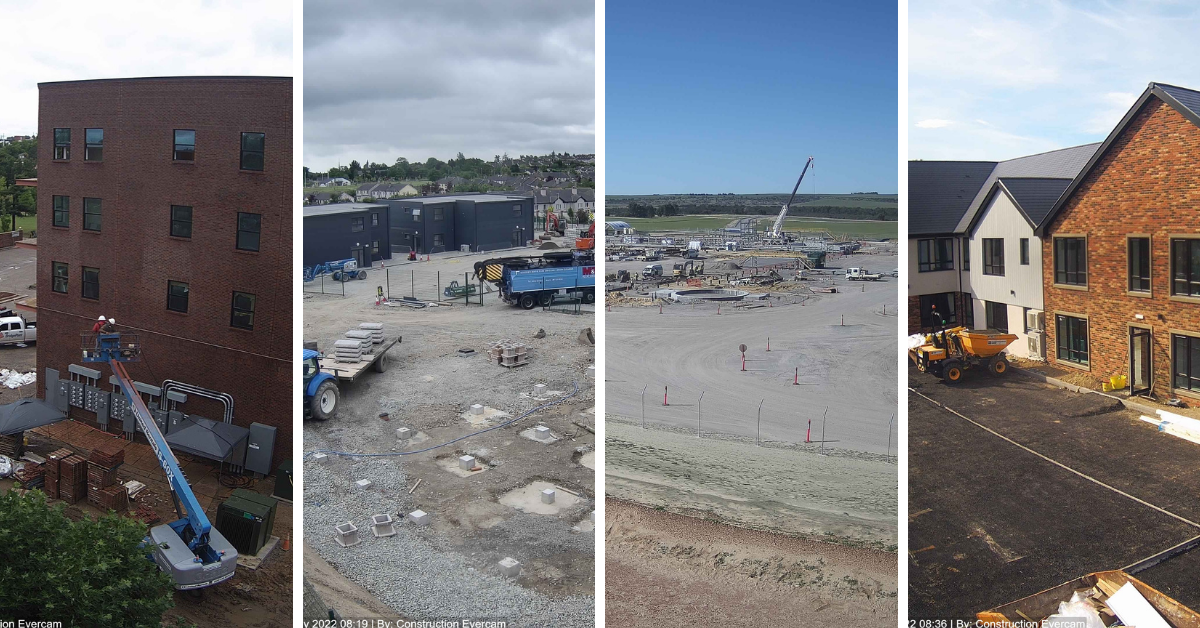
Top Construction Timelapses of the Month - May 2022
Check out the best time-lapse videos produced by Evercam capturing construction progress from a range of projects across the globe.
The Village Flats, USA
Watch the progress by Tulsa Property Group on The Village Flats project in Tulsa, Oklahoma. Phase II is an approximately 37,500 square foot, 4-story mixed-use building with approximately 6,500 square feet of ground-floor commercial space and twenty-four 1 and 2 bedroom apartments.
The Village Flats project, Phase 2
Prefabricated Modular School, Ireland
Actavo Modular recently completed the first phase of development of a new temporary school for Gorey Educate Together Secondary School in Co. Wexford. The time-lapse video showcases the journey from completion of groundworks in November 2021, to installation of the buildings over the past few months.
https://vimeo.com/699775369/c5a812d47a
Actavo Modular, Gorey School Development
Project of the Month - Waitsia Gas Project Stage 2, Australia
?The Waitsia gas field is ranked one of the largest gas fields ever discovered onshore in Australia and it is forecasted to bring significant economic benefits to the Midwest region from both construction and operating phases. Clough is leading the engineering, procurement and construction scope for the Waitsia Gas Project Stage 2 Development. Watch this video to know more about the project.
https://vimeo.com/711728580/e296c753b4
Clough, Waitsia Gas Project Stage 2
Sky Offices - Burlington Plaza, Ireland
Sky employs just under 1000 people in Ireland with over 750 of those based at its Head Office in Burlington Road in Dublin. Sky wanted the campus to provide the right facilities and a high quality environment to work in - and to bring content into the heart of the workplace. Watch the fit-out design coming to life!
https://vimeo.com/708989536/09a7f85830
Sky Offices, Burlington Plaza
Eve Belle - Housing Care, Uk
Eve Belle is the fourth residential care home in the Sanders Senior Living portfolio in Wickford, Essex. Watch the time-lapse video to view the project come to fruition and how much has changed in 12 months.
https://vimeo.com/709414050/283ae4a648
Eve Belle, Housing Care
Time-lapse is just the beginning, let us show how valuable having a camera on-site can be.

How is Digital Disruption Transforming Construction?
The construction industry is poised with a constant challenge for digital transformation to change how projects are delivered, cut costs of executing projects and improve the overall project execution and timeliness. This goes hand in hand with the demand for increased profitability. Every day, around the world, more than 200,000 people are moving into cities.
To support this influx, cities need to build. Global trends such as increased competition, urbanisation, limited natural resources, and pervasive challenges such as talent access and engagement tend to make construction projects complex to manage and execute.
As project complexity increases, construction companies must harness the impact of digitisation and technology adoption to execute projects effectively.�
According to Deloitte analysis of MIT Sloan Management, few construction companies are using technology to not only improve margins but also create new business opportunities. The industry should seriously consider transformational innovation, connectedness and digital technologies to generate cost effective and sustained competitive advantage.�
As technology evolves and is adopted, one of the key components in maintaining or improving construction projects is connectedness. Connectedness in job sites involves visibility on-site and making data available to all members of the project.
Creating dashboards to analytically monitor progress, performance and resource performance, and environmental conditions such as workers� safety give the team the insights they need to make data-driven decisions.�
Technology In Construction
Real-time Visibility
In today�s competitive landscape, construction companies have little to no choice but to leverage current technologies in their business strategy. Innovations in real-time visibility using construction cameras enable remote site monitoring which has proven to increase efficiency and productivity while improving communication.
The insights that real-time monitoring delivers transform how projects are managed. The visual data collected during the execution phase can significantly influence project outcomes relating to schedule, quality, and safety.
Construction cameras impact many challenges construction managers face every day such as the need for increased productivity and improved collaboration, while also performing as a tool for site security during and outside of working hours.

Worker Safety
In the Internet of Things in construction, these cameras provide high resolution, wide view panoramic views of an entire construction site 24/7. Round-the-clock monitoring enables contractors to keep an eye on their site at all times.
In the event of an incident, footage gathered by these cameras helps deliver a clear picture of what happened and how the situation could have been prevented. This helps in identifying problem cases, which will ultimately improve OSHA regulations at the worksite.
Construction cameras provide video evidence in case there are any injuries that are a result of neglect in adhering to OSHA regulations. Fatal injuries can be prevented as the concerned authorities are able to react and respond in time. Cameras can create a culture of safety on site as workers are more likely to follow precautions when they are being monitored.
Fleet Management
Construction teams have now adopted fleet managers as part of their teams to efficiently coordinate vehicle and equipment dispatch to keep construction projects on schedule. With the help of fleet tracking software, managers can find the best routes and send the nearest available drivers to fulfil site requirements.
This increases the construction company�s ability to respond to urgent changes in site requests and enables them to quickly adapt on the go without delays. Construction cameras have also been integrated with artificial intelligence, such as Evercam�s Gate Report feature which identifies the type of vehicles that enters and exits the site as well as provides the relative data required by project stakeholders.�
Dynamic Work Planning & Collaboration
Installing construction cameras breaks through the barriers of project management. Project managers juggle multiple projects at any given time in order to make up for the shortfall of skilled labour.
Being able to access construction site cameras from any device at any time frees up project managers from having to visit worksites as often and enables them to monitor multiple sites from anywhere that they have an internet connection.
Building information Modelling-BIM
Undoubtedly, BIM has become one of the greatest advancements that have taken place within the construction industry in recent years. This element has replaced the need for a blueprint which had to be produced before the start of the project.
When an incredibly detailed and interactive 3D model of the intended structure is produced, it brings together all the necessary information about the project in one place. Using BIM methodologies and standards to collaboratively create digital representations of assets, organisations have brought new consistency and efficiency to their design, construction and operation.
BIM has proven itself as a valuable mechanism for connecting information and ideas between different stakeholders. Now, forward-thinking leaders are evolving their BIM outputs beyond design and construction and are finding new ways of deepening the use of collaborative data models in operational strategies through digital twin adoption.
Digital twins allow visualisation, monitoring and optimisation of operational assets, processes and resources by harnessing live data. This provides vital, real-time insights into performance and activity. At its core, is essentially a �living� version of the project or asset view that BIM processes exist to create � able to evolve and transform using real-time data once the asset is in use.
By adopting digitisation, on a broader, strategic scale, construction firms are given the power to analyze and improve their operating procedures for further increases in efficiency, quality, and consequently, profitability.
Considering how technology is transforming businesses in every other sector, there is little doubt regarding the fact that it is also transforming construction companies and the sector as a whole.
Thus, construction companies need to identify opportunities to disrupt their operations and invest in adopting tech tools through pilot projects to gain the early-adopter advantage.
Get in touch with us to find out more about how our construction cameras are continually disrupting technology in the industry.
Construction Safety Week 2022 How Construction Cameras Facilitate Safety in Job Sites
Construction Safety Week is a dedicated awareness campaign when construction companies throughout Ireland come together to focus on the mission of safety in the industry. This year, the safety campaign runs over the entire month of October to further spread awareness and drive engagement. Starting on October 10th, the emphasis has been placed on supporting the Lighthouse Club's Help Inside a Hard Hat initiative. Then, during the next two weeks (17�28), there will be a focus on safety topics, including five days dedicated solely to job-site safety.
It is everyone�s goal to remain safe and in order to achieve this, communication and connection play a key role. With one of the topics for the Safety Week summit being modern methods of construction, technology like construction cameras remains to be a popular addition to construction site safety measures. Construction cameras ensure and continue to facilitate the connectedness of project team members, which is an integral part of completing a project safely and on time.�
Construction cameras can play a major role in health safety adherence. Accidents on construction sites are almost inevitable and often end up resulting in lawsuits and hefty non-compliance fees as well. However, construction cameras can help regulate safety within job sites and can also provide you with a full video recording of accidents, near misses or other incidents that may happen on a project site.
Identifying Potential Hazards
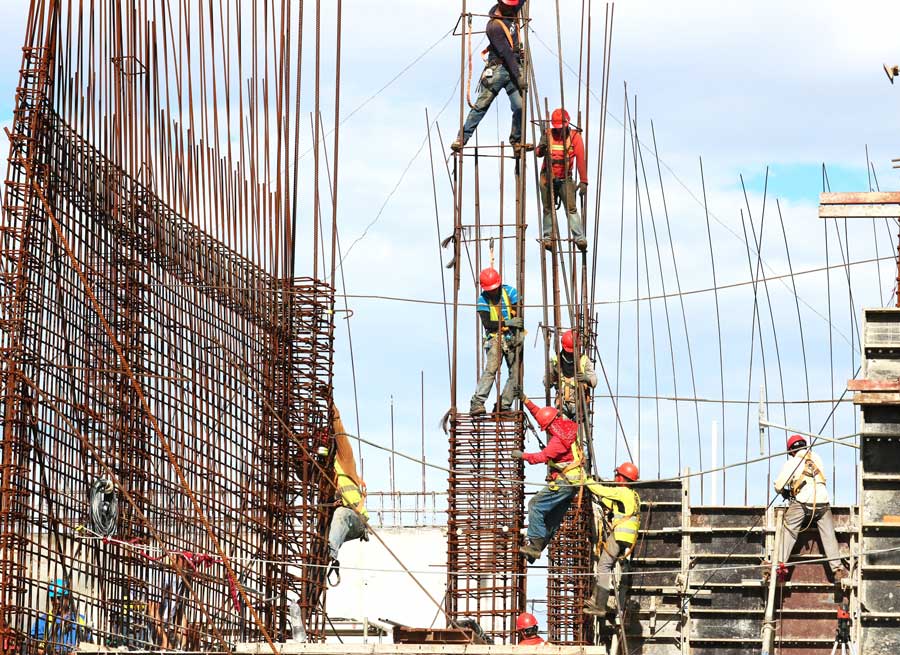
Site managers are able to use high-definition construction cameras to monitor site activities and quickly identify any potential hazards in real-time and take immediate action to reduce the risk of harm. Cameras can help identify workers who are adhering to safety policies and regulations and those that could be disrupting the implementation of regulations. In the past, contractors and sub-contractors would have to physically be present at construction sites for monitoring. The ability to review site practices remotely also enables managers to handle two or more sites simultaneously, reducing the number of physical site visits needed, and saving time and money.�
Transparency and Better Documentation
The use of cameras helps in obtaining accurate and real-time information, which can be used for assessment as well as reinforcement of the construction process and employee training. When information is available from the exact moment the accident happened, it makes documentation easier. This information is crucial for generating regular maintenance and safety reports and ensuring the overall safety of employees.
Accountability
The use of footage from construction cameras helps to tell whether the person in charge of safety regulations was responsible or how they can be held accountable. Construction job site cameras provide high-resolution, panoramic views of an entire construction site 24/7. Round-the-clock monitoring enables contractors to keep an eye on their site at all times. The footage helps deliver a clear picture of what happened and how the situation could have been prevented. This helps in identifying problem cases, which will ultimately improve OSHA regulations at the worksite. Off-site contractors can easily monitor the construction site in real time.�
Cost Control and Reduce Insurance Premiums�
Any damage to the construction equipment or employee injuries can be a huge setback in terms of cost and the progress of a project. Installing construction cameras can help with damage control. Properly maintained surveillance helps limit costs on insurance premiums. In the case of an unfortunate incident, the footage can provide strong evidence for your insurance claim.
Employee Protection.�
Despite advances in construction safety equipment, technology and training, the construction industry continues to face high rates of fatal and nonfatal injuries and accidents among its workers. According to OSHA 1 in 5 deaths among U.S. workers is in the construction industry. US Bureau of Statistics records that of the 42 annual crane-related deaths, around 60% involve a falling object. Construction cameras provide video evidence in case there are any injuries that are a result of neglect in adhering to OSHA regulations. Fatal injuries can be prevented as the concerned authorities are able to react and respond in time. Cameras can create a culture of safety on site. Workers are more likely to follow precautions when they are being monitored. With a well-equipped camera installation, your workforce can rest assured that they are being monitored and therefore protected against any mishaps.
Tool For Health and Safety Training.
Camera footage can go a long way to provide insight into training. When trainees see an actual video of an event gone wrong, it becomes more effective than reading a manual on equipment safety. For example, if an accident happened, the footage could help pinpoint its cause. It can serve as a reference when developing interventions to ensure the same incident won�t happen again. Accidents could happen due to the operator not following procedures or not having been adequately trained. This information can also help site managers in coming up with a well-designed training program.
Construction cameras are already becoming an essential part of HSEQ, health & safety and project management teams' workflows. Talk to us today about adding this technology to your company�s safety strategy.�
BIM and Digital twin. Where The Difference Lies
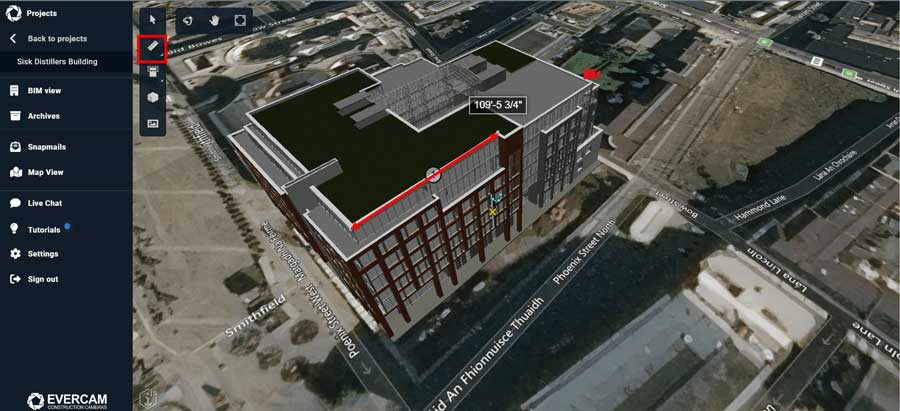
BIM (Building Information Modeling) is a new generation of architecture and building design software that provides a 3D digital representation of the project to be constructed so that it can be visualized in realistic conditions and used for further calculations. Digital Twin, on the other hand, refers to an integrated digital model of both the physical asset and its surrounding environment. It�s often described as a �living twin� because it updates in real time as changes occur and enables predictive maintenance.
BIM and digital twin share the same goal of creating a common, shared platform for design, specification, construction and use of buildings, incorporating various information systems that are typically maintained by providers. However, there are a number of key differences between BIM and digital twin.
Perception/Fusion:
The purpose of BIM is to create a 3D model that includes everything required for design or construction. This includes 3 material layers (construction, foundation, insulation and other building materials) that are typically represented with different polygonal mesh-based models for each level of the application. The end result is a solid model that can be used by 2D and 3D drawing tools as well as computers equipped with the appropriate software. Digital Twin represents only the physical asset at its component level but does omit all possible design information. It is the combination of all meaningful information and data that is relevant to a digital twin. While BIM is perceived as a tool for design and construction, Digital Twin is a tool for operation.
Scope:
In terms of scope, BIM refers to the digital representation of objects according to building design requirements. BIM is intended for collaboration and visualization during the design and construction phases, serving as a digital record post-construction. On the other hand, a Digital Twin comprises every aspect of an organization�s asset and its environment as well as relevant processes (manufacturing/operations), that can be digitally modeled. Digital Twins are intended for operations & maintenance.
Construction Lifecycle:
BIM is predominantly used in the as-built stage of construction. The use of BIM makes it very easy to preserve a model that reflects the final building geometry and data. It consists of all the changes that have been implemented in the building during and post-construction. This model can be preserved for years and be utilized for maintenance of the building, design changes, renovation, etc. Looking at the digital twin life cycle, as the construction phases proceed, different types of data are captured continuously (including data from sensors and monitoring devices). The captured data can be combined with BIM data to build a digital replica of the construction site i.e. �digital twin� that is updated in real-time with new data. Over the course of construction, project managers can use the digital twin platform to gain a multi-dimensional view of the performance of the construction site. The platform can also be used to predict trends, detect risks, and optimize project schedules.
Even after the construction phase, you can use the 3D model to efficiently manage and maintain the building. For example, you can use the model for developing an annual maintenance plan or to easily locate parts that require maintenance. Additionally, you can simulate and calculate any changes to the installations in the 3D model before applying them.
Database:
BIM is prescriptive. BIM answers questions about the elements of a building maintaining a database of the functional and physical properties of elements. For example: What is the thickness of the wall? How many walls are used in the building e.t.c. A digital twin is descriptive. It maintains a database of real-time activities addressing queries such as every status change reported for all activities of the project and who reported them; Issues and obstacles faced during the construction process and who resolved them at what point of time and so on.
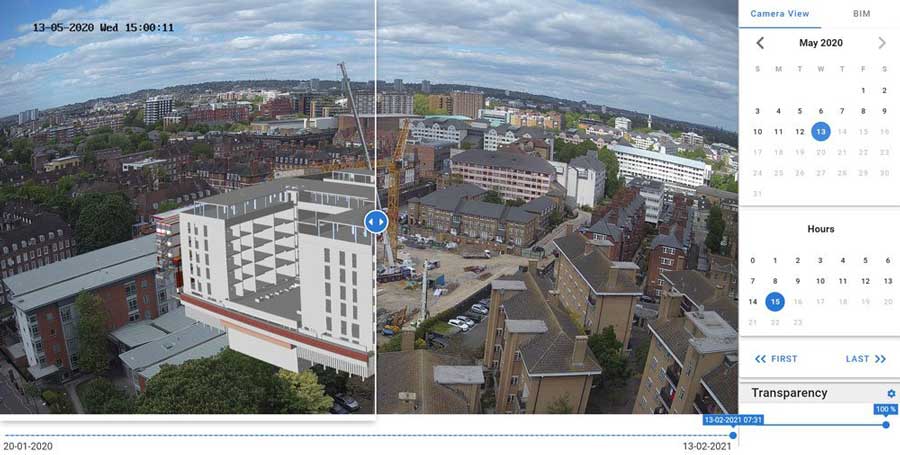
These smart platforms both represent a digital reconstruction of a building. What makes them different is the capacity in which they support it. BIM helps keep design-build on time, under budget, and true to form. Digital twins help a well-designed building meet and exceed its intended purpose. Construction companies are also getting smarter with respect to employing tech tools hence making the demand for smart software to support the entire building life cycle high. BIM and digital twins combine to answer this demand, each serving an important role before, during, and after the build, and to the many purposes, it�ll serve throughout its lifetime.
To discover more about how Evercam can connect with your BIM model and Digital Twin, get in touch with us today.

Top Construction Timelapses of the Month - April 2022
Check out the best time-lapse videos produced by Evercam capturing construction progress from a range of projects across the globe.
Infrastructure Time-lapse- New Regalica Bridge, Poland
Budimex, the leader in infrastructure construction in Poland is building a new railway bridge in Szczecin. The construction weight is approximately 4,000 tonnes. Two railway tracks will be installed on the bridge.
Watch the progress video here:
Budimex SA, Budimex - Regalica Bridge
Demolition Progress- Shaw Tower, Singapore
Standing at nearly 200m with extensive views of Marina Bay and the city, the new Shaw Tower is expected to provide nearly 560,000 sq ft GFA inclusive of premium Grade A office and retail and F&B space. Check out the video below showcasing a significant milestone in the redevelopment of the project.
Owner:� Shaw Towers Realty Pte Ltd, a part of the Hong Kong-based The Sir Run Run Shaw Charitable Trust
Project/Development Manager: Lendlease
Shaw Tower
BIM Integration- 400H� Project Raleigh North Carolina, USA
Check out this impressive BIM integration video showcasing the 400H project by Barnhill Contracting in North Carolina. The development consists of a 20-story building and will include 16,000 sq ft of retail, 150,000 SF of Class A office spaces, 242 residential units, and 280 parking spaces. Raleigh's new "vertical community" is estimated to be complete in the Fall of 2023 and will be a highly anticipated, true highlight to the area.
Barnhill Contracting - BIM Integration video
Drone & Time-lapse- Tallawarra Stage B project, Australia
Check out our latest update from Tallawarra Stage B project in New South Wales, Australia. The video shows the progress over the last few months and a lovely drone view. Clough is leading the engineering, procurement, and construction scope for Australia�s first net-zero emissions hydrogen and gas capable power plant in New South Wales.
Clough, Tallawarra Stage B project
Technimark Longford Factory Extension- Concrete Pour To The Steel Erection, Ireland
Watch the progress of the expansion of the Technimark Longford factory in Ireland from the concrete pour to the steel erection.
The plan is to double the size of the Technimark plant in Longford town to 4000sq meters. The firm has traded in Longford for more than fifty years and was previously known as Longford Tool & Plastic. It was bought out last year by the major US firm, which specializes in the production of high-end moldings and plastic components.�
Technimark Longford Concrete Pour To The Steel Erection
Like what you see?
Time-lapse is just the beginning, let us show how valuable having a camera on-site can be.�
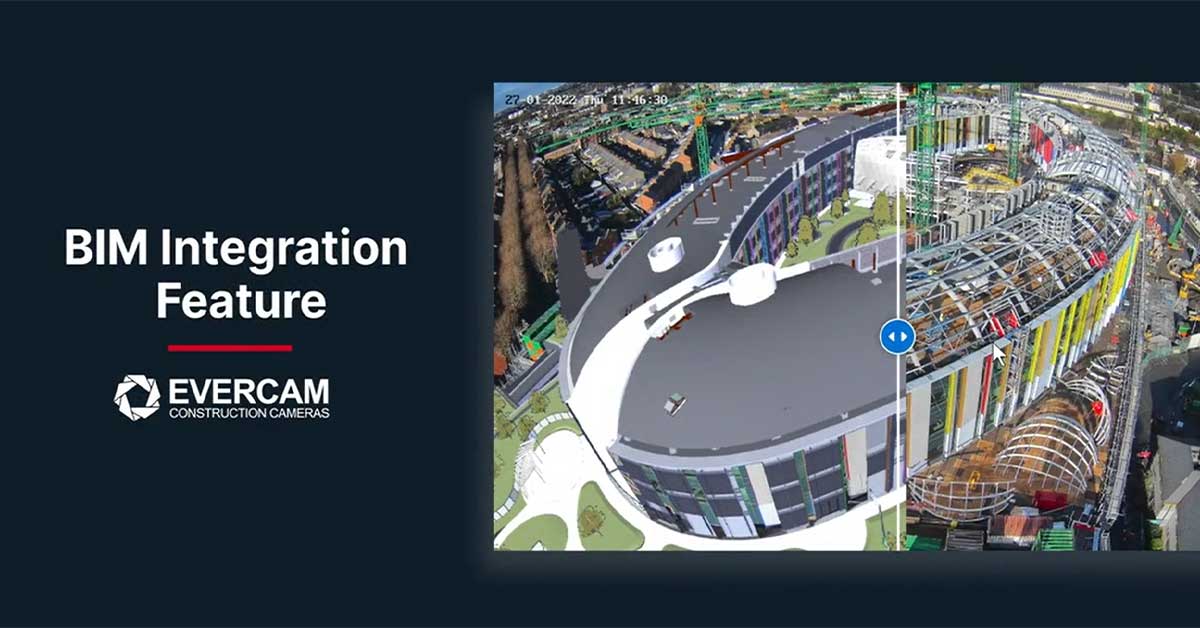
Construction Camera BIM Integration - Why you need this technology for your next project
Construction cameras are continuously becoming an important reality capture source on job sites in recent years. Not only are such cameras now needed for time-lapse videos and project management but the innovative BIM integration feature is now being used to verify that projects are on schedule by comparing real-time footage vs the proposed design.
Evercam Construction Camera software integrates with BIM�enabling users to overlay�3D renderings over construction camera images to compare the planned & actual construction status. Different project stakeholders can benefit from this feature by superimposing the BIM model and being able to follow through with the progress of each milestone.�
WHY INTEGRATE YOUR BIM MODEL?
- All in one platform:
Integrating a BIM model within Evercam provides real-time video & virtual models that are synchronized in an all-in-one visualization. This provides real-time visibility for all project team members involved, indisputable progress data, and better alignment amongst stakeholders throughout the life cycle of the project.�
- Progress Verification:
With BIM integration, users can identify whether the project is being built on time or off the critical path schedule. The stakeholders can identify the milestones achieved or delayed versus the actual progress. By combining this visualization with Evercam�s project management features and full video recording, it is possible to also tell the reason behind progress delays e.g weather delays.�
- Cost Saving:
Companies that integrate BIM on cameras cut their expenditure price points by saving money on BIM licenses. 3D modeling platform user licenses are expensive. However, Evercam users have unlimited user access to the BIM feature and more people can view the BIM model and can reference live view footage compared to the number of users that BIM would allow at one given time. Allowing more of the project team to share and interact with a BIM model than before.
- Visual Update:
The integration allows users to switch between the BIM model and as-built progress. With this, team members can track progress and communicate progress and any change orders.�
- Reduced Site Visits:
BIM integration on construction cameras bridges the gap between what is designed at the office and what is built on site. The integration feature gives everyone a clear update of the status of the project at any point in time. With the stakeholders being kept informed, site visits are greatly reduced.�
- Win more business:
Construction companies can win more business from clients by utilizing the BIM model to showcase project progress and by providing a timeline of completed works.
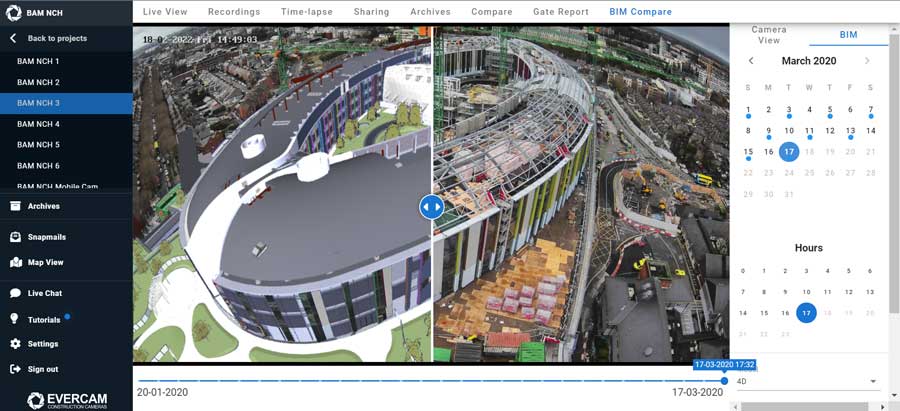
With the above reasons, some of the project team members that benefit from the BIM feature extensively include:
- Project Managers and Superintendents:� With the visual update from the BIM feature, it is easier for project managers and superintendents to compare the BIM schedule to the live view than reading a Project Schedule and comparing it to the live view.�
- BIM Engineers: Since the BIM model can be overlaid over the actual project and check on the progress, BIM engineers utilize this tool to ensure that construction is executed as per the design. BIM engineers also ensure that BIM guidelines are respected throughout construction.
- Quantity Surveyors: To achieve optimum prices for each element of the project, the quantity surveyor can also overlay the BIM model over the ongoing project and carry out valuation for the works done versus the work yet to be completed. This enables the QS to advise on costs and/ or predict future expenditures.�
- Bid Managers/ Contractors - They use this feature to show they have been on or ahead of the schedule. They can also use this to explain any reasons for delays in case the need arises.�
- Chief Information Officer - A CIO uses this feature to manage and showcase the formulating changes in the BIM Digital twin to enhance communications of actual vs planned vs changes with the project.
We believe the integration of 4D models and reality capture will enable lean construction practices and more productive construction sites, along with better asset management. We know this future of construction practices and are excited to be part of the changing landscape.
To add BIM to your construction camera, get in touch with us today
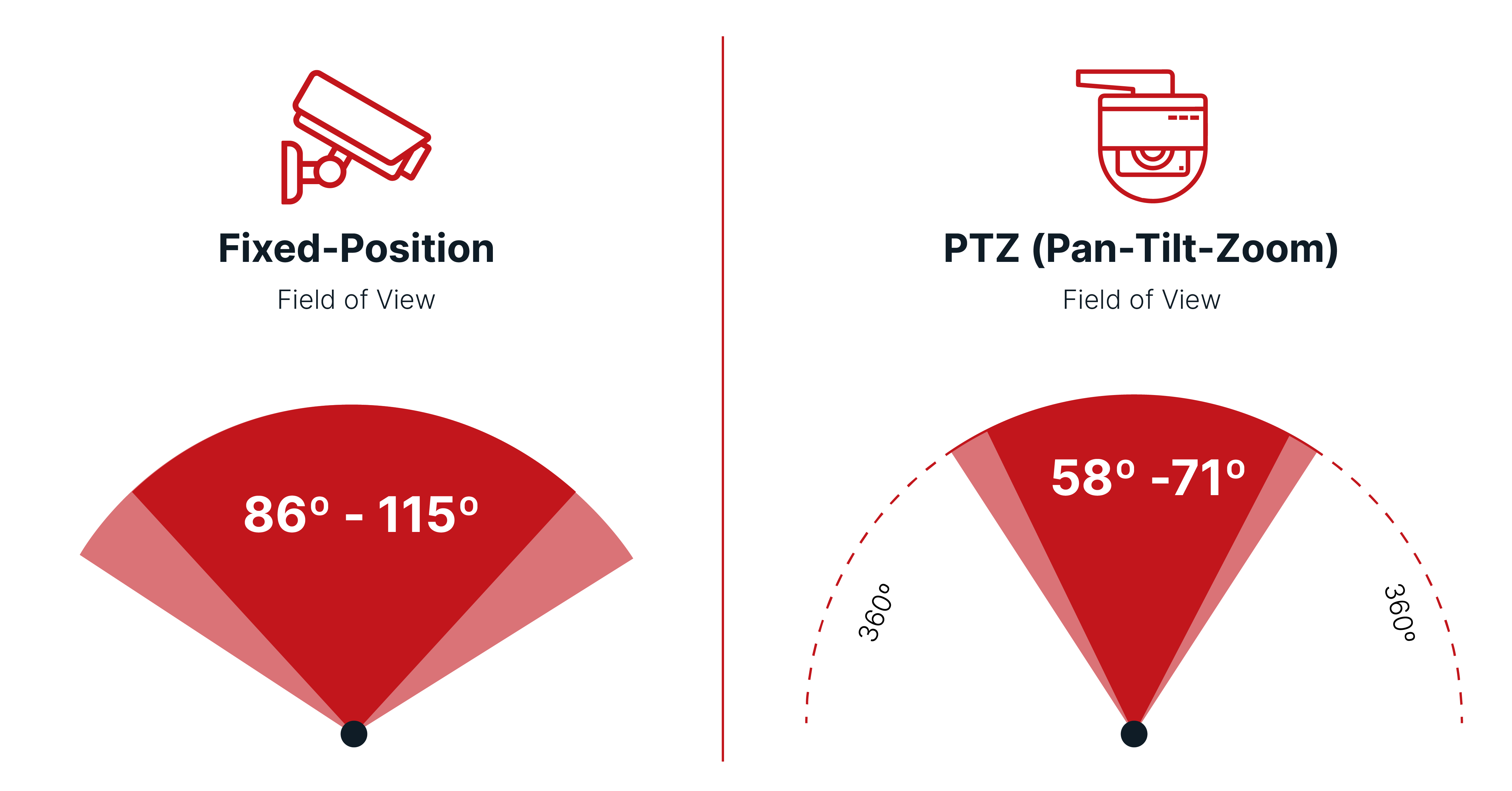
Fixed Position Cameras vs PTZ - Which Construction Camera Is Right For Your Jobsite
With the digital transformation that is taking place across different sectors, the construction industry has not been left behind. Various construction companies have embraced new approaches, tools, and data-centric strategies to improve the outcomes of projects. With the overall aim to reduce costs, time and minimize risks at job sites, adopting digital ways of operations at the site can go a long way to improve efficiency and deliver projects on time. One of the modes of incorporating digitalization is through reality capture.
Reality capture is the process of quickly and efficiently recording the conditions of the project using construction cameras in order to gain the most accurate interpretation of the project and represent the closest portrayal of reality. Construction progress can be captured either using PTZ (pan-tilt-zoom) cameras or fixed position cameras. Construction cameras have become the most common form of reality capture on job sites. These cameras are used to improve security, enforce policies and procedures and provide visual project documentation of everything that happens on a project, helping project managers stay on schedule and on budget. They can improve collaboration between key stakeholders while reducing the need to physically visit the Jobsite.
As the name suggests, PTZ cameras use motors that allow them to pan, tilt, and zoom in and out of a preset location. One can operate them remotely to monitor wide open areas that require a 360-degree view.
Fixed-position cameras are set up stationarily to capture the activities of a set location over a given time. Although these types of cameras are immobile, it is the ability to capture events in real-time that give them an upper hand as construction cameras. With a number of options and suppliers, selecting the right construction camera can be challenging. This is because the features of the construction camera are not only important but also the functionality.
Here are some of the differences between these two cameras that are commonly used on job sites:
Fixed position Cameras Over PTZ cameras
- Coverage Area
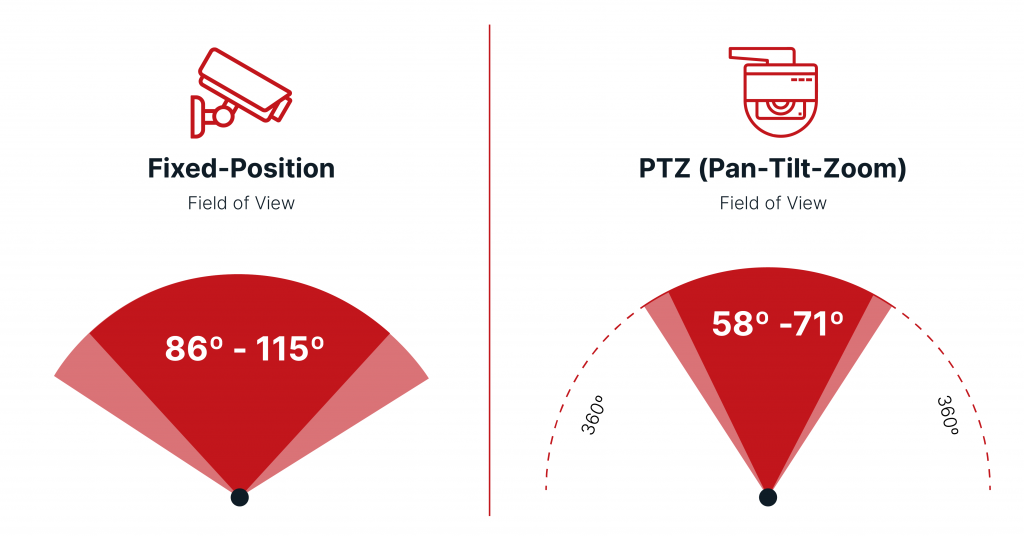
With the advancements of image resolution in fixed IP CCTV cameras, single or multiple fixed cameras can provide better coverage at a lower cost than a single PTZ camera. High-resolution fixed cameras can be configured to allow for digital zoom and set to cover the same area as a PTZ camera. On the upper hand, fixed cameras are never repositioned out of place, thereby providing multiple angles and views of any incidents that may occur on-site.
- Blind Spots
Typically, a PTZ camera covers a larger area than a fixed position camera because it can rotate through different coverage. However, with this movement, there are high chances of blind spots as the PTZ camera rotates and this provides incoherent data capture. A fixed position camera has no risk of any blind spots but rather offers reality capture of the entire site activities. Future references can be made from reality capture without the worry of missing captures.
- Installation
Due to the complexity of the PTZ camera and its ability to move around, it requires precision during installation so that the camera can be fully utilized. On the contrary, a fixed camera can be easily installed on-site without the worry of any potential damages to the camera during installation.
- Cost-Effective
PTZ Cameras are expensive compared to fixed-position cameras in terms of both hardware and installation costs. Installation of fixed cameras is highly cost-effective compared to PTZ cameras
- Picture quality
Fixed-position cameras produce high-resolution images and have a zooming ability beyond 18X the normal basic zooming level. PTZ cameras are unable to capture high-resolution images due to the mobility capability of the cameras
- Digital Zoom
Today�s construction cameras have complex multi-function systems and optional components. These components make these cameras have different price points and ROI to the customer. The fixed position camera with 101 degree, lens or field of view has a digital zoom feature. Digital Zoom uses the camera�s processor to crop into the center of the photo, capturing fewer pixels, then scaling up the smaller image and stretching out those fewer pixels to get the photo resolution back to its original size. On the other hand, the downside of the PTZ camera with its optical zoom feature is that once a user zooms in optically, the rest of the view is not captured and any important occurrence off-frame can be easily missed. This is why digital zooms to fixed position cameras have the most opportunity to recuperate costs.
Essentially, fixed cameras are advantageous since they provide reality capture that is also handy during the construction progress and help with project management
Top Construction Timelapses of the Month - March 2022
Check out the best time-lapse videos produced by Evercam capturing construction progress from a range of projects across the globe.
Waitsia Gas Project Stage 2, Dongara western Australia- BIM Integration
Check out this timelapse video using Evercam's BIM integration that captures the progress being made by Clough Group on the Waitsia Gas Project Stage 2.�
Clough is moving rapidly to change the skyline with steel erection underway, and concrete works, pipe and mechanical equipment are also due to commence.
Integrating your BIM model with Evercam�s time-lapse cameras is a great way to keep your project on track. Comparing the project as built with the BIM model at any point in time helps you to track progress and quality.
Waitsia Gas Project Stage 2 -� BIM Integration
Moneypoint Synchronous Condenser, Ireland- Concrete pour
The Siemens Energy Team reached a major milestone in the construction of the Synchronous Condenser Project in Moneypoint,� Ireland's largest electricity generation station. Over 400 cubic meters of concrete were delivered and poured to form the generator foundation. This is the result of a huge collaboration from our Siemens Energy colleagues in Germany and Suir Engineering. Well done to all involved.
Moneypoint Synchronous Condenser - Concrete pour
Saint Patrick's Cathedral, Dublin - Final Video
It is Saint Patrick�s month and Saint Patrick�s Cathedral celebrated a very important project - the restoration of the Cathedral roof.
The conservation work to repair the Cathedral�s roof began in early 2020, just a few weeks before the Covid-19 pandemic St Patrick�s cathedral welcomed visitors back to the safe and beautiful home of Saint Patrick in time for the busy tourist season!�
Check out this amazing video of two years of work in 3 minutes!
Saint Patrick's Cathedral - Final Video
Senior Centre West, North Carolina, USA - Progress update video
Senior Centre West is a mixed-use development that is currently under construction in Fayetteville, North Carolina by Cooper Tacia. The project consists of a 19,619 sq ft building (including porte coch�re) adjacent to Lake Rim. The building structure is a pre-engineered building frame with metal stud infill and is intended to be completed in August 2022.�
Senior Centre West
Like what you see?
Time-lapse is just the beginning, let us show how valuable having a camera on-site can be.�Book a demo!
WEBINAR: Reality Capture & Digital Twins. Introducing the next level of Evercam
Since the beginning of Evercam, we have been focused on developing a construction camera experience that delivers much more than time-lapse. Our main priority is to build a product that adds value to our customers goals and aligns with our vision.
From our very first customer right up to today, we have listened to what you have asked for, and through that feedback, we have built a product that we are proud of.
Images and reality capture are the future of construction site communications. We know that accuracy in digital construction plans is paramount to ensuring a project finishes on time and on budget. The future of our software will focus on integrating the construction plan with reality capture to reduce the latency in the feedback loop and democratize access to this information.
On May 5th, we will introduce, 4D View, the latest development in our BIM/Digital Twin and reality capture integration. This technology will redefine how project teams share and interact with digital plans through reality capture. We couldn't be more excited to share what we've built and where we're headed in collaboration with Bentley Systems to achieve this goal.
Please confirm your interest here, and join us as we take a step toward better digital project delivery through Evercam�s software.
REGISTER HERE
APAC / Europe Thurs, May 5, 2022 07:00 (GMT +2:00)
North America / Europe - Thurs, May 5, 2022 18:00 ( GMT +2:00 )
The Not-So-Secret World of Sustainability
The future of business in all industries�and especially construction�rests solely on the strength of sustainability efforts. Achieving sustainability involves everyone. It requires everyone to think differently about our lives, the economy, and the world. It means making a transition in how we view the environment and want to improve our quality of life today and for the future. Sustainability requires innovation, technology, and people.
Sustainability, Defined
Merriam-Webster defines sustainable as relating to or being a method of harvesting or using a resource so that the resource is not depleted or permanently damaged. Simply put, I define it as environmentally sound living without compromising the needs of future generations. So, if that is sustainability in general, then sustainable construction is environmentally friendly practices across the project lifecycle.
There are two big ways to be able to do this. For one, builders can make sure the buildings and homes themselves are sustainable, so the building owner or homeowner consumes less energy in the lifecycle of the structure. At the same time, contractors need to ensure processes at the jobsite are as sustainable as possible�something we will explore in-depth throughout this blog.
The Need for Sustainability in Construction
Today, more than ever there is a growing need for sustainability in construction. We all know C&D (construction and demolition) are some of the biggest contributors to waste in industry. In fact, numbers from the U.S. EPA (Environmental Protection Agency), suggest 600 million tons of C&D debris were generated in the United States in 2018, which is more than twice the amount of generated municipal solid waste.
Further, demolition represents more than 90% of total C&D debris generation, while construction represents less than 10%. Only roughly 455 million tons of debris were directed to next use, while just under 145 million tons were sent to landfills.
Waste is simply one example too. According to the UN Environment Programme 2021 Global Status Report for Buildings and Construction, in 2015, the construction and operation of buildings was responsible for 38% of global energy-related CO2 (carbon dioxide) emissions. By 2020, CO2 emissions in the sector had fallen an estimated 10%, a level not seen since 2007. This decline was driven largely by reduced energy demand due to the COVID-19 pandemic, but also by continued efforts to decarbonize the power sector.
The Role of Construction Cameras in Sustainability
Construction companies need to demonstrate a more efficient way in managing risk to be more cost-effective as they digitize their businesses. It will not be a separation of business, but part and parcel of everyday business. Going forward, the construction industry needs to leverage technology to be more sustainable on the jobsite.
Case in point: construction cameras. Capturing and processing data from construction jobsites is one way to improve operational sustainability. Reality capture makes it possible for operations to understand the impact of construction on the surrounding environment and a plan for proper waste management. Consider the example of AI (artificial intelligence), which can track the time difference between entry and exit of the vehicles. Another instance is the integration with BIM (building information modeling), which can enable better, faster, and less wasteful project delivery. And these are just a handful of examples. All in all, technology can reduce energy consumption and waste across the project lifecycle.
Living Lab: Project Sustainability
Going forward, construction companies will also have to build more sustainable homes and buildings. To help, Project Sustainability: Leveraging Tech to Build a Greener Home is designed to be a model for sustainable, resilient, and efficient residential home building practices.
This individual project will incorporate the most advanced products and systems from leading manufacturers and technology companies to demonstrate and educate both industry and consumers alike about how we can create a sustainable, clean, and green future for all homes and future communities for which we live, thrive, and prosper.
The future is sustainable�and those that realize it now are going to be more successful and profitable in the months ahead.
*����*����*�

Peggy Smedley is an award-winning journalist and technology expert. During her 25-year career she has extensively covered IoT, manufacturing, construction technology, and most recently sustainability, circularity, and resiliency.
She is founder and president of Specialty Publishing Media (SPM); editorial director of Constructech and Connected World; radio host of The Peggy Smedley Show, and author of her most recent book �Sustainable In a Circular World,�which follows her first book, Mending Manufacturing (2004) �