Insights on Construction Technology and Site Visibility
Items in view: 2
Showing items 1 to 3 of 6

The Rising Cost of Construction: How Evercam Can Help
According to CBRE's new Construction Cost Index, construction costs will rise 14.1% year by the end of 2022 as labour and material costs continue to rise. In 2023 and 2024, escalation should stabilise in the 2%-4% range, in line with historical averages.
Overall material cost inflation is expected to begin slowing by the end of 2022 and return to normal levels by mid-2023. However, given the large number of construction inputs, many of which are frequently subject to geopolitical risks such as tariffs and sanctions, prices for some materials may continue to fluctuate and affect the overall cost of construction.
Cost of Materials
There are many factors causing the rise in the cost of materials. Costs rise as a result of tariffs, trade disputes, environmental regulations, and shifting consumer preferences. Many projects call for materials like iron, lumber, and steel, all of which have suffered sharp price rises recently.
The price of crude oil increased by 49%, that of lumber by 29%, and that of iron and steel by 14% in just one year. As a result, the overall cost of projects increased by more than 5%. While some businesses collaborate extensively with contractors to save costs during the pre-construction phase, prices change so quickly that once the project begins, the cost estimates may be inaccurate.

Supply chain disruptions
The latest Subcontracting Growth Report from Bibby Financial Services (BFS) found that 40% have looked for new raw material suppliers, 25% have secured new suppliers and 24% have renegotiated with existing suppliers. However, 46% have taken no action yet.
The high US costs reflect the impact of significant ongoing supply chain disruption meeting a surge in demand, especially for residential construction. With this kind of disruption, the ripple effect is seen in the cost of construction.
Inflation
The construction business faces significant challenges from inflation, which drives up the cost of building supplies, machinery rental fees, consulting costs, and other project inputs. As a result, it may delay the completion of a project, raise construction costs, and lower profit margins.
Labour shortages
According to Business Insider, the construction industry needs a �staggering 2.2 million more workers,� in the next three years, or 61,000 new workers per month, to keep up with industry demands. And it goes that competition for workers will also lead to price increases.
The United States Bureau of Labor Statistics reported that in July 2021, 4.5% of construction jobs were unfilled, totalling about 347,000 jobs. By November 2021, those figures had decreased marginally to 4.4% and about 345,000 unfilled jobs.
According to Contractor Magazine, some of this shortage is attributable to the fact that more than five million people over the age of 55 exited the labour force during the pandemic, and approximately 1.5 million of those chose to take early retirement.
The Solution
There are many ways to combat the rising costs in the construction industry, and one possible solution is to work closely with technology.
While some technological advancements do require an investment of time, training, and money, those costs could be offset in the long run with efficiency and safety.
One of the technological investments that one can add to their job sites is a construction camera. A construction camera is the most convenient and transparent form of remote site monitoring.
The project managers and stakeholders can have a better view of the site activities and can ease communication and collaboration. Decisions can be made faster without necessarily visiting the site.
As technology advances, special features are also introduced to construction cameras such as building information modelling (BIM) software. Building information modelling (BIM) software can streamline the construction process, projecting costs and assisting teams in hitting crucial deadlines.
The cost impact of having construction cameras
Remote Monitoring:
Since project managers, owners, and other stakeholders may log in and view the job site remotely at any time, remote viewing reduces the need for travel. This improves margins for businesses by saving them a lot of time and money.
Additionally, remote viewing enhances logistics. Project managers may ensure that crews are prepared for incoming supplies as soon as they arrive by having up-to-date information on the status of a project.
Improve Logistics:
Project managers who have access to visual documentation of a project from beginning to end can assess if it is developing as anticipated and change the start dates for subcontractors for different construction stages well in advance � before the project lags behind schedule.
Reduced theft:
Having cameras on the job site deters stealing. Additionally, in the event of any theft incident, footage from the construction camera becomes tangible evidence to be presented to relevant authorities. With this, it is possible to trace stolen items and save on the cost of double purchases.
Construction cameras can help you keep an eye on your project and ensure that it is proceeding as planned, even if you�re not on site. By using construction cameras, you can save money by catching mistakes and problems early.
If you are interested in learning more about how Evercam construction cameras can help with the rising cost of construction, please book a demo with us today. We would be happy to show you how our technology can help streamline your projects and keep costs down.
How Construction Cameras Impact Construction Disputes
Financial Impact in Construction Disputes
Construction disputes are inevitable on any construction site.
Whether it�s an argument between owner and contractor over contractual obligations, the GC (General Contractor) & Architect argue about design errors or payment for work completed - conflict can be hard to avoid when not handled efficiently at a high-level project level.
Moreover when not handled efficiently on the project level, construction-site disagreements can morph into formal disputes and expensive legal battles.
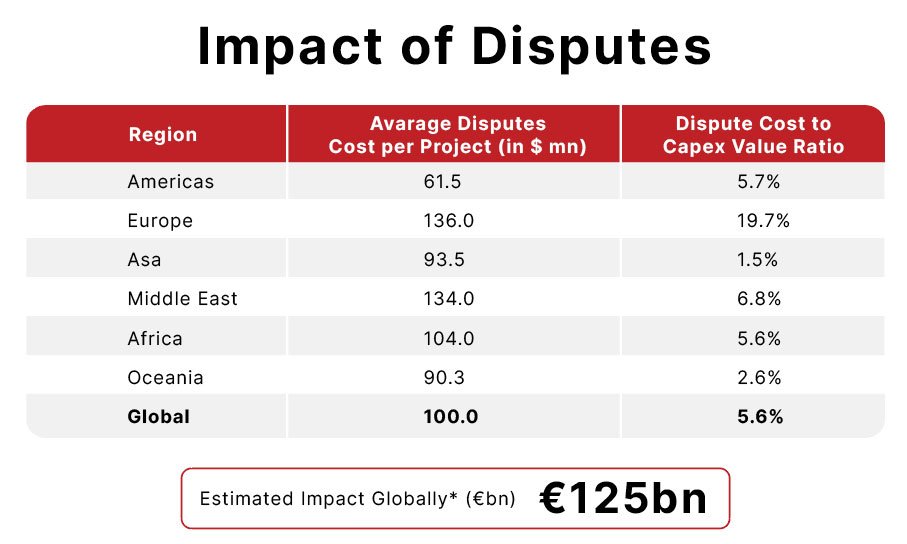
Globally, it costs the construction industry an average of $54.26m per formal dispute and 13.4 months to reach a resolution, according to the 2020 Global Construction Disputes Report by Arcadis.
Together with research completed internally, as of 2022, revealed that the estimated impact of disputes is approximate �125 billion
Impact of Disputes
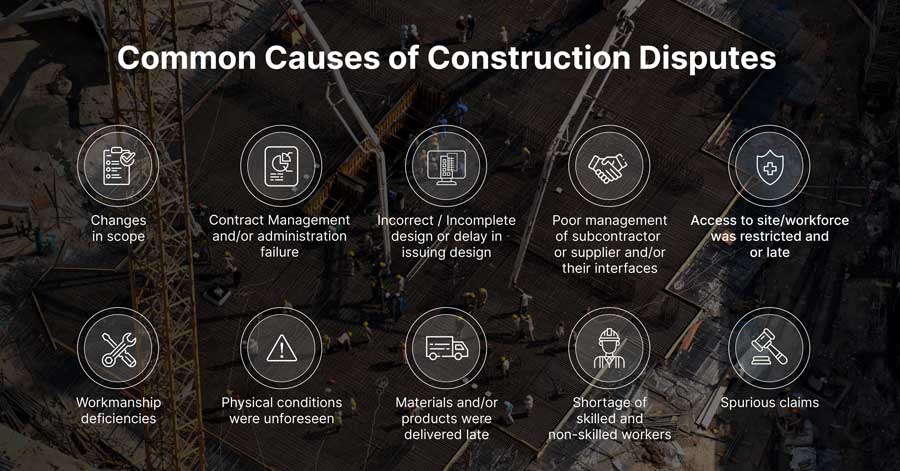
In fact, some of the main causes of construction disputes includes workmanship deficiencies, unforeseen physical circumstances that cause delays, poor project management and delay in issuing designs among many others as highlighted in the figure below.
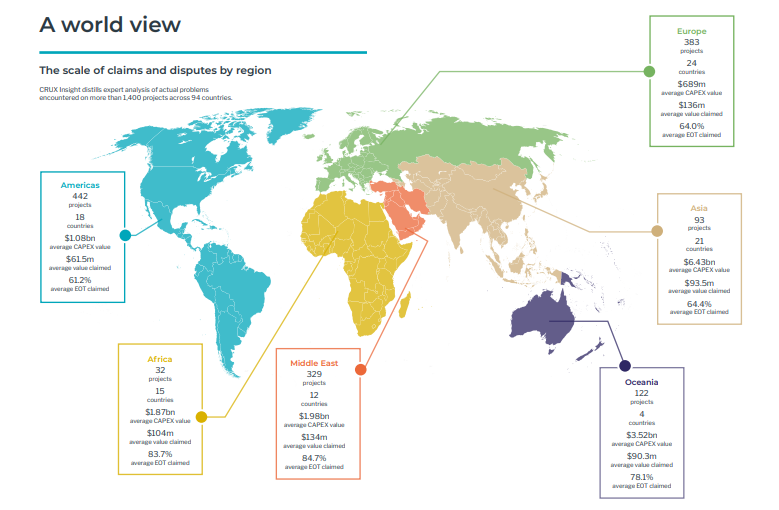
When disputes are not resolved efficiently, the potential negative impacts cannot be understated. The effects of construction disputes in an organization can be summarised as follows:�
Possibility of litigation cases
One of the most common causes of litigation is when a contractor fails to pay the workers for their work, and then the employer takes them to court. Moreover, the entire litigation process not only sucks up time for the construction project but also costs are diverted to litigation fees.�
Time delays
Ambiguities in the prevailing contract forms eventually make contract forms difficult and cause impacts such as an increase in the number and frequency of claims and disputes.
Likewise, disputes and their respective resolution processes halt construction progress, thereby causing a delay in the time ought to be taken for the construction�
Cost overruns
No part of the project team intends to get into a dispute as a project is beginning. Nevertheless, in case any form of dispute arises, funds must be diverted to facilitate the dispute resolution process. As a result of not having preventative solutions in place included in the original budget, cost overruns will occur.
Not to mention, delays that arise due to disputes can also impact the cost of construction materials that are dependent on the market price dynamics. Besides, in most cases, the cost of materials always changes in the upward direction with respect to inflation.�
Loss of profitability
In construction arbitrations involving delay and disruption, claims for lost overheads and profit are common. By the same token, contractors will claim a refund for the loss of profits incurred during the time resolution.�
Besides, coupled with other effects of disputes in an organization include; insurance coverage, liability risk exposure, additional expense in managerial and administration, and loss of business viability
Construction Cameras Save The Coin
Having a construction camera on the job site has become an invaluable tool considering the amount of money that ends up in arbitration that would have otherwise been used for construction. Not to mention, construction is a high-value industry, so when things go wrong it�s expensive.
Having the full archive of video footage helps project teams save money and resolve disputes.
Furthermore, some of the disputes that a construction camera can help to avoid are in the table below:
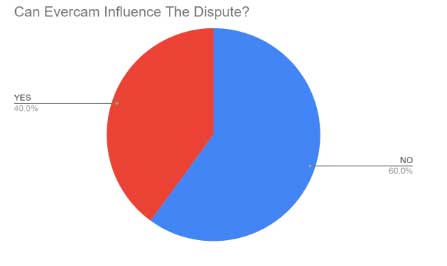
Top Causes of Claim or Dispute Can Evercam Influence? Change in scope NO Contract interpretation issues NO Contract management and/or administration failure YES Design information was issued late NO Poor management of subcontractor/supplier and/or their interfaces YES Physical conditions were unforeseen YES Access to site/workforce was restricted and/or late YES Workmanship deficiencies YES Level of skill and/or experience NO Claims were spurious YES Operational performance YES Tender errors and/or inaccurate estimates NO Materials and/or products were delivered late YES Shortage of skilled and non-skilled workers YES Installation failure YES Weather conditions were exceptionally adverse YES Personality and/or cultural differences NO Bias and/or failure to cooperate NO � � How construction cameras can influence dispute settlement. Source: File
Additionally, 40% of the causes of construction disputes can be avoided with the installation of a construction camera. This amounts to approximately $54 billion.
Hence, with construction camera on a job site helps keep employees, subcontractors, delivery drivers, and others focused on safety and compliance. This helps to avoid any incidents that may occur and lead to disputes and saves the cost of dispute resolution.�
Evercam construction cameras have a Live View feature which enables team members to remotely monitor construction projects. This 24/7 visibility ensures that communication of change orders is faster compared to physically visiting the site first. In addition, this results in fewer delays that may end up causing any form of dispute.�
Everything that happens on a construction site is recorded in high resolution and saved in the cloud for future reference. As a matter of fact, this is what one of our clients had to say about this feature after being served with a claim for faulty equipment.
"An equipment manufacturer filed a damage claim alleging that we were responsible for tire damage on a boom lift that we rented for four days 40 days prior."
I used a zoomed-in video recording of the day the boom lift was dropped off and drew a circle on the tire with the Edit Tool to prove that it was damaged before it ever arrived on the project site."
Lastly, to decrease the occurrence of disputes in a project, dispute avoidance strategies have to be used such as stakeholder management, of course, early involvement in the decision-making process, lean construction, and the use of construction cameras to monitor the progress of construction.
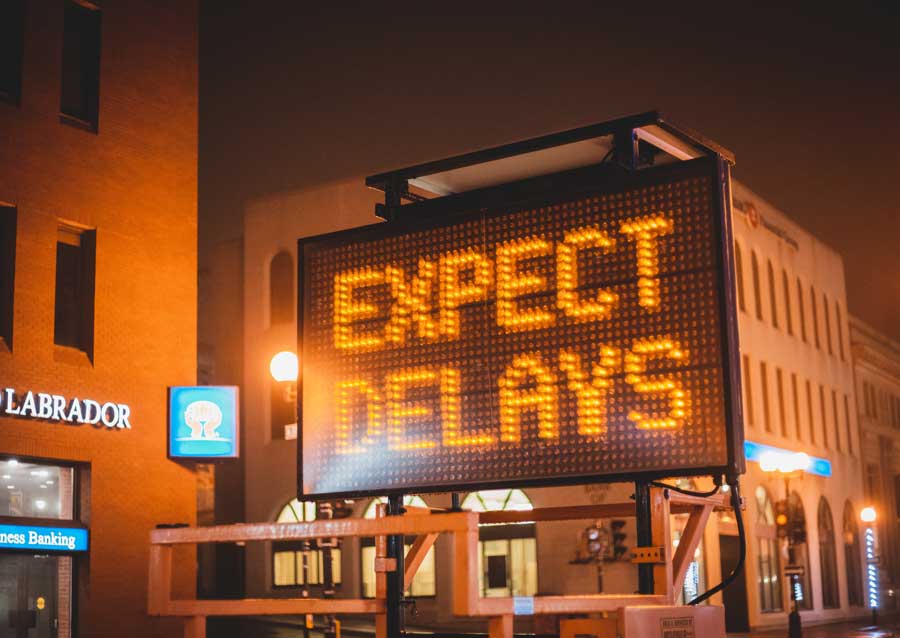
The Major Causes of Delays to Construction Projects and The Technology That Can Help Impact This Expensive Problem
The delay of construction projects is a universal problem that can have devastating effects on both the industry and the economy. Sometimes project delays are contractor based such as poor planning and management, insufficient resources, or delays in the supply of materials. Often the delays are due to weather patterns.�
Delays can have a serious financial impact on a project. They can reduce the contractor's annual revenue figures or even jeopardize the contractor's credibility to deliver a project, hence losing clients. In worst-case scenarios, the firm could be ruined by liquidated damages. In the UK, project delays have a 15% impact on the value of the project (see image below) with an estimated 1.58 trillion euros loss on a global industrial scale.�

Avoiding construction delays starts with recognizing their most common causes and working to mitigate those factors before they take effect.
Improper Planning & Poor Site management - Planning is one of those aspects that affect the outcome of so many different things in a project. Since a project has different professionals involved, at any given time, a project manager must be keen to ensure that every aspect of these is already incorporated into the planning process to obtain the maximum outcomes and best results. They must look into all the phases of construction and ensure that all professionals are working in tandem and the resources are readily available to avoid any delays.�
Poor Communication Between Team Members - The client issues an instruction to stop work for reasons unrelated to the contractor. The instruction may be due to the client changing their design, or to allow the client�s work, or the work of their contractors, to proceed.
In some cases, clients may issue an instruction to the contractor to stop work because of a fault by the contractor such as; unsafe working conditions, poor quality work, or failure to obtain design approvals or the required construction permits. In these cases, the contractor can�t claim an extension of time unless they can prove that the client (or their representative) was wrong to stop the work and that the contractor was compliant.
Shortage of Materials - One of the most significant factors that contribute to global construction project delays is a shortage and delay in material supply. Poor estimation results in either a supply shortage or an oversupply. Shortages of supplies impede construction progress on the job site, as reordering can result in lengthy delays and additional costs, especially if the material must be imported from another country. Other issues that may arise as a result of reordering include colour inconsistency and size tolerance.�
Equipment Failure - Due to the technological advancements and the need
for faster completion of works, construction modern construction equipment is chosen instead of relying on manual labour. The increase in using these solutions in various construction activities has also resulted in the increased importance of maintenance planning for onsite machinery and technology. Improper construction equipment management directly affects the progress of a project and results in construction delays.�
Inadequate client�s finance and delayed payments - Poor cash flow management, insufficient financial resources and financial market instability may have an influence on the supply chain of payment and supply of materials as a whole. A well-managed cash flow is important to enable the delivery of a successful project. By performing a cash analysis on a regular basis to identify any problems productivity related to materials deliveries and supply chain will not be impacted
Impact of Evercam technology�
These reasons and many more show the need for combating these causes, where possible. To tackle these delays, every construction business should seek out ways to adopt new technology on its job sites to save time, and money and be effective in every aspect. A construction camera helps with overall visibility on site.�
Cause of Delay Share in costs due to delay. Can Evercam Influence? Poor original planning/ unrealistic scheduling 39.30% NO Lack or delay in receiving information 34.49% YES Changes to the initial specifications 9.60% NO Shortage of material or inadequate labour 4.60% YES Availability of the site 3.30% NO Resource productivity 3.30% NO Weather 2.60% NO Site conditions 1.30% YES Finance holdups 1.60% NO Share of top causes that Evercam Influences 40.3% � � � � Annual costs of delays that Evercam can influence (in $ billion) � 669 � � � How construction cameras can influence delays in construction. Source: File
�
The table above shows the impact of construction cameras on project delays. With an estimated 1.58 trillion euros loss due to delays, construction cameras have a 40.3% influence on the causes of delays. These types of causes of delays cost the industry $669B annually.�
Instead of spending time on the road, project managers can stay up to date on what's going on at their job sites with real-time access to live video and photographs from the job site. Construction cameras are the most convenient way to see what's going on without having to visit the site. They are a powerful tool that makes communications and progress updates easier and solves problems quicker, which in turn can help to reclaim lost time.�
Evercam provides a 24/7 view and recorded archive of a construction project. The footage can be compared with the project�s BIM and schedule, giving users the ability to assess how much of the work has already been completed, and what still needs to be done. This comparison helps project teams to review the project status and investigate what may cause delays or disputes, and find a resolution..�
Construction camera technology is not just changing the way project teams find and solve problems on sites � it�s transforming how we visualise and communicate live and retrospective construction progress.�
Want to find out more about how construction cameras can make your project management more efficient? Get in touch today.�
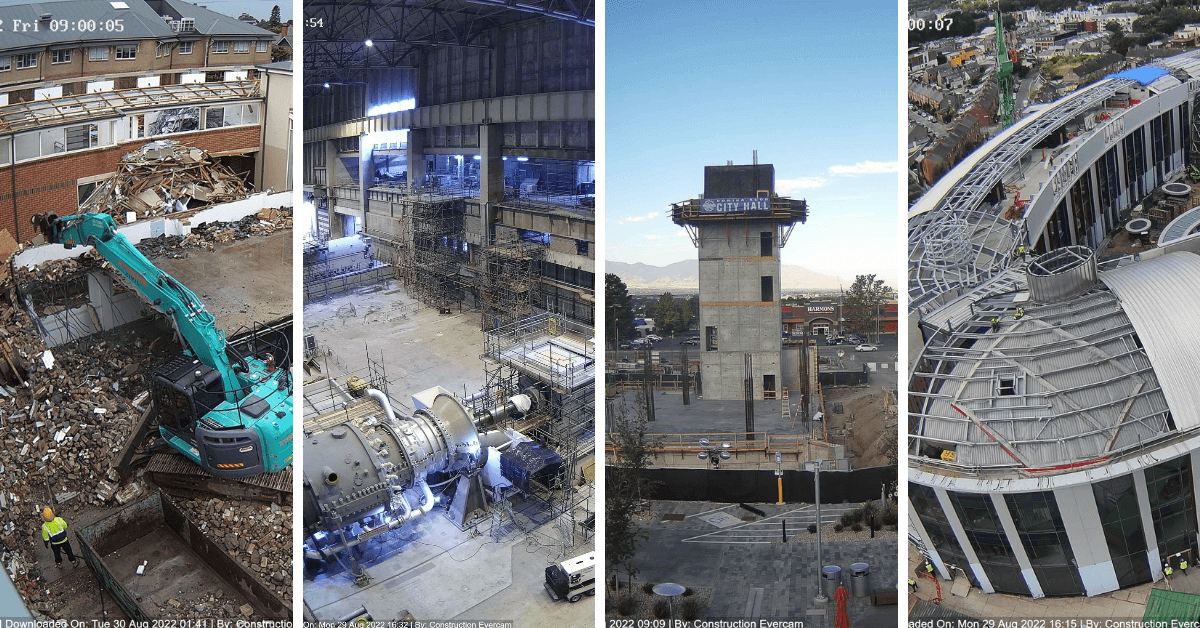
Top Construction Time-lapses of the Month - August 2022
Our talented video team provides high-quality, marketing-ready time-lapses for all of our clients, but with a key focus on the construction milestones. Check out some of the best time-lapse videos produced by the Evercam video team this month, capturing construction progress from a range of projects across the globe.
Danebank College Demolition, AU
Great progress on happening on the Danebank College site!
Since commencing this project, Rohrig have undertaken the demolition of the existing building, which required expert handling as it�s enclosed on 3 sides by other school buildings.
Check out the video with the old building successfully removed, the site team is getting ready to pour the first slab and see this new facility come together.
Kilroot Power Station, UK
Atlantic Projects Company are delighted to share a time-lapse video progress update from Kilroot Power Station where we they just installed the first of the Open Cycle Gas Turbine Units for EP UK Investments.
Check out the video:
Milestone video - Generator Installation
The New Children's Hospital (NCH) Project, IE
The most significant healthcare project ever undertaken in Ireland, Dublin's yet-to-be-named 'New Children's Hospital' (NCH), is now 70% completed. Check out this video to see some of the latest updates from the project and have BAM Ireland our using our 4D View feature on this site.
Project of the month video
Millcreek City Hall, USA
Millcreek's new City Hall building is now under construction. The building will be one of the first city halls in the country to feature a public market on the ground floor, council chambers, police precinct, and offices.
Okland Construction is currently working on ground work phase of the project. Check out the video:
Project progress video
Like what you see?
Time-lapse is just the beginning, let us show how valuable having a camera on-site can be.�
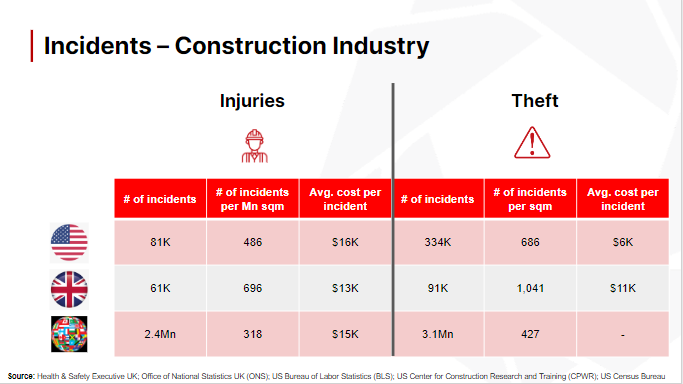
The Cost Impact of Incidents & Theft in Construction Industry
The construction industry contributes significantly to national economic growth and provides numerous opportunities for job creation; however, workplace accidents and theft have long plagued the industry.�
The economic significance of workplace injury by construction activities and theft can have a detrimental impact on growth in the industry. These incidents represent a significant economic and social burden on both employers and employees.�
Wherever construction work happening, there will always be related problems of theft and vandalism, which will depend on the nature of construction work and vary from major projects like highways and airports to in-fill housing developments.
Although it is not possible to insure against all the costs arising from these incidents, it is possible to prevent accidents from occurring. Consequently, the costs of accidents can be avoided, time and money can be saved and harm to employees prevented.
Incidents in Construction Industry�
The construction industry is one of the most hazardous in the US. According to the National Safety Council (NSC), the construction industry experienced the largest number of preventable fatal injuries in 2020. There were 957 fatalities and 250,000 medically consulted injuries in the construction industry in 2020.
Safety incidents are like an iceberg. There are the costs you see and the costs you don�t. Accidents have a significant impact on construction projects and can result in expenses that can quickly add up to thousands of dollars.
Costs of Construction Injuries/Impacts
For construction companies, the average cost of one lost-time injury on a job site is $35,000, though many injuries cost much more due to litigation, medical expenses and compensation, according to the Workplace Safety and Insurance Board. Furthermore, 6-9% of construction project costs are workplace injury related, leading to long-term increases in insurance costs and shrunken profit margins. A severe or deadly accident can mean the end of a project or company.
According to the Occupational Safety and Health Administration (OSHA), US companies pay over $1 billion per week in workers� compensation for disabling and non-fatal injuries. Preventing these accidents means protecting the lives of workers while offering major savings for their employers. It is estimated that the full impact of workplace injuries and fatalities costs companies approximately $151 billion per year.
The human impact of accidents is even more significant and important than financial losses. In 2020, the US Bureau of Labor Statistics (BLS) reported 2.7 million work injuries and illnesses, and 4,764 workplace fatalities. One-fifth of those fatalities occurred in the construction industry.

Costs of Construction Theft & Vandalism
Construction job sites are naturally at high risk of theft due to the valuable assets found on them. Such items include large excavators, loaders, vibrator rollers, dumpers, generators, pumps, drillers, breakers, shutters, and scaffolds. Theft of high-value assets such as construction plants results in loss of profits for contractors.
Though it does not result in massive losses for contractors, vandalism is a nuisance that must be avoided. Vandalism manifests in the form of destruction
of in-place materials, graffiti, broken glass, and damage to construction plants. Taken together, theft and vandalism ought to be critical facets of commercial construction projects which must be given attention. Thieves and vandals can directly impact the success of a project and diminish the potential profitability of the project under construction. Theft is more costly to large-sized firms than to smaller firms, but vandalism is more costly for smaller firms despite the measures used by larger firms to combat theft and vandalism on their construction sites.�
Installing construction cameras at construction job sites is the most effective way to protect your projects from the threat of theft, trespass, arson, and vandalism. A camera on-site acts as a visible deterrent, which can prevent criminal activity before it occurs, thereby saving the costs that have been discussed above.
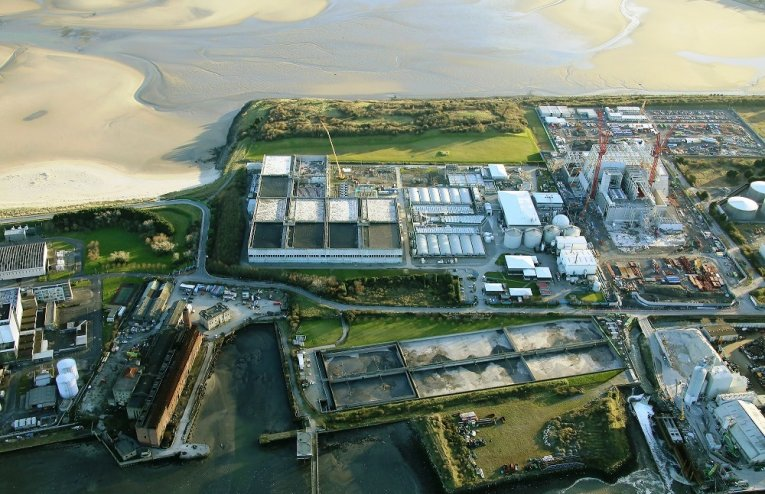
CASE STUDY: Murphy Ireland deploys Evercam�s innovative construction camera technology
Murphy Ireland deploys Evercam�s innovative construction camera technology to enable remote project management at their�Ringsend Phosphorous Fixation and Recovery Project.�
Project Background
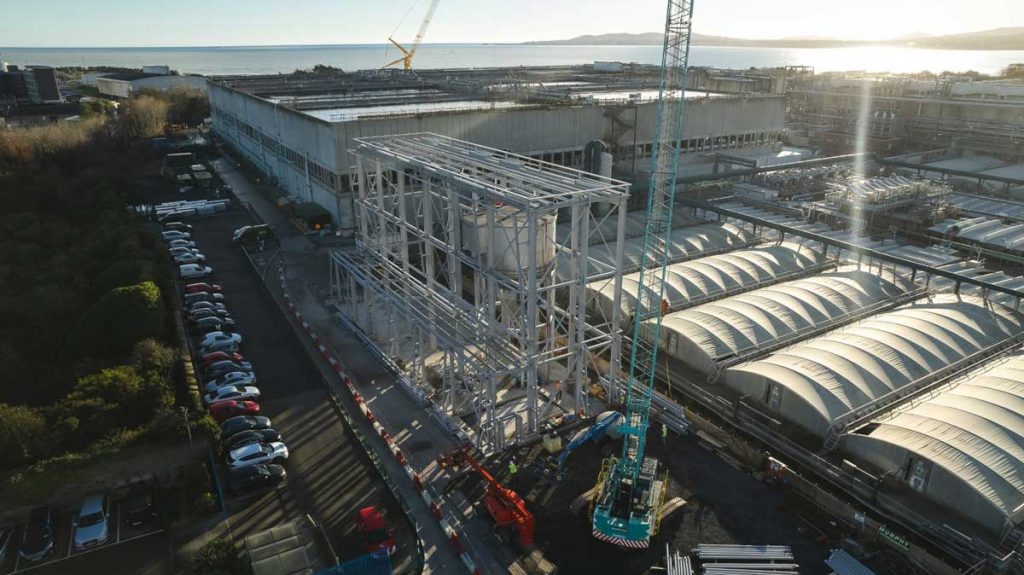
Murphy Ireland is constructing the Ringsend Phosphorous Fixation and Recovery Project using Ostara�s Pearl� phosphorus recovery technology. Upon completion of the project, the Ringsend Wastewater Treatment Plant will reduce the phosphorus released in the treated effluent and the phosphorus recovered will be processed to produce sustainable fertiliser for use in agriculture. This project is the first of its kind in Ireland and, once installed, will be the largest in Europe by reactor volume. It involves the use of innovative technology to sustainably remove phosphorus from the wastewater being treated at Ringsend WTP.
The stipulated time of the project is 90 weeks with the use of approximately 169t of steel, 780m of pipework, 241 valves and 9 pumps. Since this is a huge project and the first of its kind, Murphy�s use of visual documentation with Evercam is seen as critical. The value of construction cameras needed on the job site cannot be over-sighted.�
Challenge
Murphy Ireland is an integral part of Murphy Group, a leading global, specialist engineering and construction company that operates throughout the United Kingdom, Ireland and Canada. Like many other construction companies, they have multiple projects spread across their borders of operation. This may pose a challenge to project managers, operations managers, and company leadership to keep an eye on multiple projects. Management would require travelling every so often to job sites, which would cost a great deal of time and money. On the other hand, identifying and correcting mistakes must be done as soon as possible, especially for a project like this; where utilities require absolute keenness during construction and having limited time at the job site can make that difficult. For this particular project, site constraints such as vehicular traffic, minimal storage areas and tight site boundaries along with all other risks that come hand in hand with working in a live treatment plant were identified at an early stage of the project.
Solution
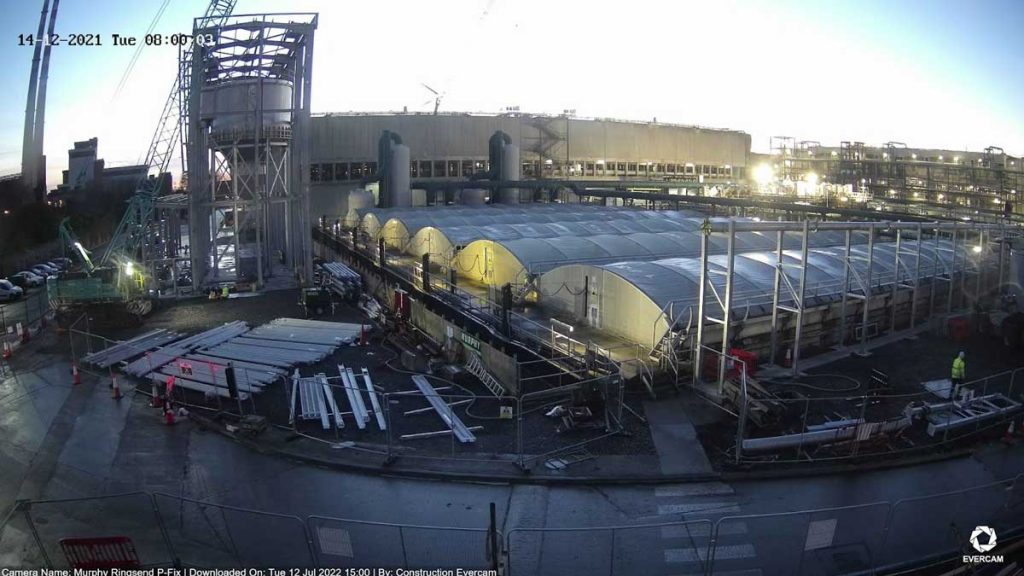
Murphy Ireland required site cameras that would allow them to remotely monitor and document their projects. They went with Evercam Construction Cameras after considering the many project management features that come with its installation, including live view, full video recording and integrated project management tools. The company made the conscious decision to focus on digital construction methodologies to produce a highly accurate product whilst maintaining a testing programme with minimal interfaces with the existing plant operations�
The Benefits
- Live view & remote monitoring � The project team are able to monitor the progress and productivity even remotely. Evercam�s easy-to-use interface allows users to switch between each of their projects� within the dashboard.
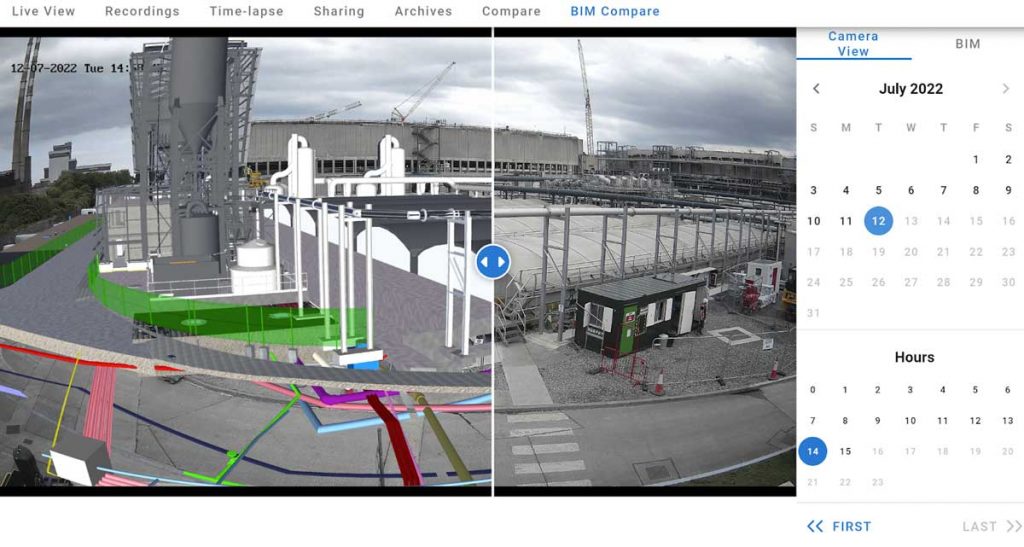
- BIM Model - This feature allows users to overlay a BIM model with real-time, high-resolution images of whats actually happening on the construction sites.
In this study, we get some great insights from Patrick Maguire (Senior Project Manager), Declan McFadden (Construction Manager) and Michael Kenna (CAD & BIM Engineering Team Manager) on the importance of� using BIM� for this project.�
Main Feature Used: BIM - Building Information Model Integration
Michael: �Building Information Modelling was a specific client requirement for use on this project and was specified in the Employers Information Requirements (EIR) document. Autodesk Revit is the primary design software used and drawings were produced for extraction of quantities, enhancing the use of off-site fabrication, multi-discipline coordination of models(both consultant and suppliers) and data input and output. The data output was also a client requirement, and this output was in form COBie (Construction Operations Building Information Exchange) data sheets. Autodesk Navisworks was used as a design review & project management tool. Project models were federated into an overall site model to produce a �whole project� model. Model reviews were then carried out with project stakeholders to produce a clash free model. 4D-construction simulation was also utilised on this project. Model elements were linked to construction programme tasks to produce a construction sequence animation. �
How was Building Information Modelling & Evercam Integration used?�
Declan: �The BIM model was used for generating a graphic that would be used during the constructability review, which showed all the different elements of the build and the methodology for constructing them. The BIM Compare feature within the� Evercam software was then used to demonstrate to the client that the methodology was executed as described initially.��
What were the steps taken toward planning and implementing BIM on the project?
Michael: �The in-house design team received formal training in the use of BIM software with some of the team returning to third-level education to enhance their skills. An internal learning schedule was also set up to review & enhance this training. Internal �lunch & learn� sessions were carried out with project teams (both site and office based) in the use of BIM tools such as Navisworks. Testing also took place with the in-house fabrication design team; models were exchanged, imported and exported to find the best solution in enhancing the off-site fabrication process��
Who were the key members of this project?�
Patrick: As this project was a design and build, key team members were appointed to cover all levels of disciplines (Civil, Mechanical and Structural). There was an Information Manager appointed to collate and manage all building information and a Construction Manager to process this information into the Works. A MEICA (Mechanical, Electrical, Instrumentation, Control and Automation) Contracts Manager was appointed to co-ordinate all information with suppliers and to ensure imports into the model were reflective of the equipment being delivered. This also aided in identifying clashes in the system and altering both pipework and equipment to fit holistically within the structure.
Were there any barriers to the implementation of BIM?
Patrick: While BIM integration and implementation were embraced with enthusiasm, the main challenge was making it default across all elements of the works. Despite being adopted early on in the project, there were challenges in the lack of familiarity and infancy of a project of this scale being delivered. This was across the entire project team, including subcontractors and suppliers.�
How were the barriers addressed?
Patrick: Regular team meetings were conducted and extensive demonstrations and workshops were hosted by Murphy�s in-house BIM team for the projects team. By outlining the benefits of BIM to all project members, its usage was not only seen as an advantage for a few members but an overall project benefit. Strict standards and procedures were agreed upon with all suppliers in advance of commissioning works to also ensure that there was a consistent approach to the works from the onset, and that data was being exchanged and managed in a way familiar to all.
Benefits of BIM Integration and Evercam�s construction cameras to the project?
Michael:
- Construction sequencing�
- Off-site fabrication�
- Assembly logistics�
- Access planning�
- Communication with plant owner
What were the results/ milestones after camera installation?�
Declan: The biggest milestone of the project, which incorporated most planning and use of BIM during construction, had to be the construction and lifting of the Pearl reactor, the centrepiece of the project. Upon becoming aware of this milestone Evercam produced a special ten-hour in two minutes time-lapse piece capturing its placement in the awaiting steel frame building. This production was shared with stakeholders fundamentally celebrating this achievement with the full project team.�
Michael: The 4D construction simulation proved to be successful and well received by the client. Linking model elements to the project programme, allowed Murphy to provide a digital rehearsal of the overall construction sequence, but specifically the difficult installation of the prefabricated Pearl Reactor Tank.�
Patrick: Using the 3D model, the team was able to size elements of the work (pipework) alongside other design elements. This allowed a federated model of the works to ensure that, where possible, elements of the works could be fabricated off-site where possible. Additionally, parts of the works which could be pre-assembled off-site, were identified with the use of the 3D model. This was challenging, considering the tight constraints on the site. However, by pre-assembling, we were able to ensure elements fit within the constraints of the existing plant, meaning less time spent in potentially hazardous environments or the possibility of causing disruption to existing plants.�
While there may still be physical site visits, the overall frequency of team members visiting the project has been reduced. The project team members have 24/7 access to view job site conditions, no matter where they are. Cameras are also shared with owners so they can see their projects coming together. The cameras have also helped Murphy Group to identify problems before they could become costly errors.
Any future steps?�
Patrick: In the future machine learning and AI will enable improvements in terms of health and safety at the design stage by identifying risks in the layout, based on collated data on methods to implement a given design. For example, being able to identify works from heights or sequencing issues with the construction. It is envisioned that this may also be used during construction with real-time images. This would have huge benefits and it would be the first step in automating the selection of methods for construction, which will bring more control into the environment in which we implement work.�
Michael: To ensure that the use of 4D construction sequencing becomes more of an everyday way of working, which would allow better programming of the sequence of construction activities. Evercam�s 4D View BIM Integration can directly enable this as it brings the 4D model, including the timeline directly into a live camera view.
A live Evercam camera integrated with a BIM model can be shared with multiple project stakeholders. This integration gives more stakeholders access to BIM data than ever before, all within the Evercam platform and allows users to receive an instant update of the project as planned (BIM data) versus the project as-built (live camera view). Murphy Group is currently dealing with numerous overseas project stakeholders and also has some upcoming projects outside of Ireland, meaning this technology is critical for frequent and meaningful stakeholder engagement.
Testimonial
��Evercam was recommended to me by a Murphy colleague who was using the software on another project. Although admittedly, I was slightly dubious at first of the benefits that the package would bring, I can truthfully say now that it has been a fundamental tool in the planning and implementation of all construction-based activities. With features such as gate reports, screen editing, weather reports and recording and BIM compare all available to authorised team members, it creates transparency and responsibility for the full project team.� Declan McFadden (Construction Manager)
Top Construction Timelapses of the Month - July 2022
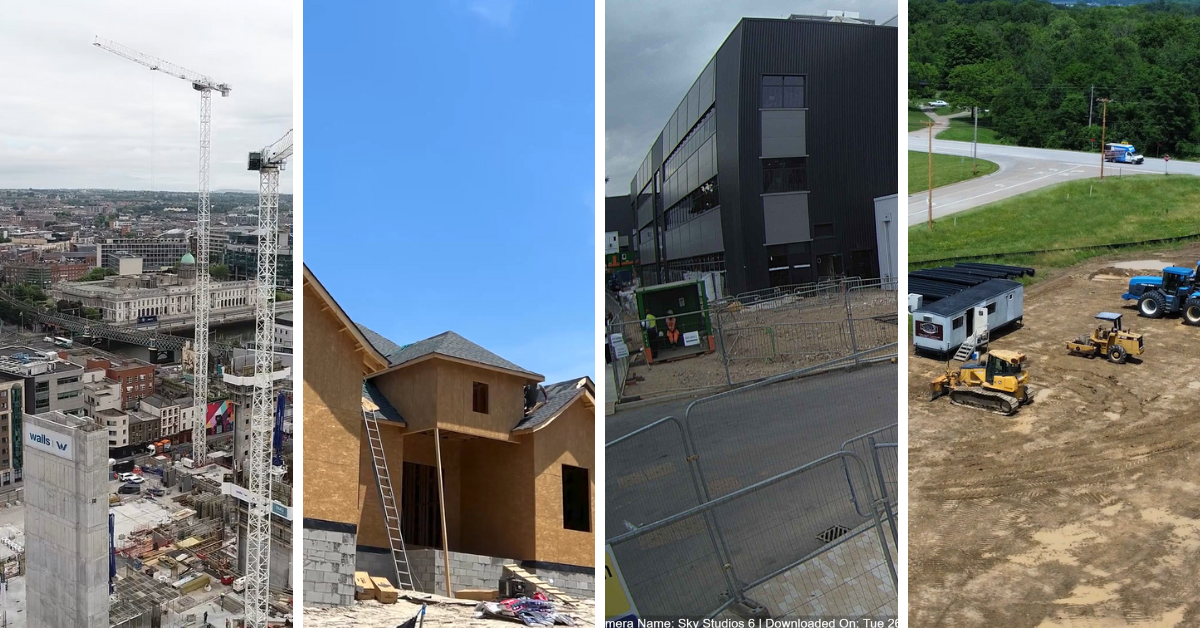
Our talented video team provides high quality, marketing ready timelapses for all of our clients, but with a key focus around the construction milestones. Check out some of the best time-lapse videos produced by the Evercam video team this month, capturing construction progress from a range of projects across the globe.
College Square - Crane Installation, IE
Take a look at this 2-minute video showing the installation of the tallest crane in Ireland this month by Walls Construction at the College Square development.
Standing at 104m, the new crane is the highest freestanding in the country and is a key addition to the delivery of the project.
Well done to the Walls Construction team. Careful planning and management were required to ensure the safe disassembly of the existing crane, and the installation of the new one. It all went to plan with military precision.
College Square, Crane Installation
https://vimeo.com/723080955?fl=pl&fe=sh
Project Sustainability - Living Lab, USA
Living Lab is designed to be a model for sustainable, resilient, and efficient residential homebuilding practices.
The project incorporates the most advanced products and systems from manufacturers and technology companies to demonstrate and educate both industry and consumers on how to create a sustainable, clean, and green future for all homes and future communities.
Project Sustainability - Living Lab
https://player.vimeo.com/video/665182308?h=2044939b60
Sky Studios Complex, UK
The new Sky Studios Elstree complex is under construction and set to open later this year. The new 32-acre studio complex includes 12 filming studios, production offices, a set construction workshop, a screening cinema and modern post-production, digital facilities as well as associated access, parking and landscaping works.
Sky Studios Complex
https://player.vimeo.com/video/722231223?h=eeecab68f9
Trailer one New Building, USA
The future home of Trailer One, Inc. is in progress in Medina, Ohio. Trailer One is a semi trailer sales, leasing and rental business specialised in Dry Vans, Flatbeds, Drop Decks, Reefers, and Specialty Trailers. Check out the progress of this project here:
Trailer one New Building, Progress video with drone footage
https://player.vimeo.com/video/722619686?h=0271cf01d2
Like what you see?
Time-lapse is just the beginning, let us show how valuable having a camera on-site can be.
Modular Construction - ?ukasiewicz Research Network Innovatorium
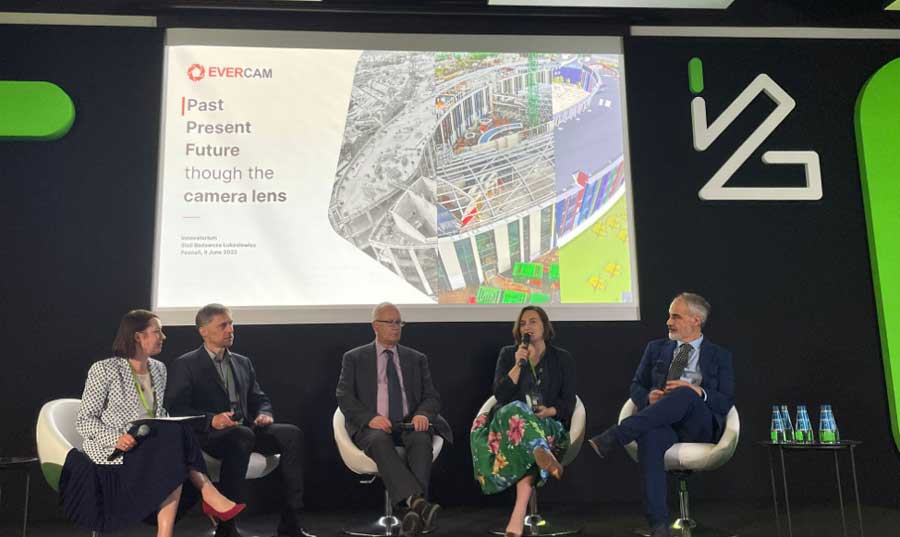
Evercam participated in a debate on innovation in Modular Construction during the Innovatorium conference organized by the ?ukasiewicz Research Network in Poland�
The ?ukasiewicz Research Network is a unique project of great commercial potential. This network forms part of the scientific community that works to promote business and support the development of innovative SMEs in Poland. Operating in line with the Science is Business model, they network with business owners and offer solutions designed to help them enhance business operations and build game-changing technologies. The network also works within research groups made of specialists and experts from across institutes. The group's objectives are�to work out the project portfolio, exchange experiences and network.�
At this year�s Innovatorium conference, Evercam was invited to participate in a panel discussion on Modular Construction. Panel members, including our very own R&D Manager Natalia Pi?kowska, discussed their experiences in research and development in modular construction. They shared a variety of findings, including:
- Innovations and automation in construction
- The key players in the global modular construction market
- Perspectives on how the industry can improve its environmental impact & sustainability through modular construction
Dr Lidia St?pi?ska-Ustasiak, a Research & Operations Manager led the panel where they delved further into various reasons why modular construction is gaining popularity by the day.��

Modular construction is increasingly becoming more popular due to its various benefits, including reduced waste, speedy building, cost-effectiveness, eco-friendliness, and flexibility. This type of construction involves creating the structure in sections off-site and importing it once it is ready to be installed. Little to no construction is completed on site which drastically reduces the space requirements and labor costs. As per industry experts, modular building projects can be completed 30% to 50% quicker than traditional construction.
Some of the reasons why there is an obvious growth in modular construction include;�
Achieving Competitive Edge: There are hundreds of construction companies all vying for work in today�s market. Many contractors tender for one project at a go. This competitive market means that companies must seek alternative processes and look at ways in which they can gain a competitive edge. Modular construction is a fantastic way to reduce costs and provide a quicker, cheaper end product to the customer. A contractor offering custom modular structures could have a huge advantage over businesses using conventional methods.
Saves Space: The human population continues to increase, and this can cause overcrowding and a shortage of adequate housing and educational facilities. Governments require housing and schools to be built quickly and in often cramped spaces. Modular structures fill this requirement perfectly � they can be erected in a fraction of the time and take up less space than traditional building methods. Decisions can be made on whether to build on-site or just drag and drop structures from the factory; making unique applications much more accessible.
Cost-Effective and Viable Alternative: Modular construction is hugely cost-effective and much cheaper than traditional building methods. In recent years the world has seen a global state of recession. Companies and governments do not have the cash flow they once had at their disposal to invest in housing and other public infrastructure projects. Investing in prefab construction can be a cost-effective way to complete public infrastructure projects.��
Health & Safety is prioritized: Modular construction offers a fantastic level of employee safety in comparison to traditional building methods. As most of the construction is carried out off-site, there are not the associated dangers and hazards that can be found on your traditional building site. Furthermore, factories where prefabricated construction is completed often work to stringent health & safety standards.
Less Landfill Waste & More Recyclable Materials�
Modular constructed buildings are manufactured to high standards for a long and efficient working life. Right from the design stage, the aim of modular construction is to minimize the amount of material that goes to landfill. The more recyclable materials used, the less the environmental impact which goes a long way to achieving sustainability.�
Less pollution: Construction using traditional methods is directly contributing to the global pollution problem pollution. Modular buildings minimize pollution in different ways. Building in a factory takes less time and produces less waste � and pollution - than conventional methods. It�s also far easier to track and control waste products for responsible disposal in a factory environment. In addition, the materials used in modular buildings tend to be lighter in weight than traditional construction materials, which reduces the emissions caused by delivery and transport.�
Cleaner operations onsite
When a modular building is installed onsite, the process is quick, efficient, and remarkably clean. The whole modular construction process is rapidly achieved, requiring far fewer journeys to the site by the workforce, and far less risk of air, water, dust, and noise pollution.
At Evercam, there are a number of companies that have embraced this type of time-saving construction such as CPAC Modular and from our camera lenses, we can clearly see the past ways of standard construction, and the present adoptions in construction and the future innovations that can be adopted.�

How Construction Cameras Are Being Used on ATEX Sites
A construction site is constantly changing as a structure is erected. There are diggers, supply vehicles, and lifting equipment that all operate on an uneven surface in most situations. A construction site is hazardous because of the nature of work that is performed on it, and the kind of equipment that is used there. There is a big probability of accidents at a construction site, and this industry has the highest rate of fatal accidents.�
As much as the construction site is hazardous in its nature, there are other types of construction sites that require more attention when it comes to health and safety because they are ATEX. ATEX generally refers to the hazard of explosive atmospheres occurring in the workplace due to the presence of flammable gases or combustible dust mixed in the air, which can give rise to the risk of explosion. Such job sites include gas station construction sites, oil pipeline maintenance sites etc.�
Having a construction camera on these job sites means better visibility of any potential problems. Preventing potential issues means better project efficiency and faster completion times; something that is of great importance when the project has to be done fast. Also, it can be crucial for quality control, as continual surveillance ensures all materials, devices, and procedures are implemented correctly. By monitoring the job site, you can prevent fraud, theft, and abuse of materials and equipment.�
Evercam In Action
We recently installed a camera on a major ATEX construction project. Our client thought construction cameras were absolutely essential to install on their ATEX site. This client needed visibility on its existing petrochemical processing facilities turnaround projects. Since the processing areas have different types of work zones, we could not use the normal Evercam standard construction cameras but rather went for an intrinsically safe ATEX camera. The ATEX Cameras and ATEX Junction boxes are used on this site instead of Evercam�s Standard Commercial 12 MP IP Cameras with its IP66 Rated Junction Box.�
With the availability of the ATEX Equipment Solution and Standard Equipment Solution, Evercam is able to give a wider variety of construction projects access to visual data, such as petrochemical projects. Having an ATEX camera for visual documentation in hazardous areas helps users become more effective, and reduces human errors. It also acts as a way to monitor and review incidents after they may occur, which can make way for new procedures to be put in place to prevent this from happening again.�
Some of the factors to consider with a hazardous site that needs monitoring or visual documentation include; what type of images should be taken? What are the light conditions on the site? Who is the end user? What is the ideal size and weight of the camera? etc.�
Use cases can vary from having to do simple inspection and documentation images in the field, to making full time-lapse videos in hazardous areas.�
Explosive atmospheres can be caused by flammable gases, mists, vapours or by combustible dust, in combination with oxygen. With a certain concentration level, all that is needed to cause an explosion is a source of ignition. Having good images and videos is beneficial in both diagnosing, planning and reporting. Not having to get hot work permits is also a benefit of using ATEX cameras instead of normal IP cameras.�
Choosing the right ATEX camera will therefore save you both time and costs. Interested to discover more ways that Evercam Construction Cameras can help you during your next project?
Top Construction Timelapses of the Month - June 2022
Check out the best time-lapse videos produced by Evercam capturing construction progress from a range of projects across the globe.
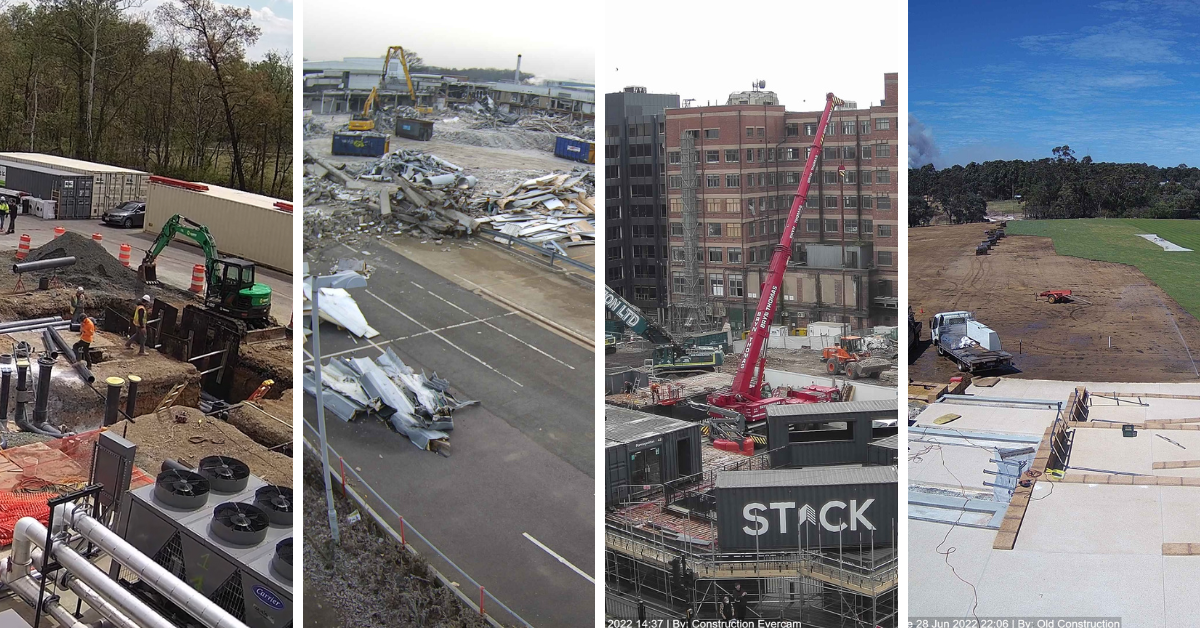
E-Finity's Microturbine Stallation, US
E-Finity sells and installs Microturbines to provide clean, independent power solutions to buildings. They are an exclusive distributor of Capstone Turbines.
Take a look at this time-lapse video showing the installation of two microturbines at a cannabis facility just south of Baltimore, MD.
Metro Deconstruction, UK
Well done to Metro Deconstruction on the successful completion of their project in Crawley. Take a look at the journey of work and progress on-site in this final time-lapse of the completed project.
Demolition of Stack - Pilgrim Street Hub, UK
Pilgrim Street Hub in Newcastle has undergone a major transformation over recent weeks, with a huge demolition project clearing the way for the biggest office development in the city center�s history. Contractors Bowmer and Kirkland are now getting started on building the new Pilgrim�s Quarter office complex.
Watch as the former Stack shipping container village is dismantled.
Margaret River SHS, AU
Environmental Industries is a landscape contractor that provides a fully integrated turf and grounds maintenance service, specifically catering to the requirements of corporate and institutional clients.
The company undertook the task of landscaping at Margaret River Senior High School, a project completed in just over ten and a half months. Check out the progress captured to date.
Check out the progress captured to date.
Like what you see?
Time-lapse is just the beginning, let us show how valuable having a camera on-site can be.

How Digital Construction Week '22 Went Down
Technology that powers the built environment has continually evolved at a rapid rate, which is why Digital Construction Week 2022 had a high attendance of professionals who want to future-proof their business by checking out the latest technology on the scene.
This year, over 150 companies showcased the latest tech, tools, and solutions to revolutionize the built environment. We were excited to showcase our latest developments with our software and discuss the solutions we are bringing to the table with our customers and peers in the industry. �This year our main focus was discussing the integrations between reality capture, BIM, and digital twins, and the benefits that have for project teams.
Marco Herbst, Evercam CEO took to the stage to preview Evercam's latest product, "4D View" which combines real-time, high-quality video footage of the job site with a digital twin. 4D View allows users to share and visualize a BIM model within Evercam and easily switch between the model and a live camera view.�

Marco was also featured as part of the Enterprise Ireland panel discussion �A step change In CX and Collaborative Innovation�. furthermore, other panelists that were in session include; John Hunt who is the overseas lead for construction at Enterprise Ireland, overseeing investment and trade in construction services and technologies across 40 overseas offices. John has a great interest in improving productivity and outcomes through digital, offsite manufacturing, and low carbon solutions across verticals as diverse as high-tech manufacturing and ultra-low energy housing, Paul Stone, a Product Strategist at�Flowforma where the company provides a digital process automation tool that uniquely combines forms, workflow and document generation in one integrated tool and Mohaidin Ahmed a Digital Change Manager at Bouygues Energies & Services UK. Mohaidin, working in the digital transformation team, believes that it is important to provide employees with solutions with the easiest implementation and fastest route to adoption.
Digitization has proven that we are at a stage where professionals can design, construct and monitor construction projects collaboratively without physical presence. Through innovation, the industry is constantly being presented with new technological advancements which aim to aid activities in the industry. moreover, it is becoming more apparent that there is a need to digitally transform the built environment to match the ever-growing challenges such as the housing shortage crisis, climate change, and the most recent case of a global pandemic.�
To find out more about our digital product,�get in touch�with us today.�

What is the difference between CCTV Cameras and Construction Cameras?
Site managers often dream of having eyes in 10 different places at once. As with every site, monitoring progress, health & safety and security all top priorities list and it can be a challenge to keep up with. The latest advancements in reality capture now allow teams to gain more visibility of their site.. Remote monitoring and surveillance have now become a common practice on construction projects.
When it comes to site surveillance, the first thing that springs to mind is often CCTV. While every construction site will have CCTV cameras protecting its perimeter, many sites are now using cameras to capture and record what's happening on the site, which offers so much more than surveillance. Here, we look at the differences between CCTV cameras and construction site cameras and the value installing both brings to your project
CCTV cameras are mainly used as surveillance equipment. They are strategically placed to cover high-risk areas on the job site and used to capture unplanned activities. Construction cameras are mainly used to capture and monitor planned activities on the job site. They are used to track progress, report on project management and post-production timelapse videos provide material for marketing purposes.�
CCTV cameras often provide low picture quality and sometimes the video feed is triggered by activity. Post-production of footage is limited, and normally not of suitable quality for marketing purposes. Construction cameras are designed to capture high-quality images at regular intervals over the period of activity. The images can be zoomed in and the consecutive captures offer images for high-quality timelapses videos that can be used as marketing content.
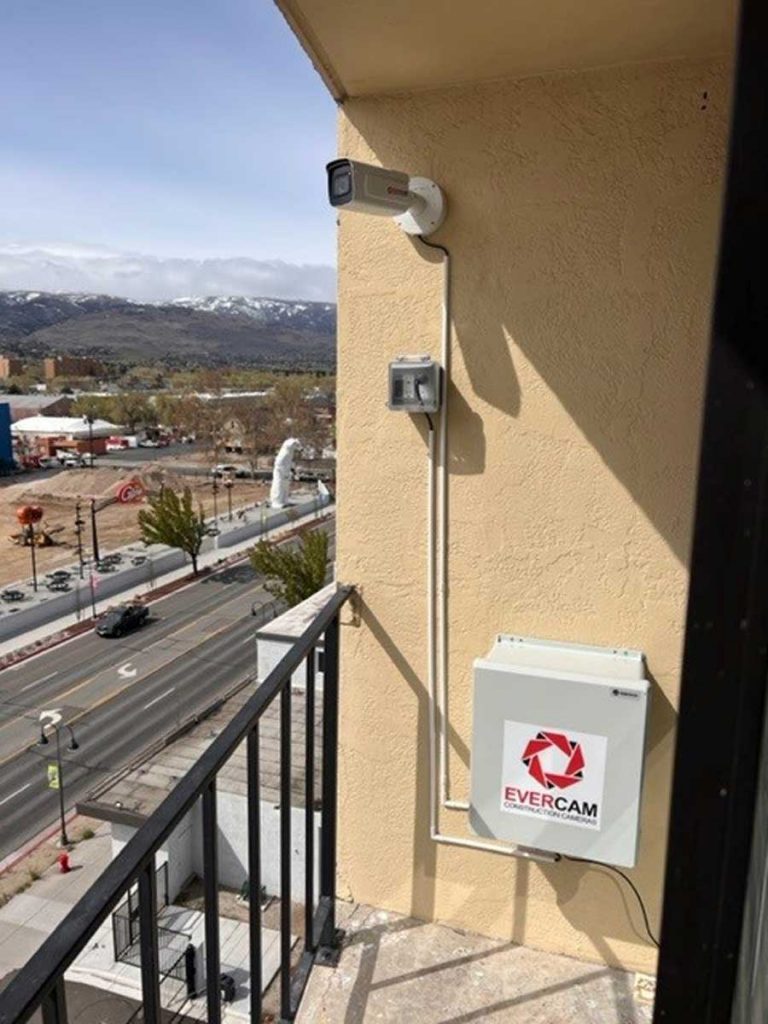
The table below summarises some key differences between these two types of cameras.�
Feature CCTV� Construction Camera Progress Reports No Yes Project timeline� No� Yes Progress Comparison� No� Yes Motion sensor� Yes No Installation� Excess cabling� Minimal cabling� Long-term data storage� Limited� Yes Integration with project management� No� Yes Image Resolution� Low quality� Higher quality� Multiple live views from single login� No Yes cctv vs construction camera feature comparison table
Even though both cameras are essential in the market, when it comes to construction projects, it is clear that construction cameras have an upper hand in their uses and advantages to a project team. Construction cameras enhance project efficiency by enabling site monitoring, and progress reporting, and eventually saving time and money.�