.jpeg)

Overview
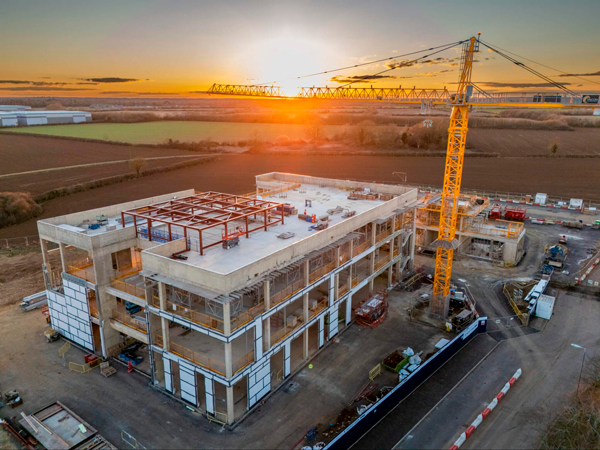
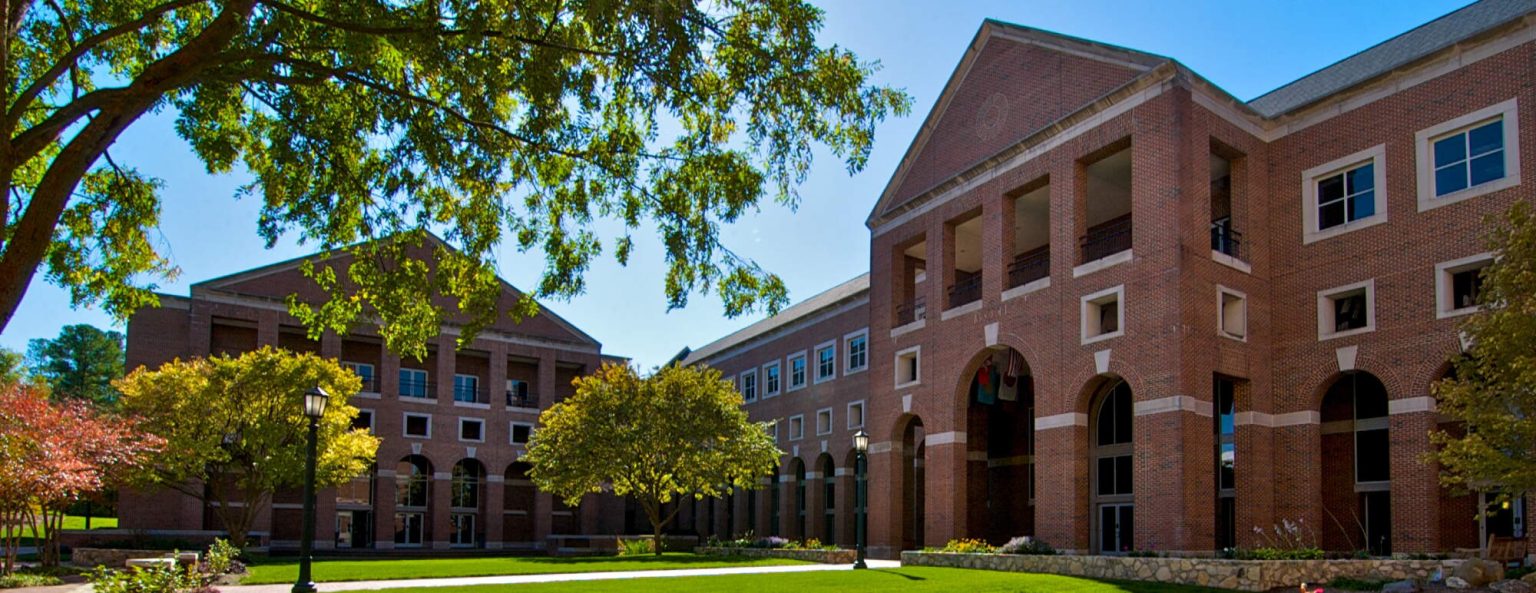
Barnhill Contracting Company and Holt Brothers Construction are leading the construction of the McColl Addition to the UNC Kenan-Flagler Business School in Chapel Hill, North Carolina. Charged with overseeing construction delivery and performance, they are executing a project that includes approximately 150,000 square feet of new program space spread over four floors, above two levels of below-grade structured parking.
Additional scope items include:
- A pedestrian bridge connecting the new addition to existing buildings
- Major site improvements along Blythe Drive, creating a prominent new entrance
- Landscaping and stormwater management features
- Sustainability milestones to support UNC’s environmental goals
The new space will significantly expand capacity for students, faculty, and staff, and is scheduled for completion in 2025.
The Role of Evercam
%20(1)%20(1)%20(1)%20(1).png)
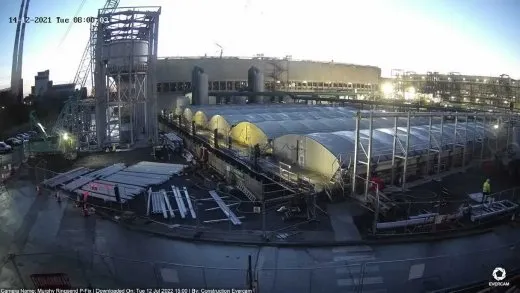
To support day-to-day visibility and documentation needs across the job site, Evercam provided an integrated construction camera system. This included:
- High-resolution, timestamped video and photo capture
- Remote access for stakeholders to view site progress in real time
- Integration with an onsite weather station to correlate visual and environmental data
- Ongoing support for issue tracking, power monitoring, and content requests
The system played a central role in documenting site activity, generating material for internal and external communications, and facilitating data-driven decision-making.
The Challenge
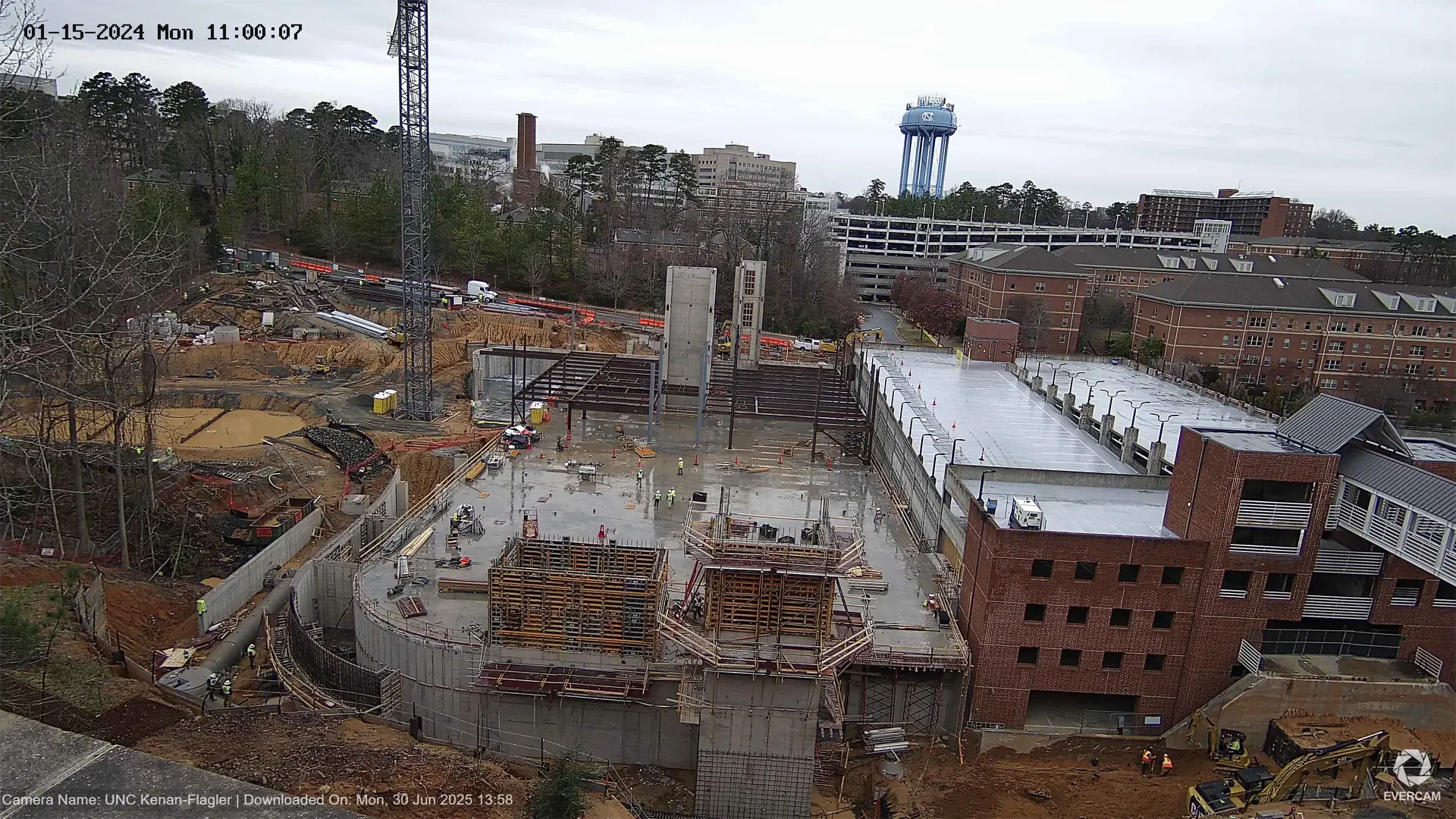
During the course of construction, the team encountered several weather events that disrupted scheduled work. In complex commercial projects, it can be difficult to clearly demonstrate the specific timing and impact of such delays—especially when requesting schedule adjustments that help avoid liquidated damages.
The team needed a reliable way to validate the effect of weather on productivity using objective evidence.
The Solution
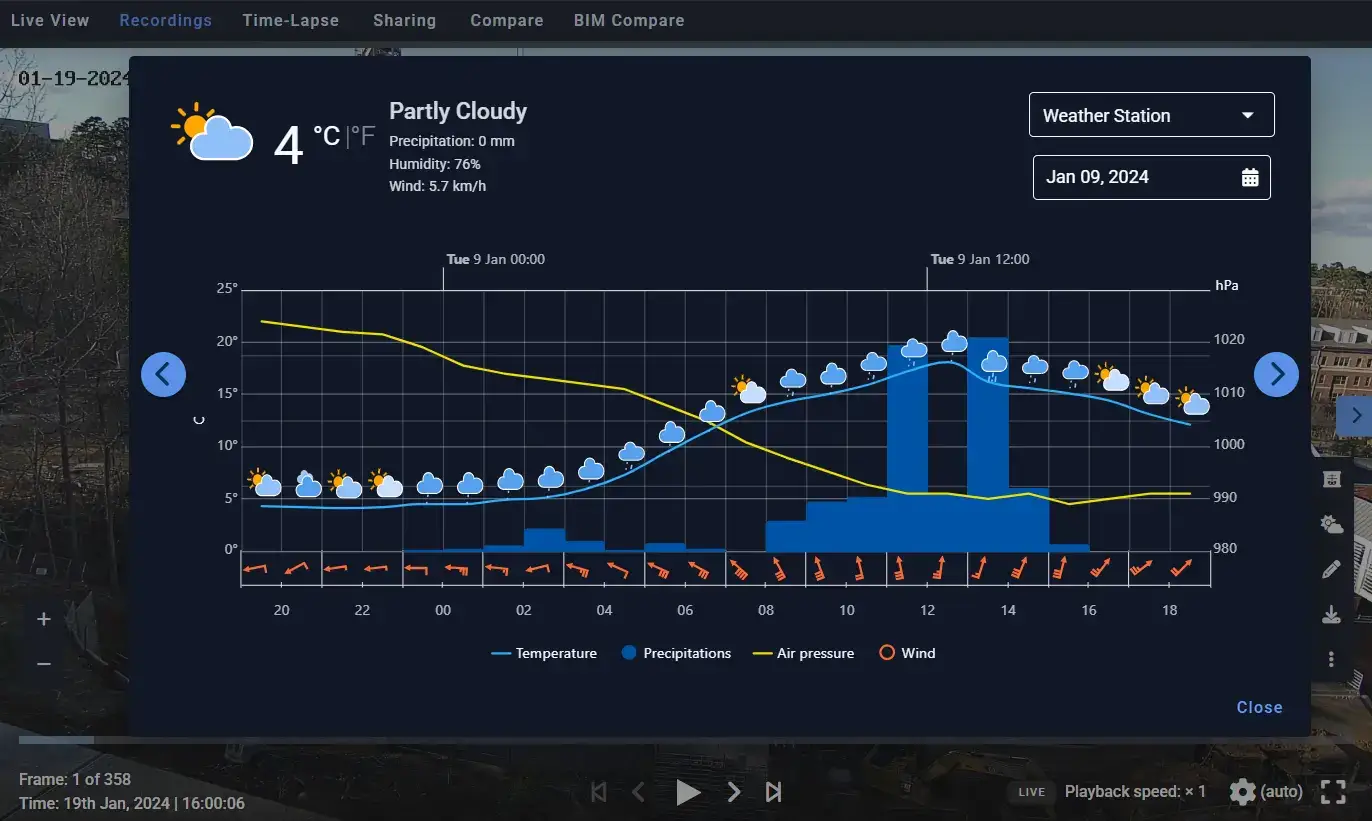
Using Evercam’s continuous footage archive and weather data overlay, the team was able to present a synchronized timeline of site imagery and environmental conditions. Timestamps captured by the camera system, paired with the weather station’s metrics, allowed the team to document exactly when and how weather events halted construction activities.
This dual-source validation created a compelling, verifiable case for requesting additional days on the construction schedule.
The Results
The impact of validating weather delays was both immediate and long-term:
- 12 additional days were credited back to the project schedule
- The team potentially avoided $1,000 per day in direct costs that would have resulted from weather-related penalties or delays
- The effort prompted a broader reevaluation of the value of site imagery and weather documentation tools
Recovering those 12 days delivered a substantial financial advantage by directly offsetting penalties from schedule overruns.
By providing verifiable, time-stamped evidence of weather-related disruptions, the team secured essential schedule relief that protected their project margins. The following tables quantify the estimated cost savings resulting from those 12 recovered days.
Key Variables
To understand the full financial impact of 12 days added back to the schedule means considering key variables like daily overhead and potential liquidated damages.
1. Daily Project Overhead
- Including labor, equipment rentals, site utilities, administration, and general conditions.
- Typical range for higher education or mission-critical projects.
2. Liquidated Damages (if applicable)
- Contracts often include penalties for late delivery.
- Typical range for these penalties.
3. Additional Considerations
- Also avoided costs from:
- Weekend/overtime labor to catch up
- Earlier release of subcontractors
- Stronger relationship with owner
- Reduced risk of litigation or margin loss due to delay disputes
Value of Recovery: the Big Picture
The 12-day schedule recovery provided significant value to the project timeline and risk management. While specific cost calculations vary based on individual contract terms and project circumstances, having clear documentation capabilities can help teams build stronger cases when weather-related delays occur.
This type of defensible documentation becomes particularly valuable in situations where liquidated damages or extended general conditions costs are at stake.